An open resource for Christian technologists and ministry leaders
What really is the good news in our context?
Christian reflection and practical tools for a changing context.
Principles, a missional canvas and design options for Bible and faith products.
Find your starting point

When silicon catches the light
We tricked rocks into thinking. Now people ask them about God.
Every phone and every AI runs on silicon, a kind of rock. With AI the rock talks back, and many people now ask it about God before they ask anyone else.
Those of us who build on these rocks shape how they answer: what they say first, what they leave unsaid, when they step back for a person. They can reflect a light they do not make. Our trust belongs with the Rock, not the rocks. (Psalm 18:2)
The metaphor, in full





The approach in practice
One question, from a neighborhood to a screen.
-
A neighborhood changes around a church.
The church stays in place. The people, questions and circumstances change. Listen again, question assumptions and discern together how the church can serve here.
- A café opens in a worn corner building.
- The house is restored, then retail and offices change its use.
- The church stays in place while its neighborhood changes.

A fictional neighborhood, over some years -




From the working example: a streak, and a week that starts fresh Someone returns to a Bible reading plan.
After a difficult break, a missed streak can bring shame. Another opening welcomes them and offers a manageable restart. Try the alternatives with people to learn what supports their practice.
Compare approaches to progress -
Someone asks AI for spiritual guidance.
Make sources accessible, invite discernment and recognize when a conversation with a person matters. Another AI answer is not always the best next step.
Read the principles for product teams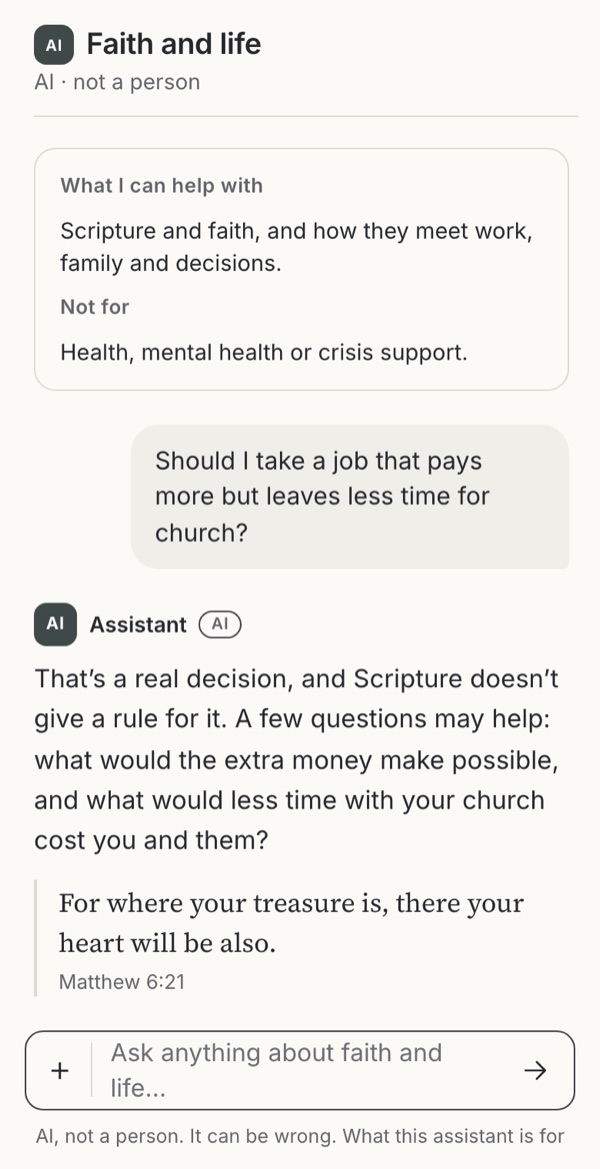
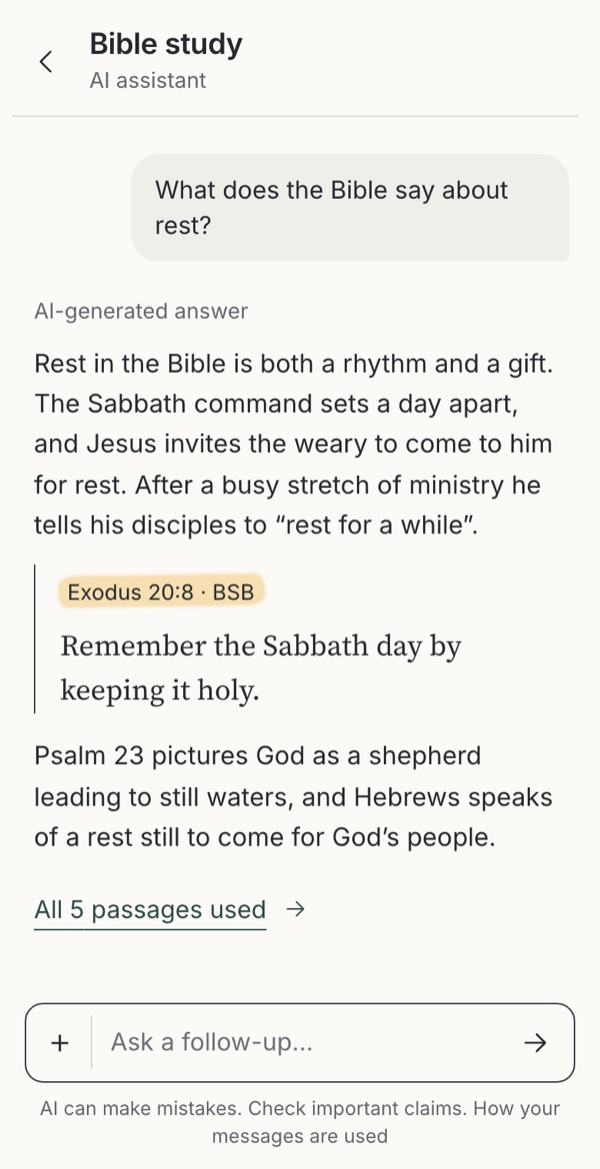
From the working examples: a stated scope, and an answer with its source
One approach · Three starting points
What are you working on?
-
Understand the perspective
How Christian calling, context and responsibility shape design. Ten principles make the implications concrete for digital products.
- The Word
- The person
- The practice
- The people
- The makers
-
Work with the canvas
Listen with your team, clarify your missional identity and shape a next step. Start with the church canvas, or explore the nonprofit and business drafts.
- 1Listen with your team
- 2Clarify your missional identity
- 3Shape a next step
-
Explore product decisions
Compare approaches to Bible reading, prayer, community and AI. Try examples and weigh their implications through theology, research and everyday use.
A missed day. A welcoming return. How might a reading app help someone begin again?
Welcome back.It’s good to see you again.Continue where you left offPick up again?Whenever you’re ready, we’re here.ResumeIllustrative design options
Context · Formation · Faithfulness
What we design shapes how people practise faith.
The good news of Jesus gives this work its purpose. Scripture, prayer, the church’s wisdom and the people affected by our work belong in the design process. As circumstances change, we return to them: whom are we serving, and what does faithful service ask of us here?
Technology can make remarkable things possible. Good work also strengthens the freedom to need a tool less. Continued use can support a meaningful practice; it is not, by itself, evidence of spiritual growth.
Essay: On Which Rock Are We Building?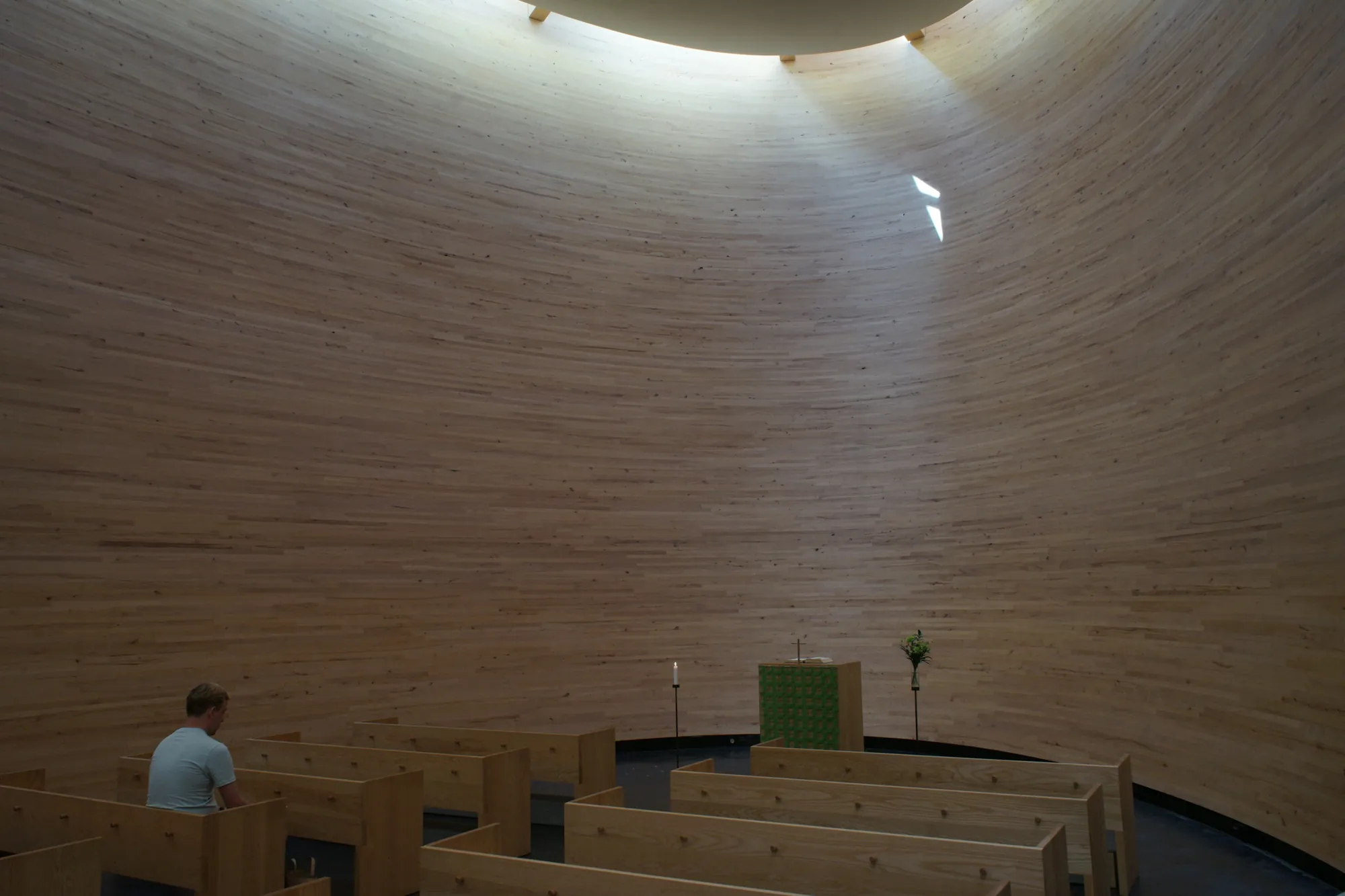
The people are the point.
Faithful design starts with listening. To people. To our changing context. To the good news of Jesus.
A changing context calls for renewed listening, prayer and action. The same question connects a church’s life in its neighborhood with the choices a product team makes on a screen.
Our context keeps changing.
Faithful responses begin with renewed attention.
Explore the perspective