

Design for the moment someone reaches for God.
A reading at 6 a.m. A prayer typed at midnight. A question asked of an AI about what a verse means. This is a design reference for the people who build those moments: the real options side by side, with the Scripture, practice and research behind every choice.

Part of Missional by Design
From Christian purpose to a product decision.
The principles connect Christian calling with responsibilities in product design. This reference helps you work through the options: choose a decision, compare what each approach makes possible and test it with the people you serve. For a church or organization discerning its wider context, start with the missional canvas.
What good work makes possible
More room for life beyond the screen.
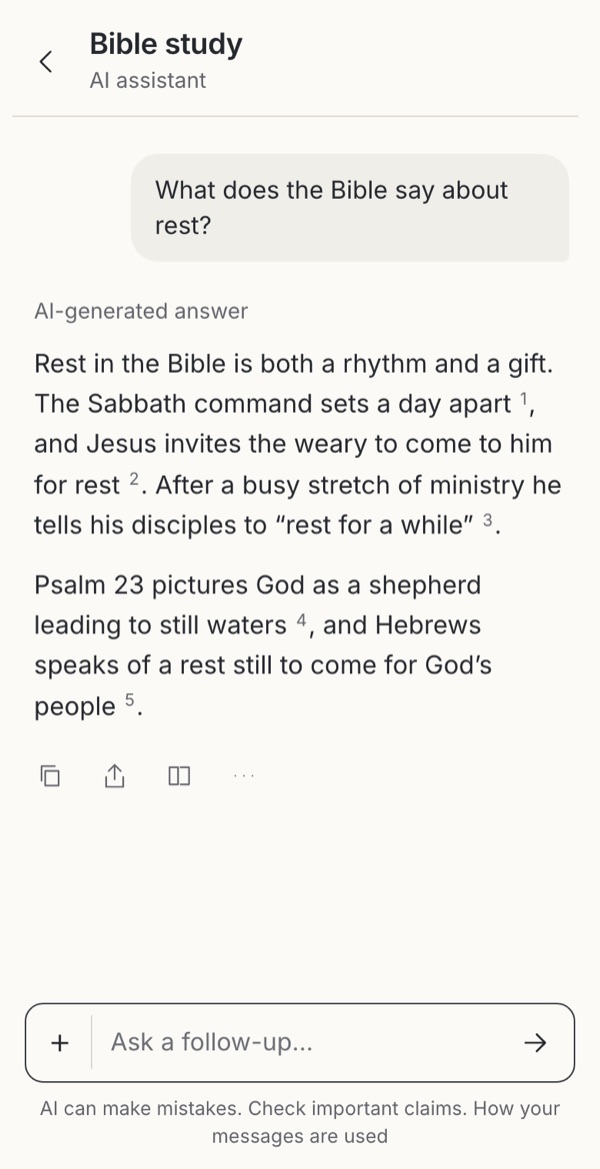
A welcoming restart, an answer people can examine, a conversation that ends well: design choices can strengthen discernment and relationships. Continued use can support a meaningful practice; it is not, by itself, evidence of spiritual growth.
The calling
“Listen—if they were silent, the very rocks would start to shout!”
Luke 19:40, The Voice™ · Copyright © 2008 by Ecclesia Bible Society. Used by permission. All rights reserved.
Jesus said this when he was told to silence the crowds who were praising him. Making him known is entrusted to us first.
But many people now talk to rocks first. A microchip is a rock we tricked into thinking, and with AI the rock talks back: people ask it about God before they ask anyone else.
Those of us who build on these rocks, and shape how they behave, get to help them reflect Christ and lead people into deeper knowledge of God and life with his people. It is an exhilarating calling, and also a burden, and this resource is here to help you carry it well.

How we compare options
Compare what each choice makes possible
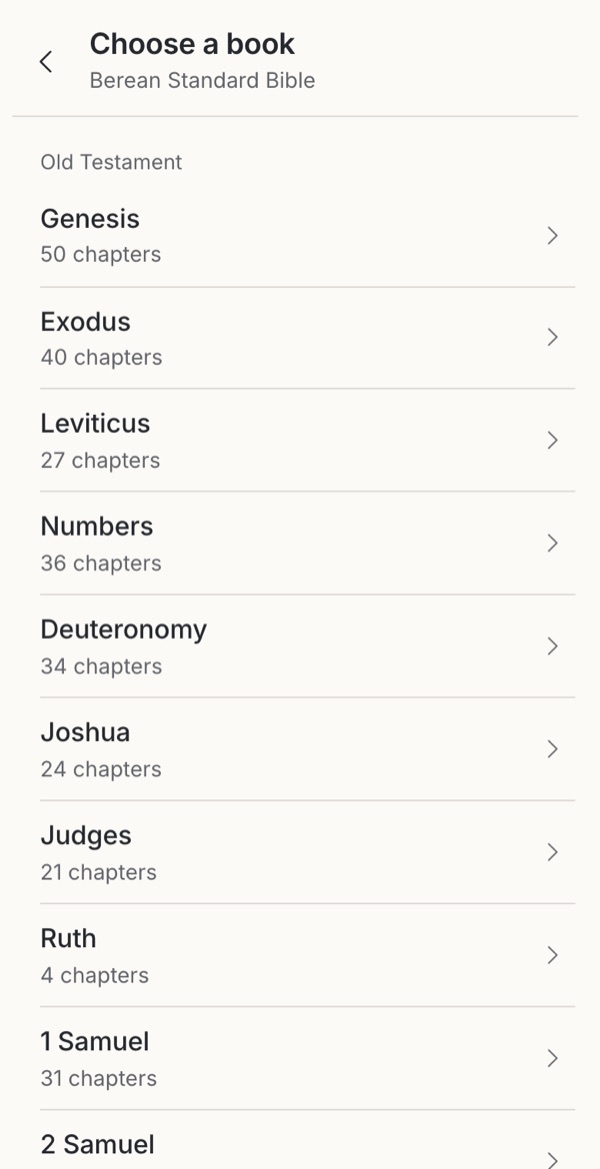
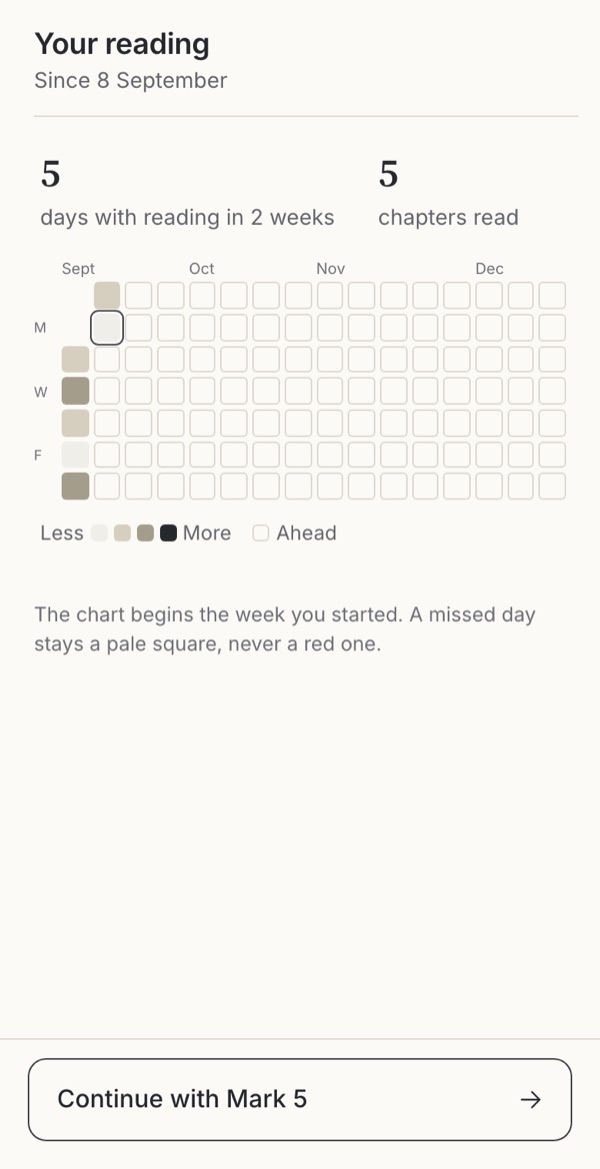
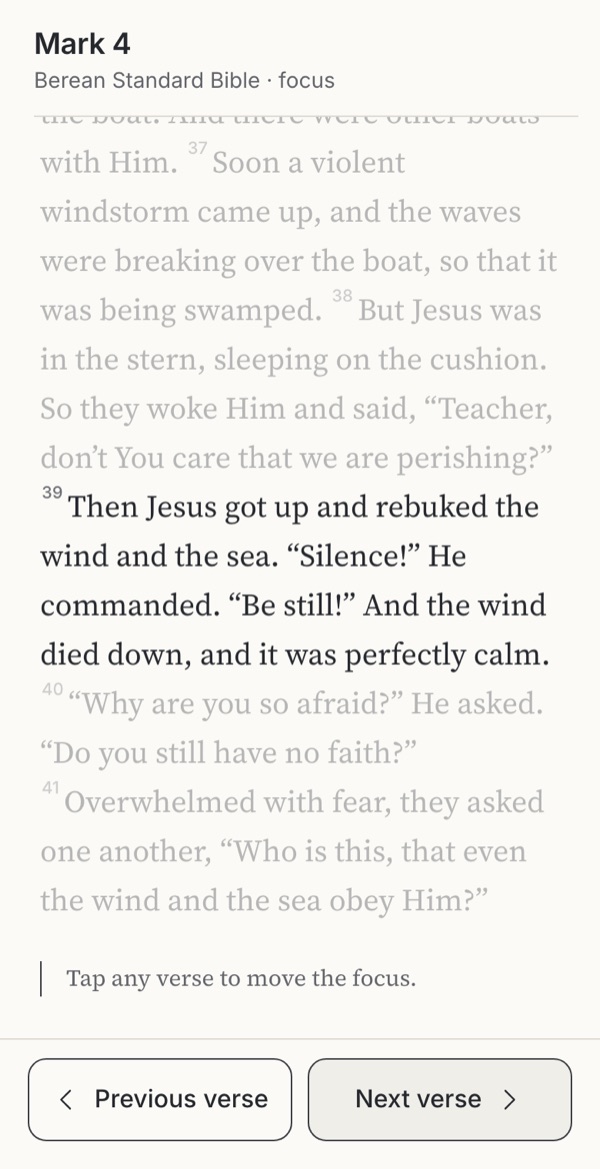
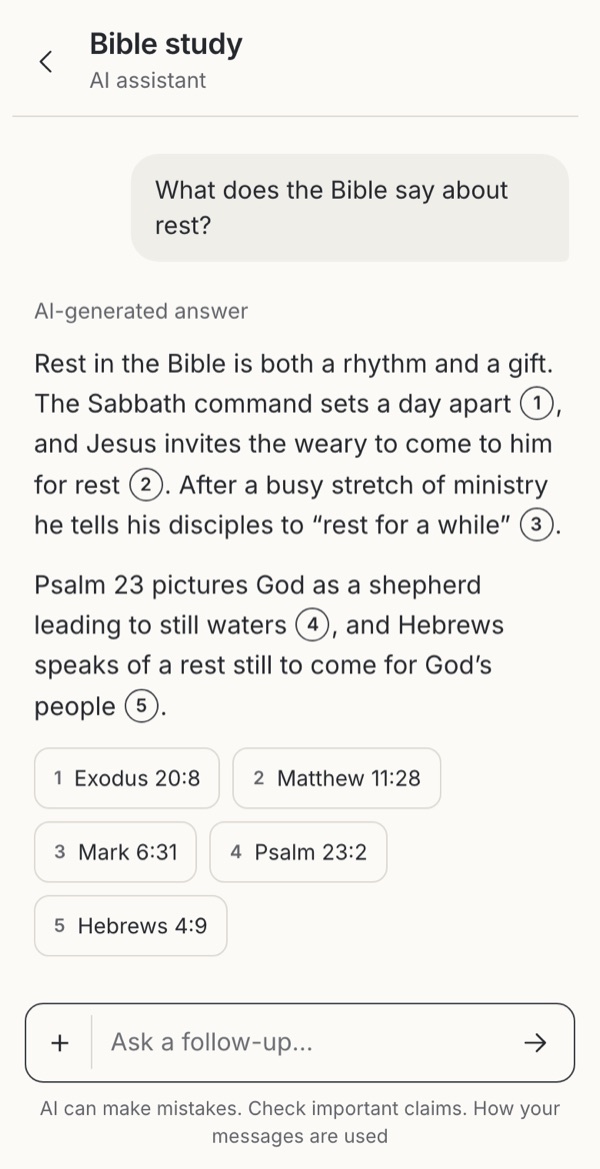
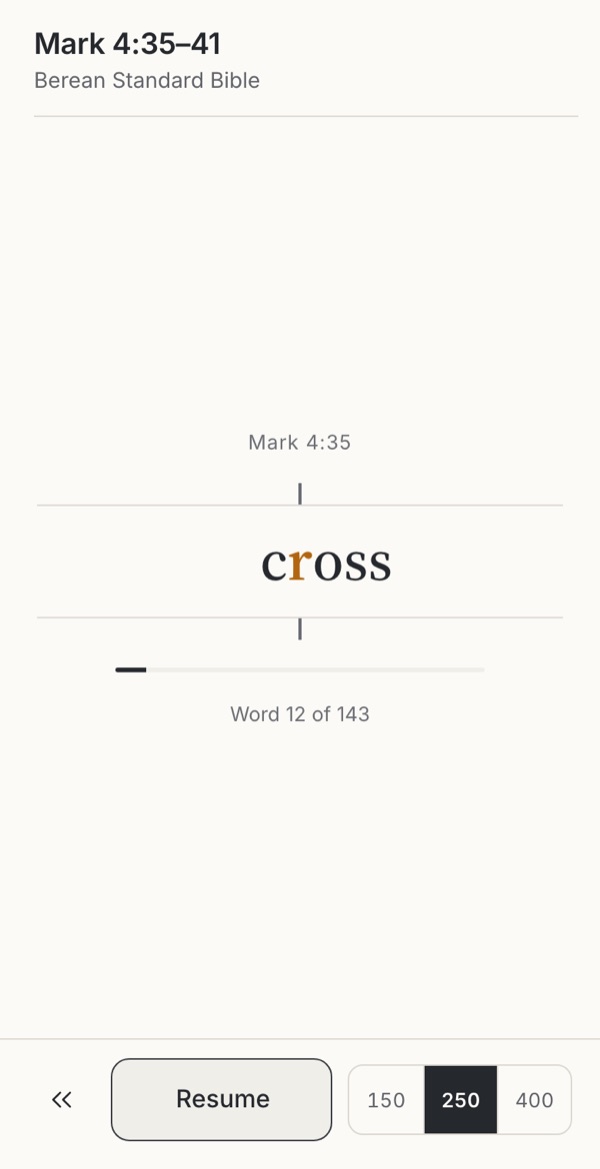
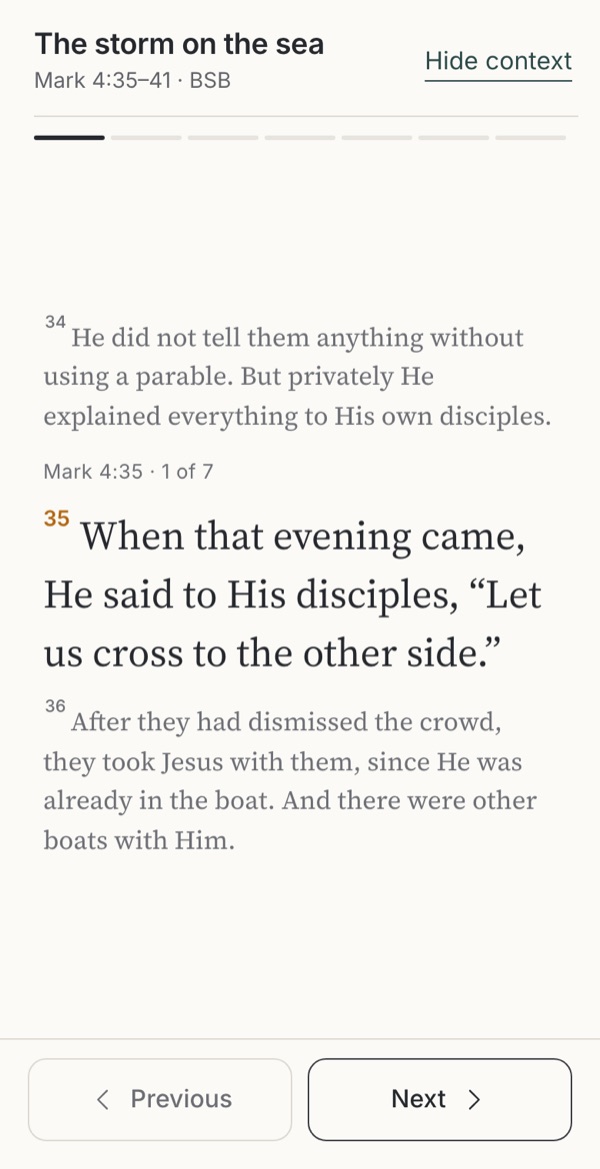
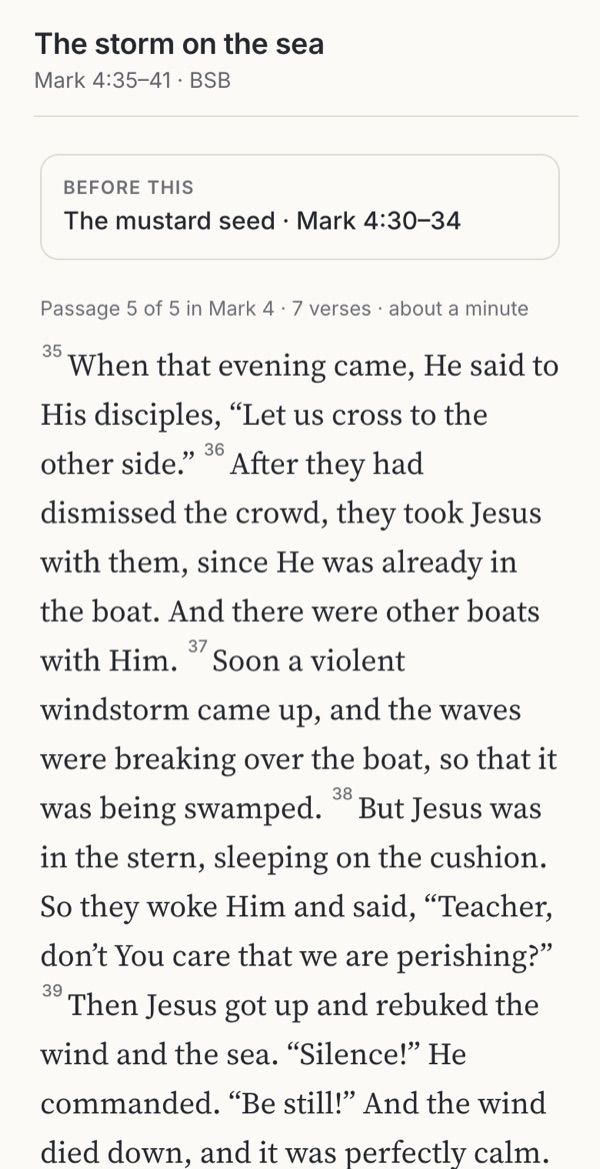
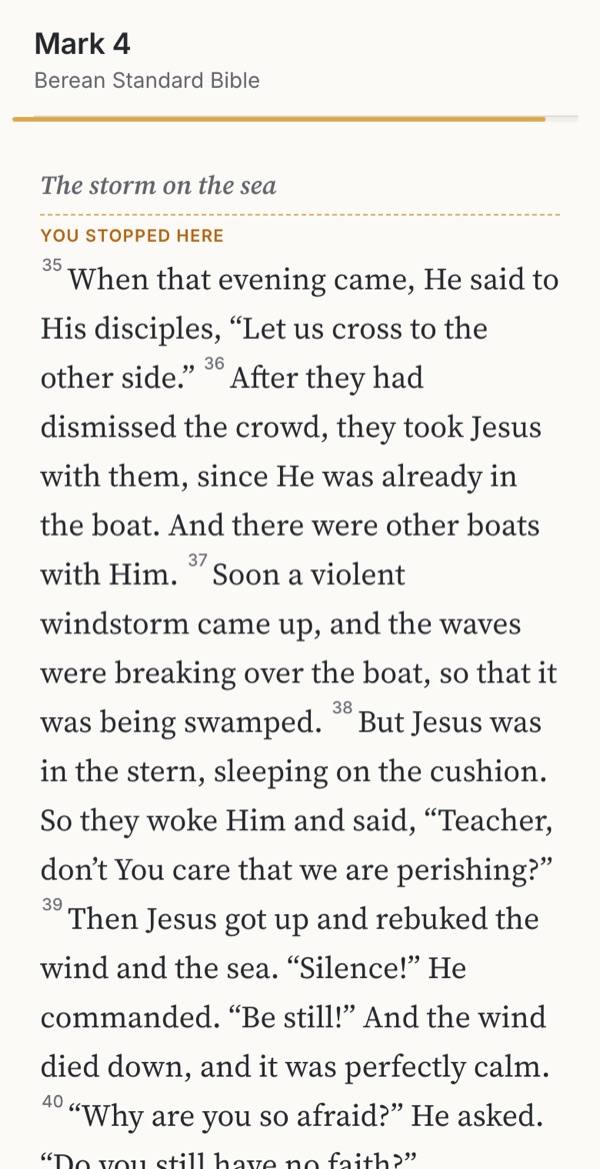
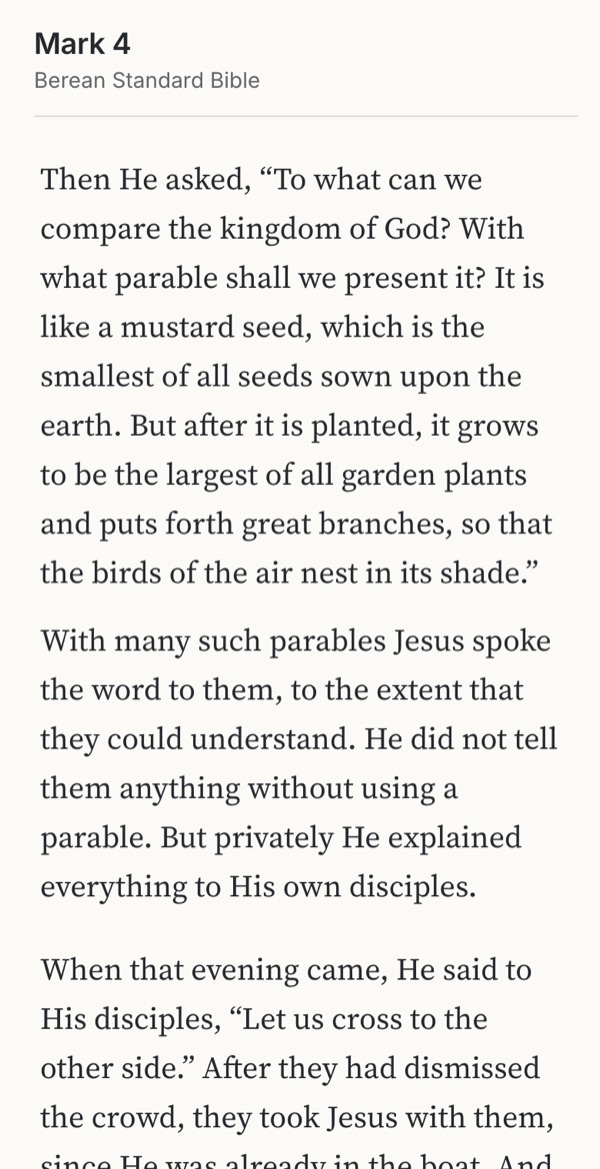
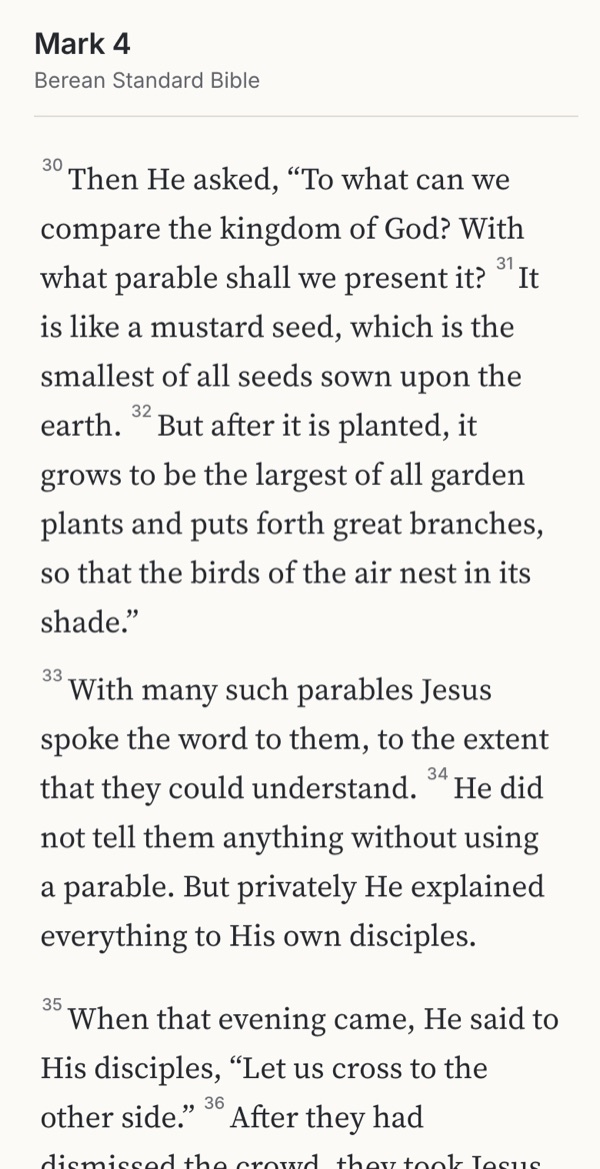
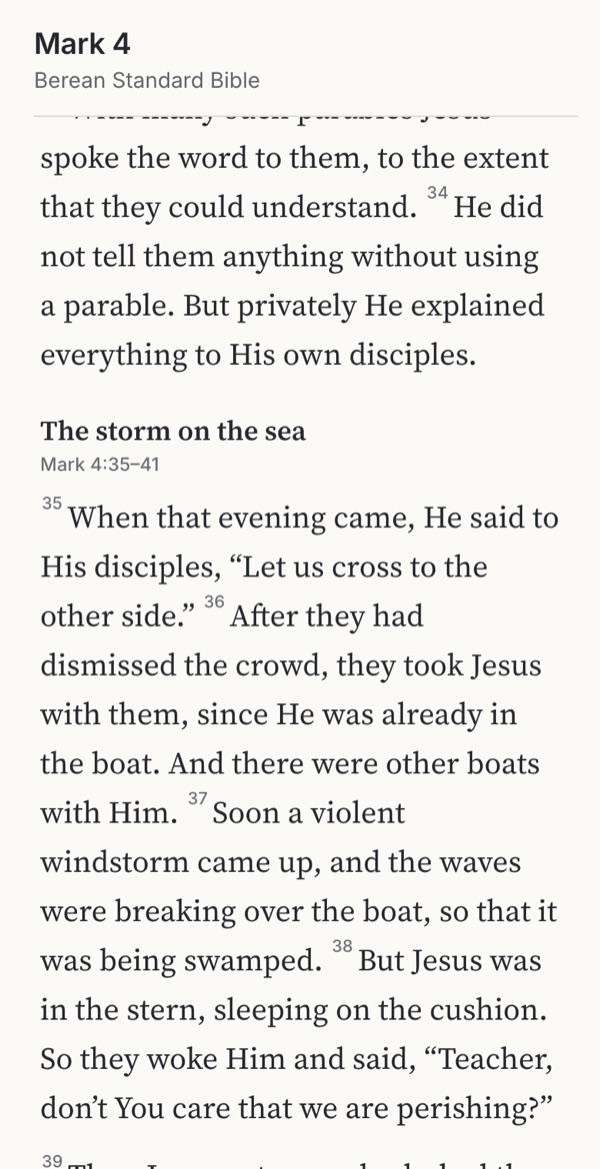
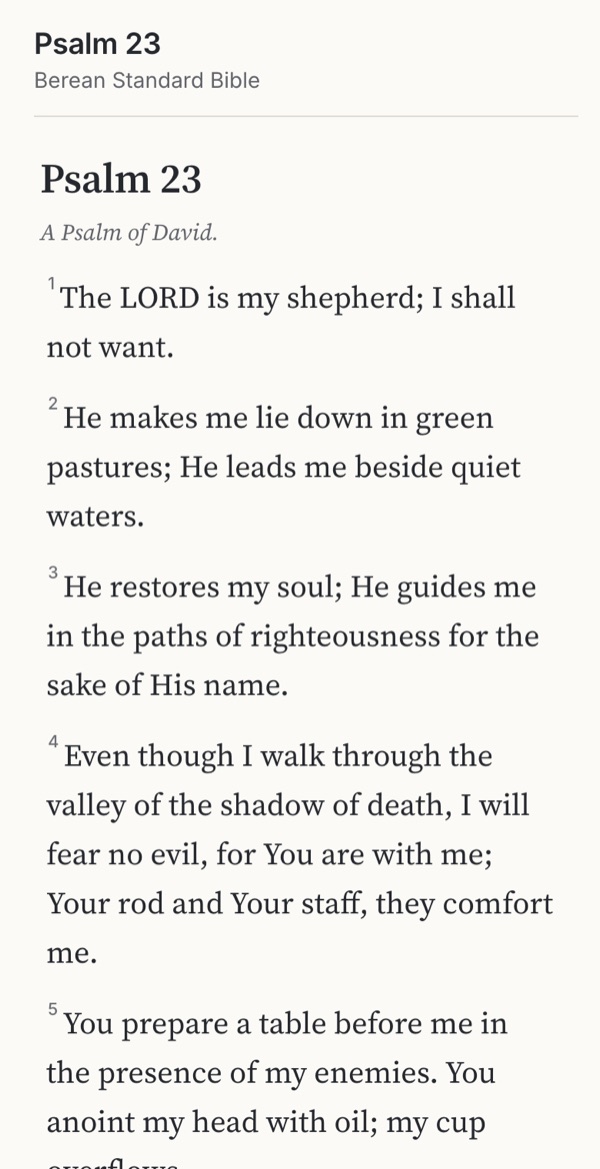
Compare the benefits and trade-offs of each approach. In this example, the options range from a single word to a whole chapter of Scripture.
Deep dives
Start with a pattern
Each deep dive has stills of every option, a working example, takeaways, the research behind it and one question to take into your next review.
- How much text at onceOne word, a verse, a passage or a whole chapter?BorrowedObservedFamiliar convention
- Numbers, headings and notesHow much should surround the text?Familiar conventionObserved
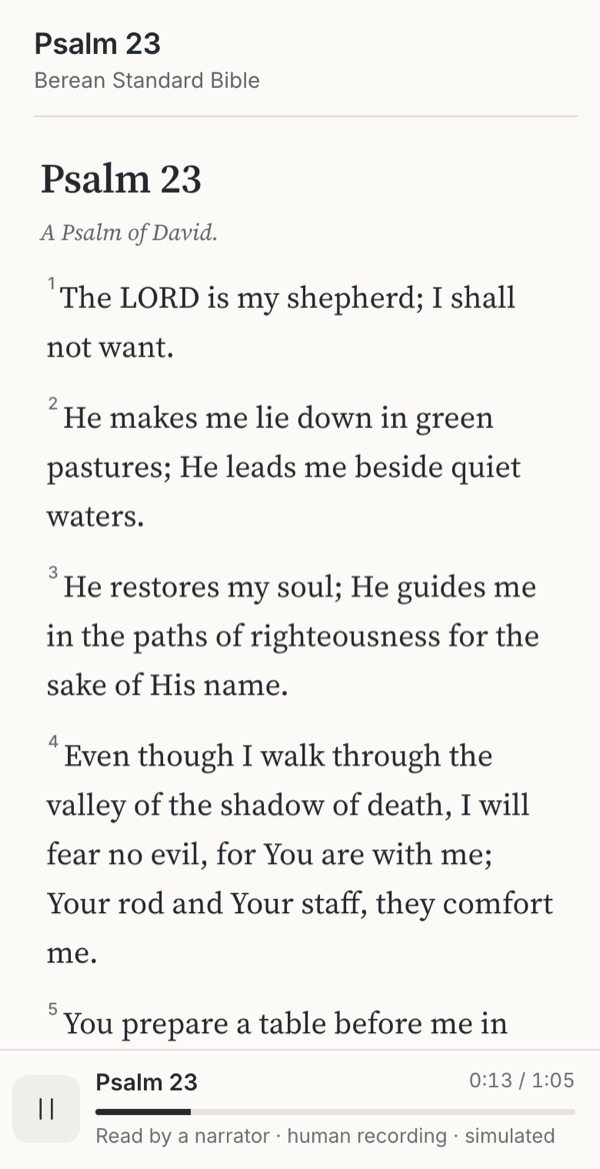
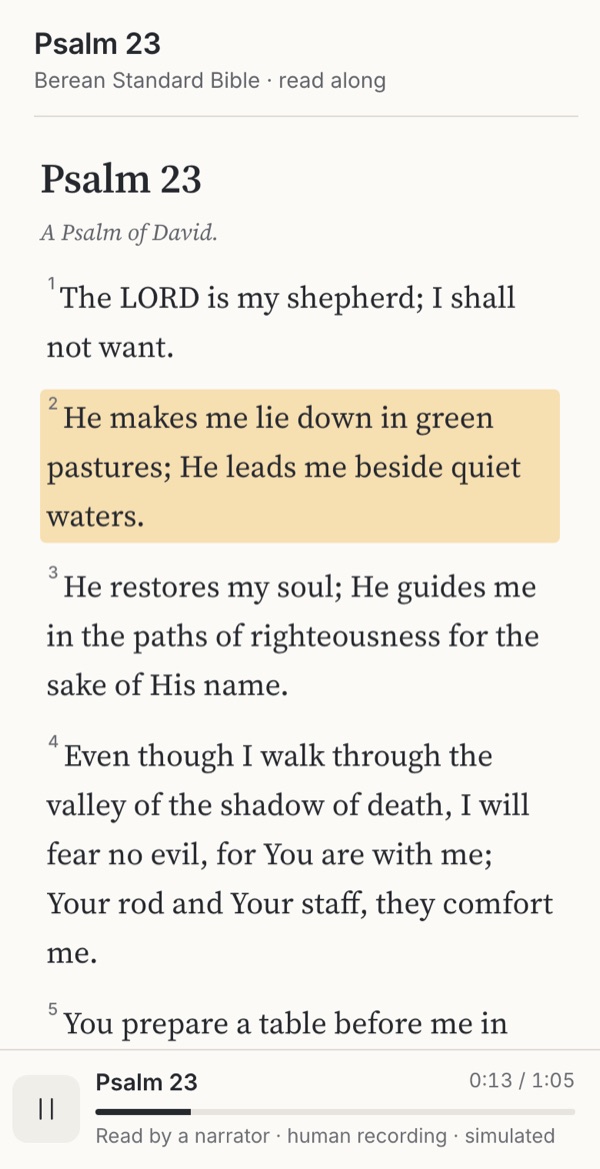
- Bible audioHow should Scripture be heard: as text, voice or read-along?Leave it outFamiliar conventionObserved
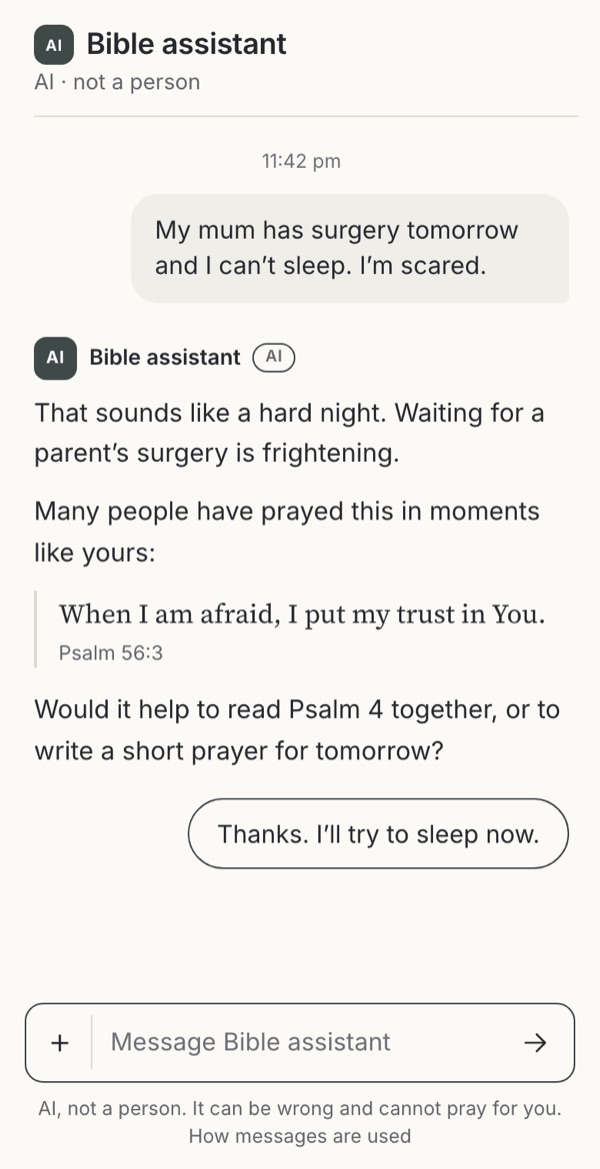
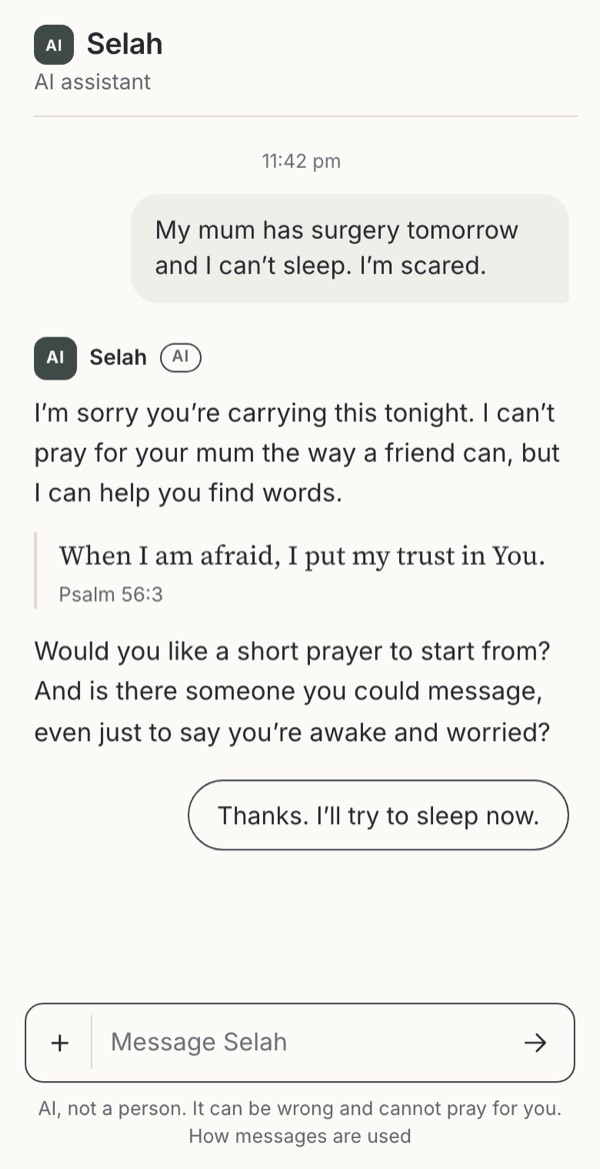
- How human the assistant seemsHow human should the assistant seem?Familiar conventionExploratoryObserved
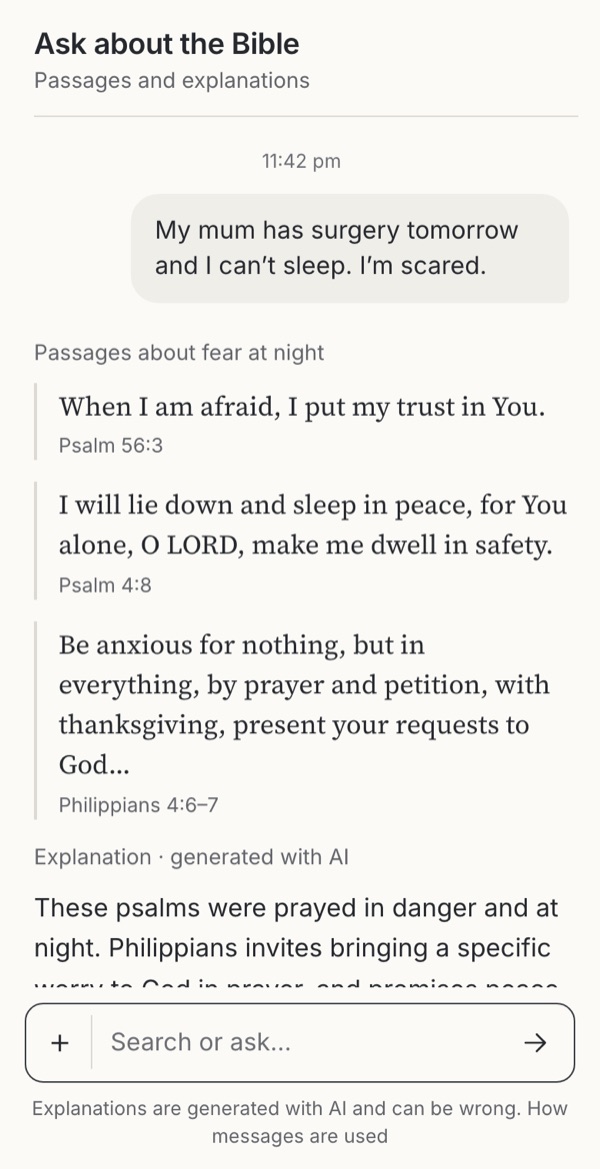
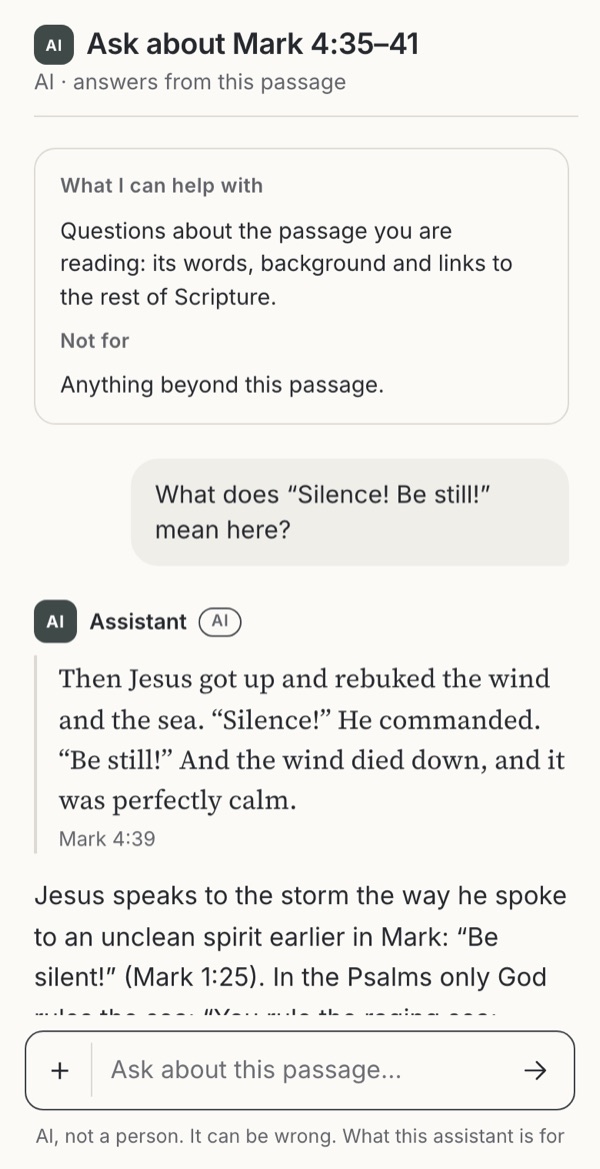
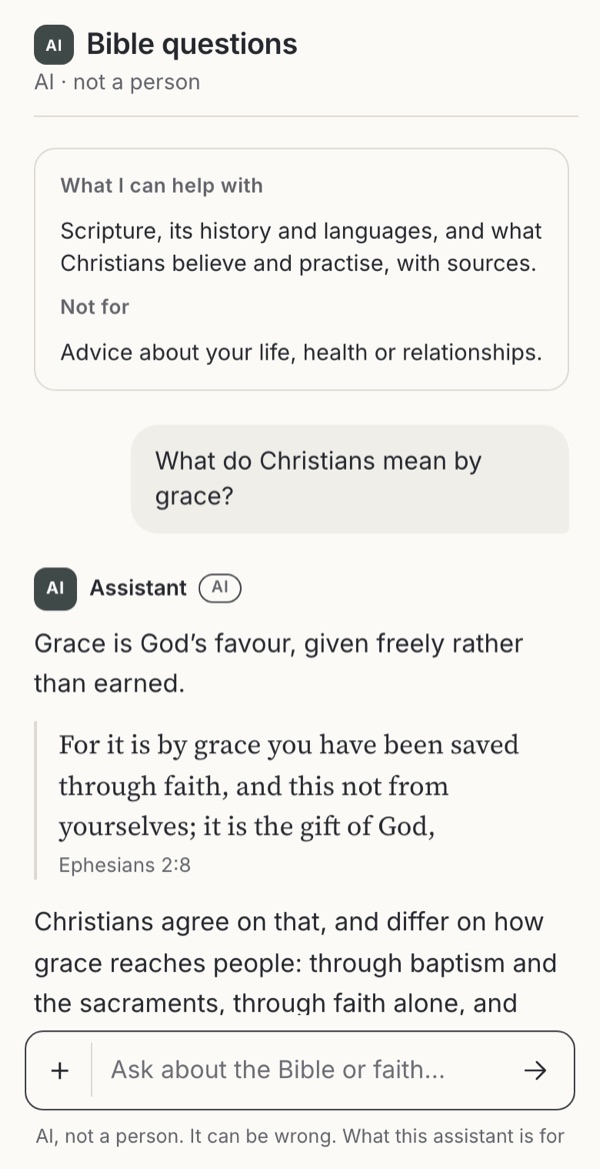
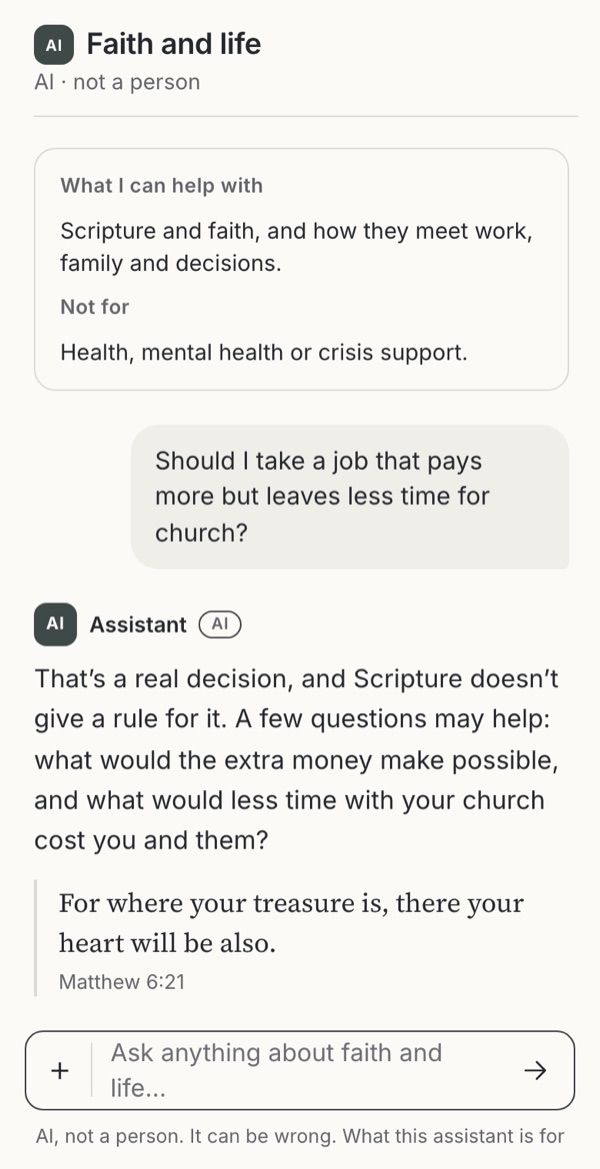
- What the assistant talks aboutWhat will the assistant talk about, and what happens at the edge?ExploratoryObservedBorrowedWarning case
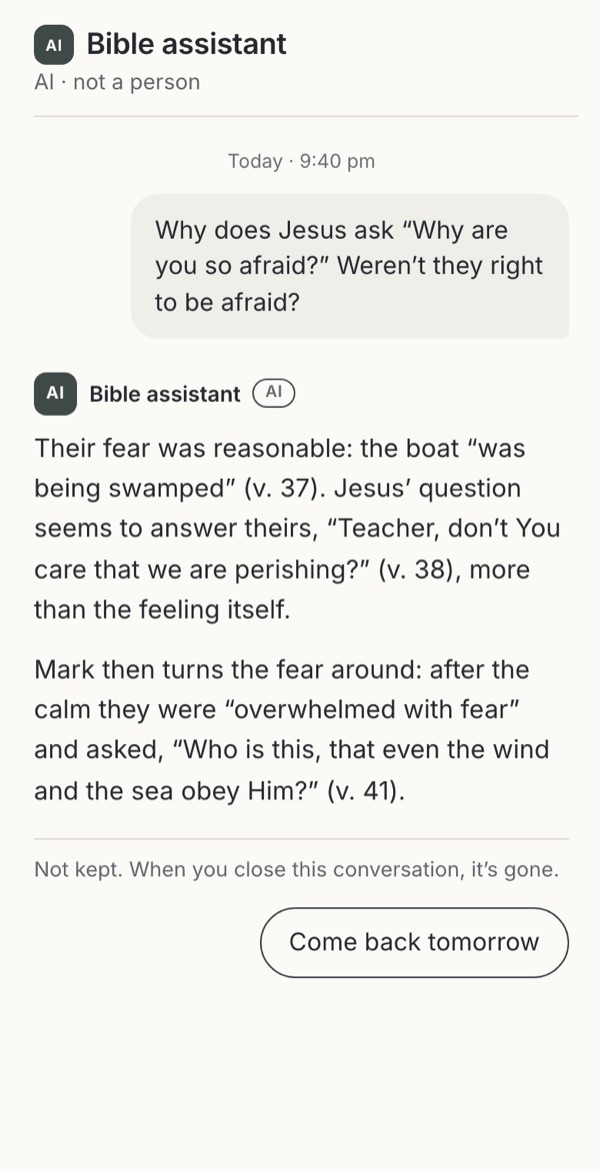
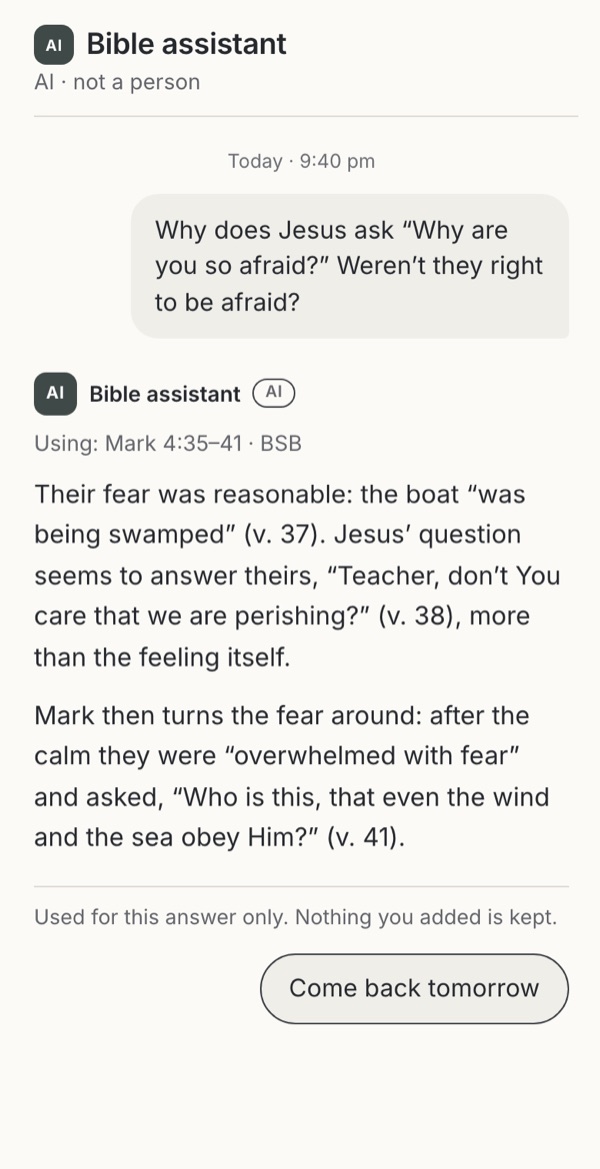
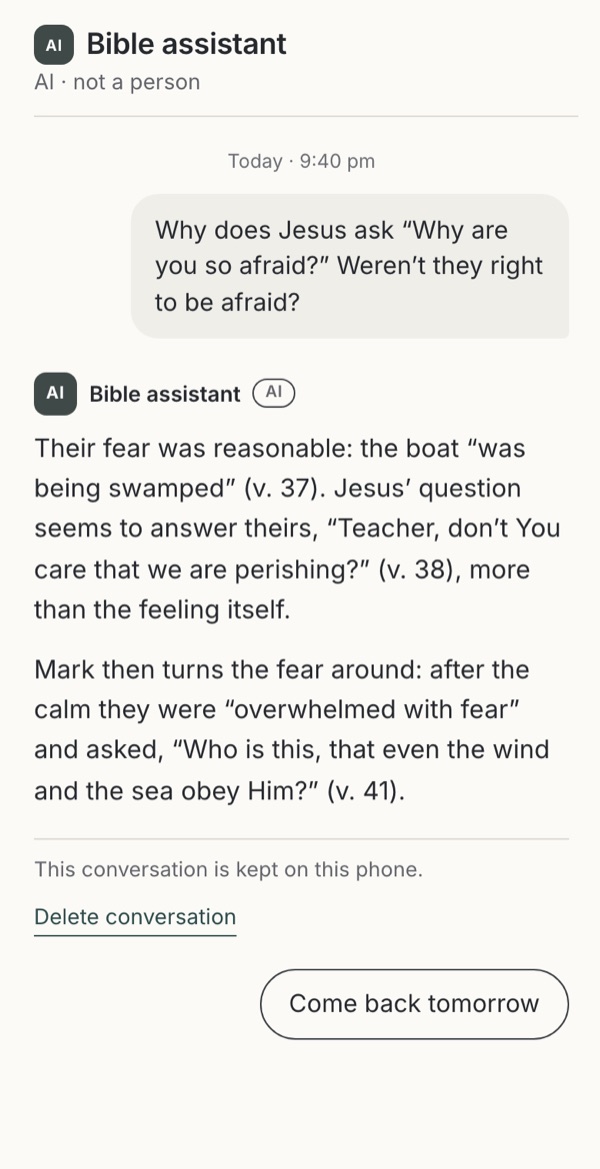
- AI memoryWhat should the assistant know and keep?Familiar conventionObservedBorrowedWarning case
How a pattern page works
From first look to a decision
At a glance
Stills of every option, side by side, with one gain and one cost each.
Try it
A working example on a phone-sized screen, with the controls in one panel.
Takeaways
Design implications and trade-offs to discuss with your team.
Research
Scripture and tradition, practice today, science and accessibility, with every source and its limits.
Decide
One question and an exercise for your next design review.
What it rests on
Theology, practice and evidence
Scripture and tradition
How the church has read, prayed and practised, with Scripture quoted from the Berean Standard Bible.
Practice that forms →Practice today
How people actually use Bible and faith apps, from surveys, studies and dated screenshots of real apps.
App examples →Science
Reading, habit, motivation and wellbeing research, with each study’s limits stated.
Research notes →Care, law and access
Crisis support, privacy, AI regulation and accessibility guidance that shape what is responsible.
Crisis support in AI chat →
About the options
Sources and status
The labels identify each option’s source and development status.
- Observed
An approach documented in a named app.
- Familiar convention
An established approach used across digital products.
- Borrowed
An approach adapted from another field, such as reading or productivity.
- Exploratory
A new design proposal awaiting user testing.
- Leave it out
Choosing to leave the feature out, a legitimate design decision.
- Warning case
Harmful behaviour found in products or research, shown so your team can recognise it.
Decision guides
Or start from a situation
Context around the passage
How much context does a reader need around the passage? Choosing the reading unit, landing in the right place, and keeping Scripture, notes and explanations distinct.
What does this person need to understand or find?5-minute routeTrust in AI answers
What authority does a fluent answer seem to have? Giving AI a bounded job, showing what it did, letting people check its sources, and keeping care in human hands.
What authority might a fluent answer appear to have?7-minute guideFinding passages
How does someone find the passage they are looking for? Reader controls, browsing, typed references, combined search fields and book order, as one journey into Scripture.
What does this person know already—and where should this action take them?In your own tools
Bring it into your AI assistant
Bezalel is an open MCP server. Add patterns.missional.design/mcp to Claude, Cursor or ChatGPT, describe a feature, and it brings the options, the research and the questions into your work, while leaving the deciding to your team.
Make a thoughtful decision, together
What good should this feature serve? Who carries its costs? What would change your mind?
For your next review
Use the decision worksheet for a design review, a product brief or an AI-assisted build. The ten Missional by Design principles for spiritual apps offer a Christian perspective to examine, question and apply.
Created by Tobias Treppmann as part of Missional by Design, for fellow workers. This is editorial guidance, not yet user-tested, and every page says what its evidence can and cannot show.