Glorify · User-contributed screenshot · resized, content unchanged
“Wake up” and “Wind down” reminders
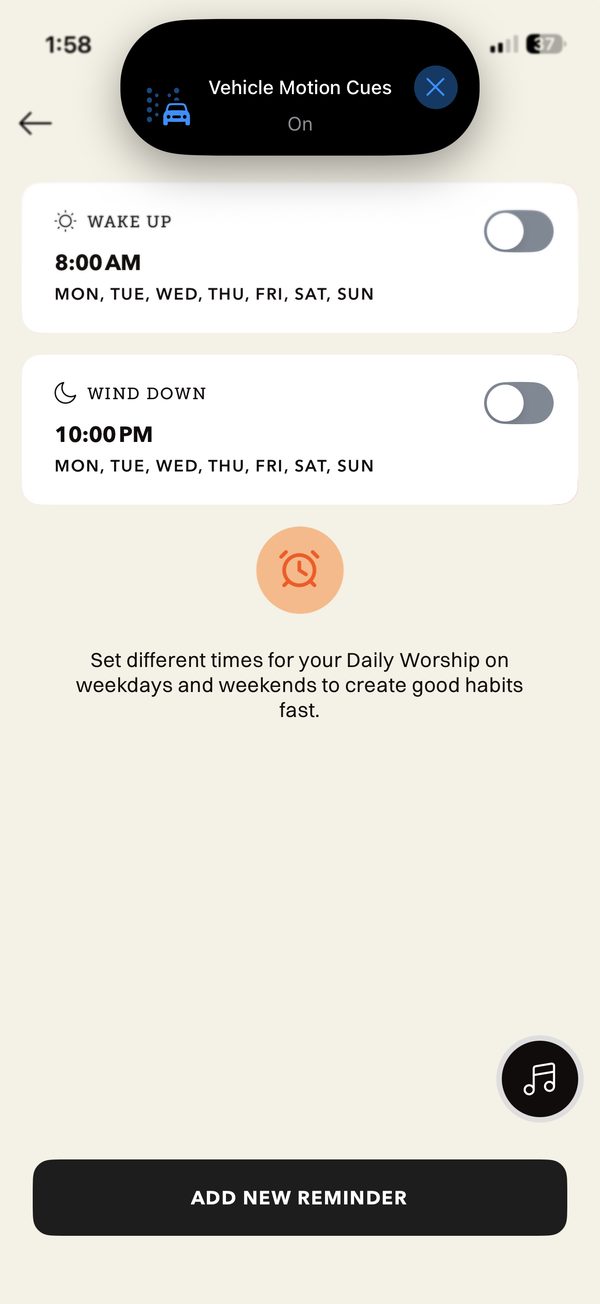
Two reminders, “WAKE UP” at 8:00 AM and “WIND DOWN” at 10:00 PM, each listing the days and with its own switch (both off), above the line “Set different times for your Daily Worship on weekdays and weekends to create good habits fast.” and an “ADD NEW REMINDER” button.
Design takeaway
Reminders the person times to their own morning and evening. “Good habits fast” frames prayer as habit-building; say instead what the time is for.
What this example establishes
Two reminders, “WAKE UP” at 8:00 AM and “WIND DOWN” at 10:00 PM, each listing the days and with its own switch (both off), above the line “Set different times for your Daily Worship on weekdays and weekends to create good habits fast.” and an “ADD NEW REMINDER” button.
Limits and further verification
A still image shows one interface state. Gestures, timing, accessibility, persistence and what happens next were not tested. App version not recorded.
Provenance
- Platform
- iOS app · device model not recorded
- Image origin
- User-contributed screenshot · resized, content unchanged
- Source or capture date
- Captured 28 August 2025 · from embedded image metadata
- Reviewed
- 6 October 2026
- Version
- Not recorded
Screenshot captured by Tobias Treppmann for his app-pattern research and supplied for this design reference. Resized for the web; content unchanged. Interface, imagery and Scripture text remain the property of their respective rights holders.
Compare the relevant patterns
Notifications and reminders
From an app that waits to be opened, through reminders the person sets, the church’s hours of prayer, a daily word and messages from people, to notifications tuned to bring people back and an AI that writes first: decide who chooses the interruption, how urgent it claims to be, what it says to someone who has been away, and what reaches someone at night.
Research-informed design proposal · draft for review105 · Habits and spiritual formationReading plans
From a plan tied to calendar dates, through a sequence that waits for the reader and a weekly rhythm, to readings that belong to each day, and streaks as a warning case: decide what a plan asks of time, and what happens when someone comes back after days away.
Research-informed design proposal