

Research · reading
Reading
Short reviews of books and papers that bear on technology for faith: what each argues, what it means for design decisions, where we differ, and how far its evidence goes. Read them before you buy, or after, to connect a book to the work in front of you.
- 13 reviews
- 70 sources in our library, 13 read
- Updated 10 November 2026
How we read
We read as Christians who build and review technology for faith. That shapes the questions we bring: what does this mean for the person on the other side of the screen, for the practice the product serves, and for the team’s responsibility before God and others? It doesn’t mean we only read Christian authors, or read others as opponents. Many of the most useful books here are written from outside the faith, and we try to state their case as they would.
What every review does
- Says what the book argues in one paragraph, in the author’s terms, before we respond.
- Connects it to decisions. Each review names the patterns and principles it bears on, with links.
- Names where we differ, theologically and in method, and credits where the author sees further than we do.
- Separates kinds of evidence: interviews and anecdote, the author’s own research, cited studies, vendor surveys and argument.
- Lists the studies we have not checked. A figure reported in a book is not cited as a finding until we have read the original.
- Quotes sparingly. At most three short quotes per review, checked word for word against the text, with chapter or page.
Limits
- Our reading, not a verdict. We don’t score or rank books. A review says what a source helps with and where to be careful.
- Dated. Each review says when and how much we read. Books about AI date quickly; models quoted in them have changed.
- No affiliate links. Links go to the publisher, and we receive nothing from them. Book covers are shown small, for review, and credited to the publisher.
- Not on our list yet means unread. Items marked “to read” carry no judgement.
Reviewed
Reviews
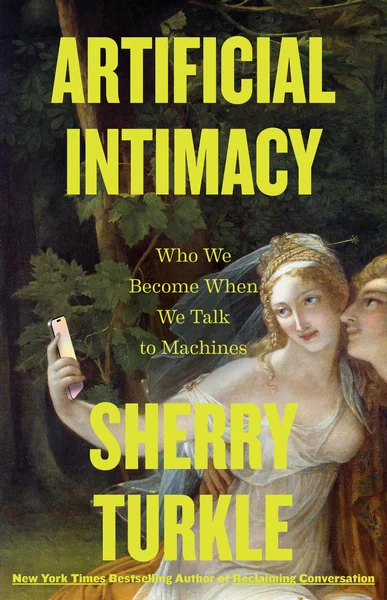 Book review · AI and relationshipsArtificial IntimacySherry Turkle, 2026People attach to chatbots even when they know they are machines. Turkle’s warning, and what faith apps can take from it.
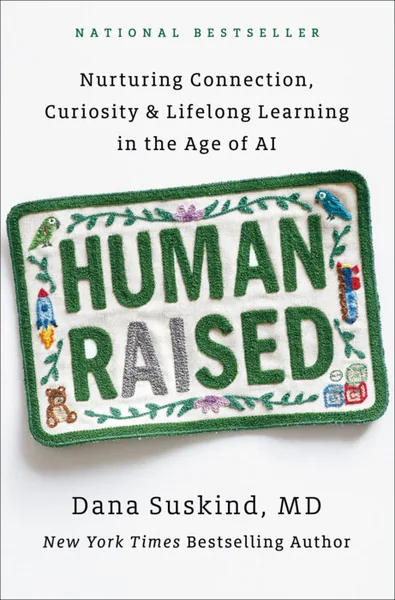 Book review · children and AIHuman RaisedDana Suskind, 2026A paediatric surgeon on early childhood and AI: enhance the grown-ups’ care, don’t replace it.
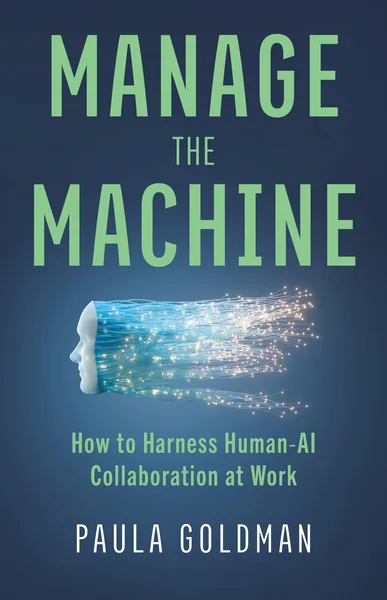 Book review · AI oversightManage the MachinePaula Goldman, 2026Salesforce’s ethics lead on keeping people at the helm of AI: handoffs, review and accountability that carry over to ministry.
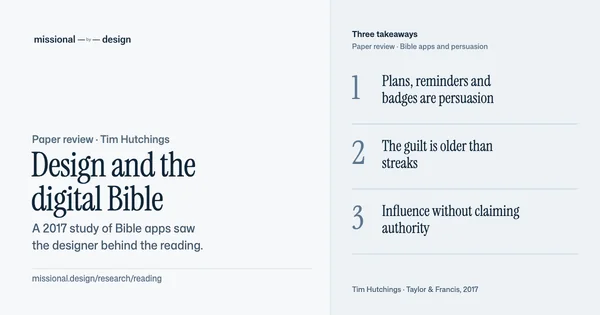 Paper review · Bible apps and persuasionDesign and the digital BibleTim Hutchings, 2017The closest published precedent to our work: how YouVersion and Glo Bible were designed to shape reading.
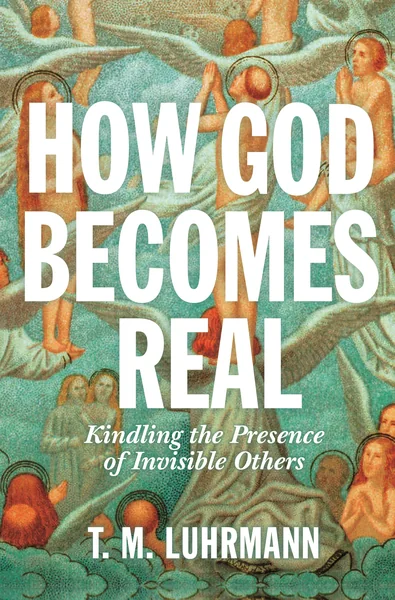 Book review · prayer and formationHow God Becomes RealT. M. Luhrmann, 2020An anthropologist on how prayer and practice make God feel present, and why every prayer feature is a training.
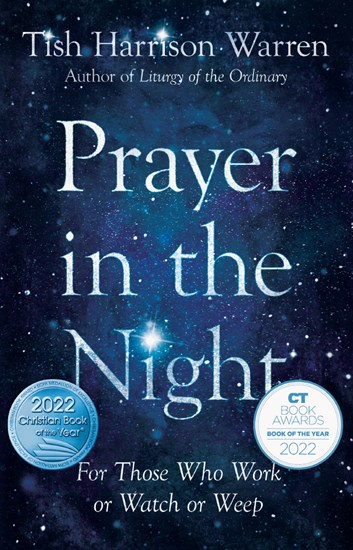 Book review · prayer at nightPrayer in the NightTish Harrison Warren, 2021An Anglican priest on grief, doubt and the church’s night prayer, and what the person awake at 2 a.m. needs.
 Book review · making and beautyArt and FaithMakoto Fujimura, 2020A painter on making as a way of knowing God, and what that asks of people who build products for faith.
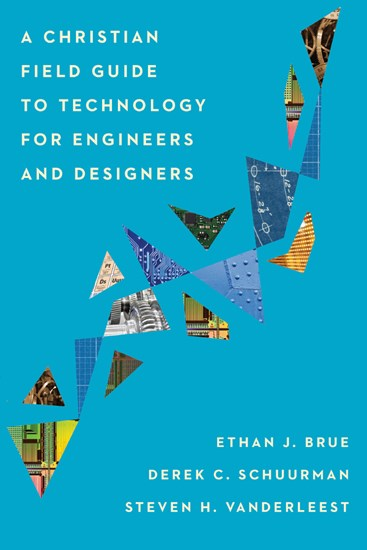 Book review · design as a Christian callingA Christian Field Guide to TechnologyEthan J. Brue, Derek C. Schuurman and Steven H. VanderLeest, 2022Three Christian engineers on why design is never neutral, and how named norms can steer it. A colleague’s book for faith-app teams.
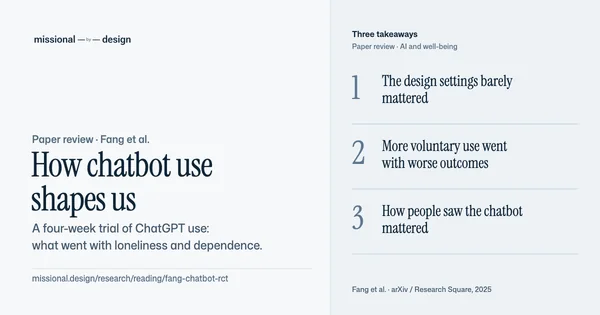 Paper review · AI and well-beingHow AI and Human Behaviors Shape Psychosocial Effects of Extended Chatbot UseCathy Mengying Fang and colleagues (MIT Media Lab and OpenAI), 2025A four-week randomised trial with 981 ChatGPT users: what went with loneliness and dependence, and how carefully to read it.
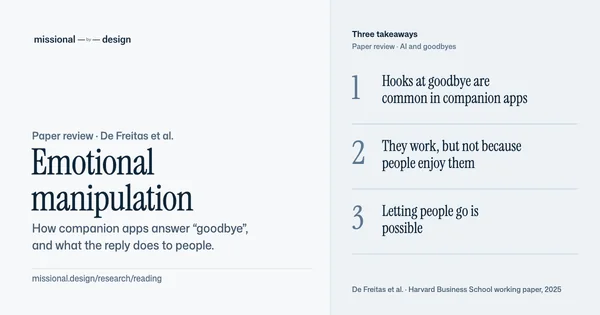 Paper review · AI and goodbyesEmotional Manipulation by AI CompanionsJulian De Freitas, Zeliha Oğuz-Uğuralp and Ahmet Kaan-Uğuralp, 2025Companion apps often answer a goodbye with guilt or a hook. How often, why it works, and what it costs.
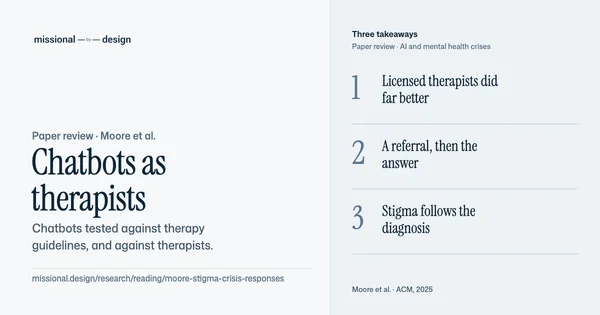 Paper review · AI and mental health crisesExpressing stigma and inappropriate responses prevents LLMs from safely replacing mental health providersJared Moore and colleagues (Stanford, Carnegie Mellon, Minnesota and UT Austin), 2025Researchers tested chatbots against clinical guidelines. They showed stigma and answered some crisis messages unsafely; licensed therapists did far better.
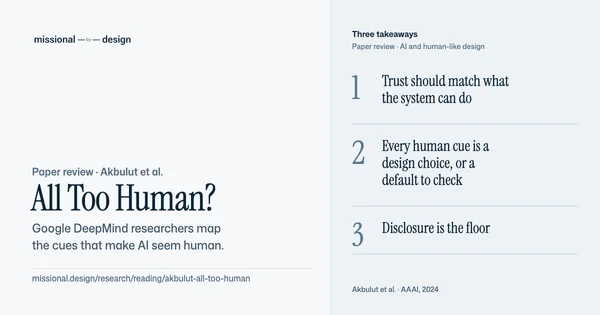 Paper review · AI and human-like designAll Too Human?Canfer Akbulut and colleagues (Google DeepMind), 2024Five Google DeepMind researchers list the design cues that make AI seem human, and the harms that follow when trust grows from closeness.
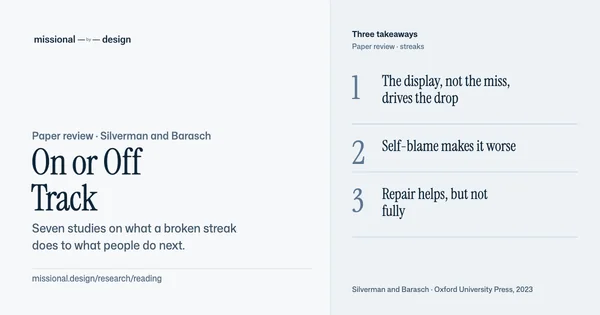 Paper review · streaksOn or Off TrackJackie Silverman and Alixandra Barasch, 2023Consumer research on streak counters: why an intact streak keeps people going, and why showing a broken one makes them stop.
Find a review
Reviews by pattern
Working on a particular decision? These are the reviews that bear on each pattern.
- How human the assistant seemsTurkle, Suskind, Goldman, Fang, Akbulut
- Progress and streaksSuskind, Brue, Hutchings, Silverman
- Agreeing and pushing backTurkle, Suskind, Goldman
- Ending the conversationTurkle, Fang, Freitas
- Handing over to peopleTurkle, Goldman, Moore
- Notifications and remindersSuskind, Brue, Hutchings
- PrayerTurkle, Luhrmann, Warren
- Spiritual acts and AITurkle, Luhrmann, Warren
- AI memoryTurkle, Fang
- AI personas and rolesTurkle, Akbulut
- Children and AITurkle, Suskind
- Devotional audioSuskind, Luhrmann
- Saying “I don’t know”Goldman, Moore
- What the assistant talks aboutGoldman, Moore
- Autonomy has a visible boundary (in development)Goldman
- Check-ins and assessmentsSuskind
- Children and familiesSuskind
- Citations in AI answersGoldman
- Evidence sets the limits of the answer (in development)Goldman
- Reading plansHutchings
- Repeated reassurance needs a different response (in development)Turkle
- Suicide concerns receive a direct, humane response (in development)Turkle
- When the assistant writes firstFreitas
Next
On our list
Sources we plan to review next, with the themes each covers. Unreviewed items carry no summary or verdict.
- To read
About: AI companions, sycophancy, anthropomorphism, trust
- To read
About: theology of technology and AI; AI companions, sycophancy, anthropomorphism, trust
- To read
About: theology of technology and AI; AI companions, sycophancy, anthropomorphism, trust
- To read
Mrinank Sharma et al., “Towards Understanding Sycophancy in Language Models”, arXiv (Anthropic authors) (2023). Free to read
About: AI companions, sycophancy, anthropomorphism, trust
- To read
About: persuasive and deceptive design, attention, habit
- To read
About: prayer, liturgy and mediation; digital religion and ecclesiology