Prayer
How can an app make room for prayer?
Every control on a prayer screen says what counts as prayer. A church’s office gives words to say, a guided outline gives steps, a list holds the people someone carries, and a quiet space asks for nothing at all. A counter asks for more. Decide which practice the surface serves, and what it asks someone to read, type, share or count. Prayer belongs to God and the one praying. The screen is only a room.
- 5 working options
- 7 app examples
- 5 takeaways
- Editorial review, not user-tested
The spectrum
From words received to no words at all
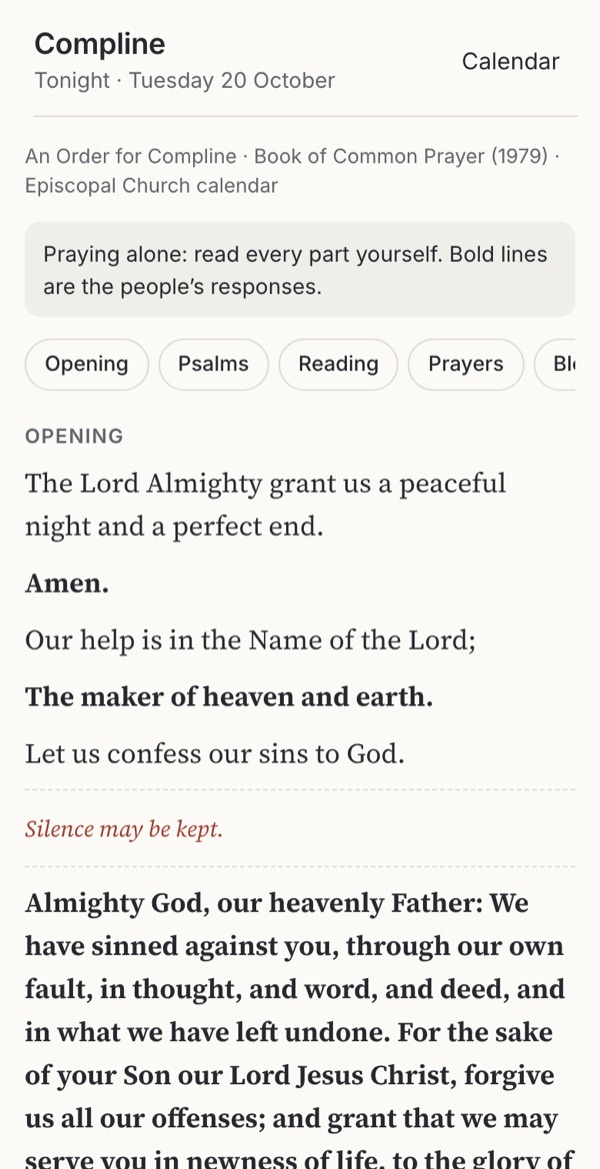 Observed Words shared with a church Needs a named calendarTry it →
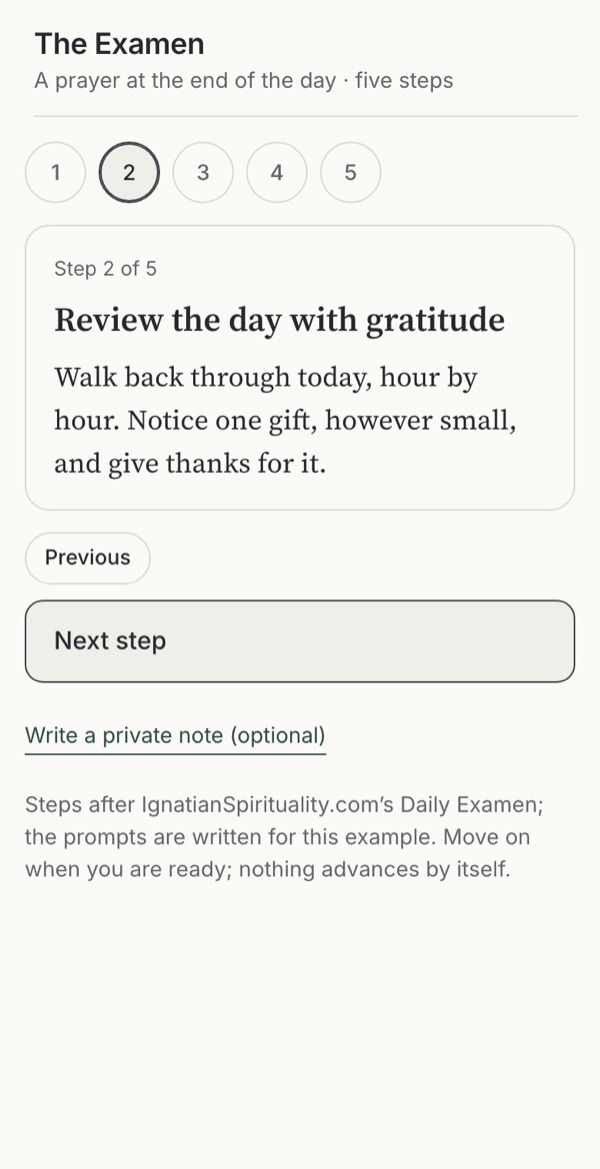 Observed A way in for beginners Prompts are someone’s wordsTry it →
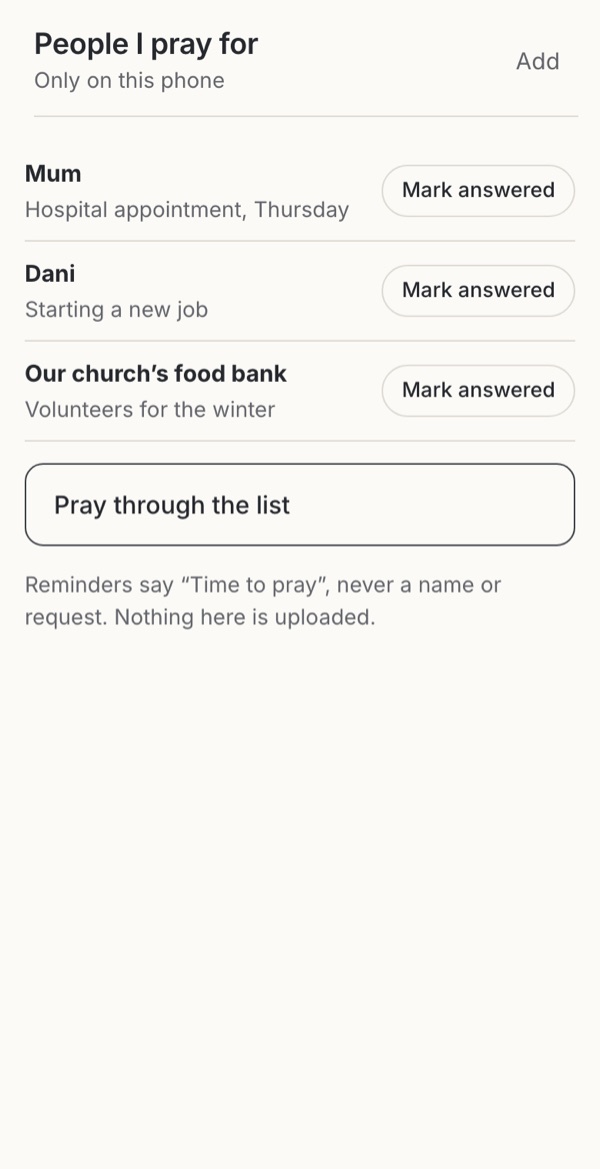 Observed Holds the people one carries The most sensitive dataTry it →
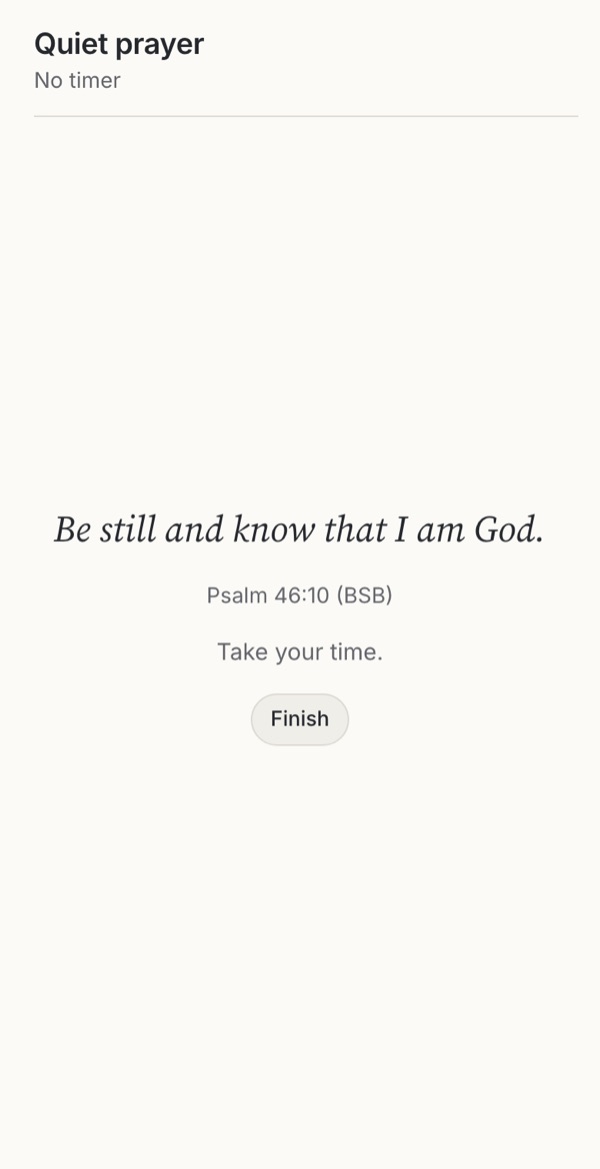 Familiar convention Nothing to fill in Little guidanceTry it →
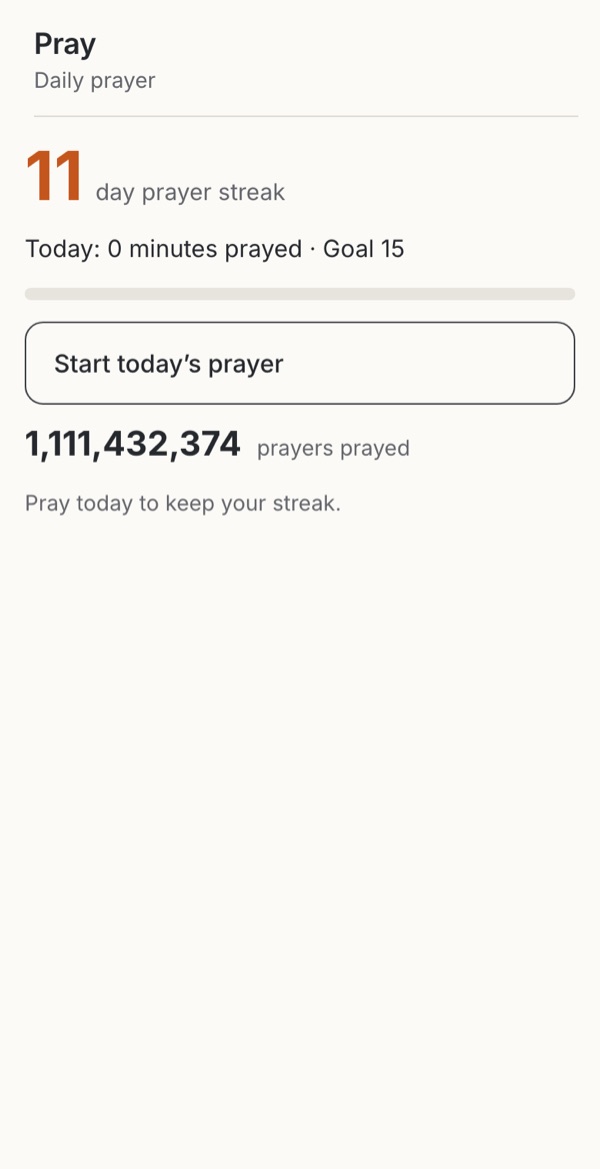 Observed Motivates while it lasts Prayer becomes a numberTry it →
Stills from the working example below. Choose one to try it.
Try it
Try five ways an app can make room for prayer
It is Tuesday evening, 20 October. Each option makes room for prayer differently, from the words of a church’s evening office to silence. Pray through each one as far as you like, then switch to praying with a group and see what changes, and what each option asks you to type, share or count.
Option
Why these settings?
Alone, the order of prayer asks the reader to say every part; with a group it labels Officiant and People, and nothing advances by itself. Guided steps give the leader a note about silence instead of collecting answers. The prayer list is private on the phone; with a group, every request names who shared it and until when. Quiet prayer with a group lets the leader end the silence. Counted prayer shows what many apps do.
Observed
1. Order of prayer
Observed in daily-office apps and sites: Hallow’s Daily Readings name the day (“Friday of the Twenty-fourth Week in Ordinary Time · Lectionary: 447”), and Lebens Liturgien opens on “Es ist Freitag Mittag”; see the screenshots below. The text here is Compline from the 1979 Book of Common Prayer.
Try this
Pray Compline, then open Calendar and look ahead to Sunday. Switch to a group and look at the labels.
Makes easier
Received words, shared with a church across a day and a year.
Costs
Needs a named tradition and accurate calendar data; unfamiliar to many.
Ask your teamWhose calendar is this, and can someone tell responses, instructions and silence apart?
Observed
2. Guided steps
Observed in guided-prayer sessions such as Pray As You Go and Hallow, which move through set stages; here the five steps of the Ignatian Examen, with prompts written for this example.
Try this
Move through the steps at your own pace. Try writing a private note, then discard it.
Makes easier
An invitation to pray, for people who do not know where to begin.
Costs
A method can feel like a form to complete; prompts are someone’s words.
Ask your teamCan someone pause, skip or finish without answering anything?
Observed
3. People I pray for
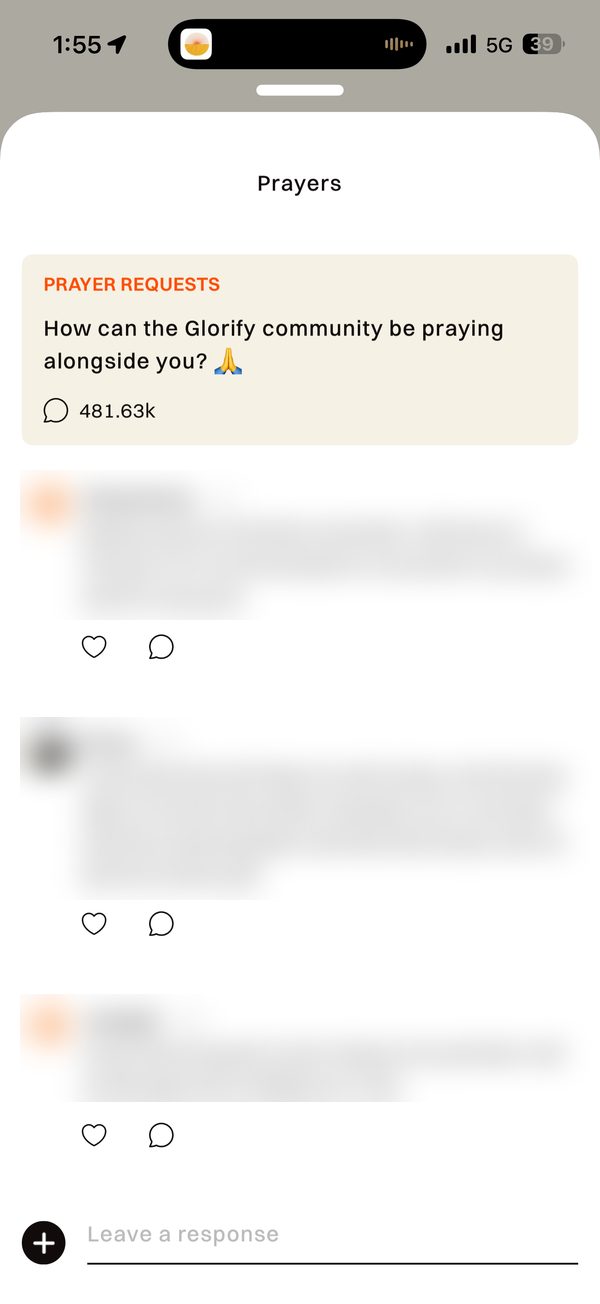
Observed in Hallow’s “Pray for an Intention” sheet and in community prayer-request feeds such as Glorify’s; see the screenshots below.
Try this
Pray through the list and mark one answered. Then switch to a group and add a request.
Makes easier
Holds the people someone carries, in their own words.
Costs
The most sensitive data an app can hold: health, family, faith.
Ask your teamWho will see this request, for how long, and did the person it is about agree?
Familiar convention
4. Quiet prayer
A familiar pattern in meditation and prayer apps: begin, put the phone down, end with a bell or by choice.
Try this
Begin without a timer, then switch to ten minutes and begin again.
Makes easier
Room for silence or one’s own words, with nothing to fill in.
Costs
Little guidance; a timer can feel like a test.
Ask your teamDoes the screen recede, and does it end without a score?
Observed
5. Counted prayer
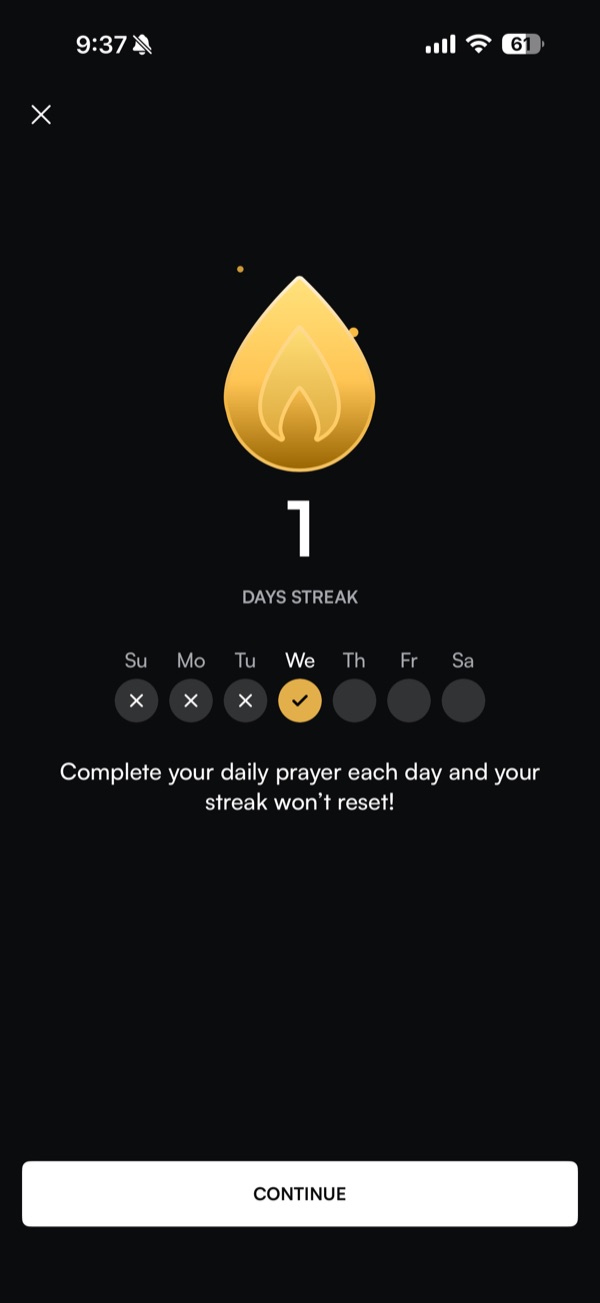
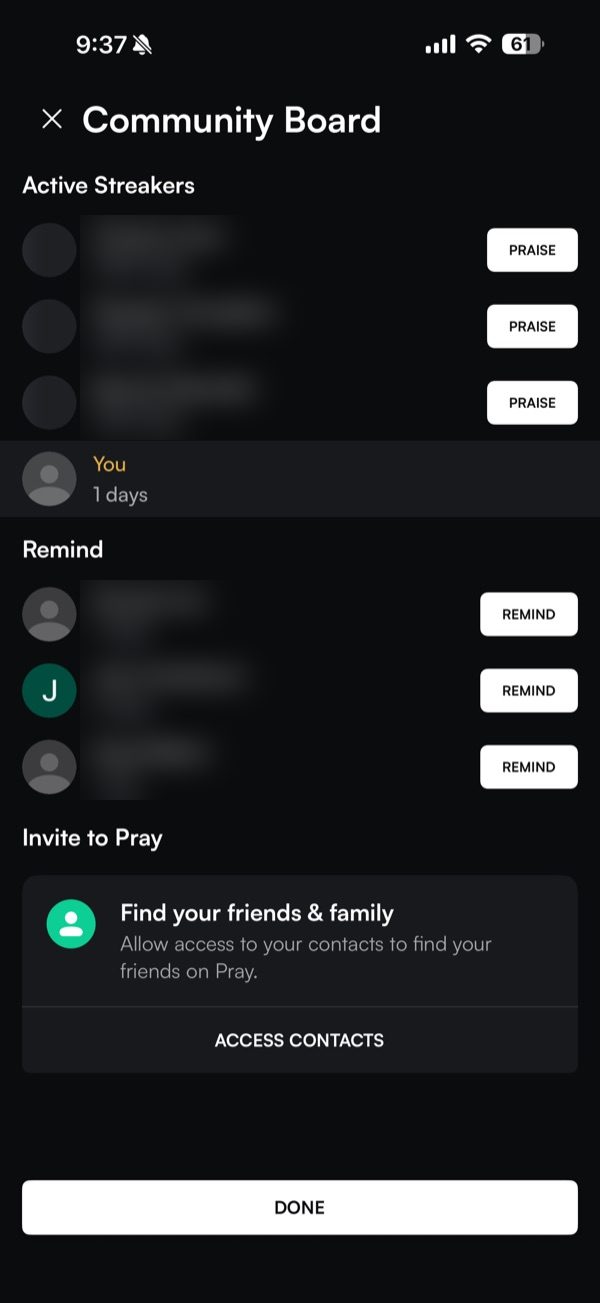
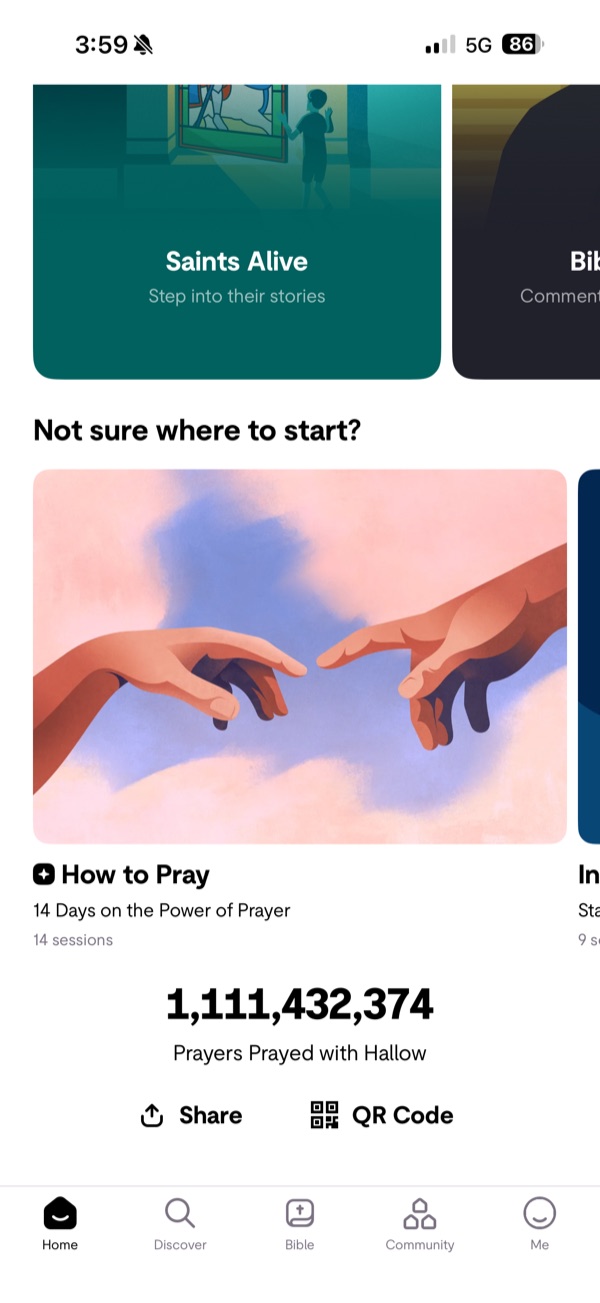
Observed in Pray.com’s prayer streak and its Community Board with Praise and Remind buttons, and in Hallow’s “1,111,432,374 Prayers Prayed” counter; see the screenshots below.
Try this
Start today’s prayer. Then switch to a group and look at the board.
Makes easier
A visible habit that motivates some people while it lasts.
Costs
Prayer becomes minutes, streaks and totals, shown to others.
Ask your teamWhat does this count teach people about prayer?
What we noticed
Takeaways
Name whose words and whose calendar
A daily office belongs to a tradition. Hallow names the day (“Friday of the Twenty-fourth Week in Ordinary Time · Lectionary: 447”); a generic “today’s prayer” hides it. Name the book, church and calendar, and let people look ahead without changing today.
Three kinds of text in one order
An office mixes instructions, the leader’s lines and everyone’s responses. The Book of Common Prayer sets rubrics in italics and marks Officiant and People, and leaves room: “Silence may be kept.” Keep all three visibly different, and never advance by itself.
Prayer requests are the most sensitive data
They name illnesses, families and doubts, often about people who never agreed to be mentioned. Mozilla gave 28 of 32 mental health and prayer apps its privacy warning. Keep requests on the device by default; for a group, name the audience and an end date first.
Not heard for many words
Jesus warned against praying “to be seen of men” and against “much speaking”; Benedict asked that prayer be “short and pure”. Measuring an activity tends to make it feel like work. Streaks, minutes and global totals measure exactly what prayer is not.
Let silence be complete
A quiet space needs no words, no timer and no score. Offer an optional end bell, let the screen recede, and finish with nothing recorded.
Use cases
Which situation, which option?
People come with different needs, sometimes in the same week. Each need fits some options better than others.
| Situation | Needs | 1 Order of prayer | 2 Guided steps | 3 People I pray for | 4 Quiet prayer | 5 Counted prayer |
|---|---|---|---|---|---|---|
| Praying the daily office | Received words for the hour | Good fit | Poor fit | Poor fit | Poor fit | Poor fit |
| Not knowing where to begin | A way in | Possible | Good fit | Possible | Possible | Poor fit |
| Carrying a sick parent | Someone to pray for | Possible | Possible | Good fit | Possible | Poor fit |
| Praying without words | Silence | Poor fit | Possible | Poor fit | Good fit | Poor fit |
| Leading a group | Prayer together, nobody exposed | Good fit | Good fit | Possible | Good fit | Poor fit |
| Preparing Sunday’s service | Looking ahead in the calendar | Good fit | Poor fit | Poor fit | Poor fit | Poor fit |
Editorial judgments drawing on the research below, not test results.
The research behind it
Theology, practice and science
Scripture and tradition
Words given, words of one’s own, and silence
Not for many words
Prayer is heard for purity of heart, not length; in community, keep it short.
An order for the night
Compline: rubrics, Officiant and People, and room for silence.
A calendar ties days to texts
Each Sunday has its collect; daily offices follow a named calendar.
An outline for the end of the day
The Examen’s five steps, after Ignatius of Loyola.
Psychology
Ways of praying, and counting
People pray in different ways
Colloquial, meditative, petitionary and ritual prayer relate differently to wellbeing, and differ across faiths.
Measuring makes it work
Counting an activity raised how much people did and lowered their enjoyment.
Privacy and law
Prayer is special-category data
Religious belief is protected
Processing needs an Article 9 condition; inferences about belief count too.
European Data Protection BoardUK Information Commissioner’s Office
Prayer apps have shared data
Mozilla’s 2022 review of mental health and prayer apps.
“Prayer is between you and God”
A prayer app that collects no personal data.
Accessibility
Pace belongs to the person
Nothing advances by itself
Anything that moves for more than five seconds needs a way to pause or stop it.
Every source, with what it can and cannot show, is listed under Go further → Sources and their limits.
Where to start
Which fits your product?
IfPeople pray with a church’s words
Start withAn order of prayer, with its book and calendar named
IfPeople want help to begin
Start withGuided steps with an outline, at their own pace
IfPeople pray for others
Start withA private list; for groups, a named audience and an end date
IfPeople want silence
Start withA quiet space with an optional bell, and nothing recorded
IfYou are tempted to count prayer
Start withDon’t: no minutes, streaks, totals or reminders to friends
These are editorial judgments from design review, not results of user testing.
In real apps
Examples in use
Attributed screenshots with dates and review limits. A screenshot shows an implementation; it does not show that it works for every audience.
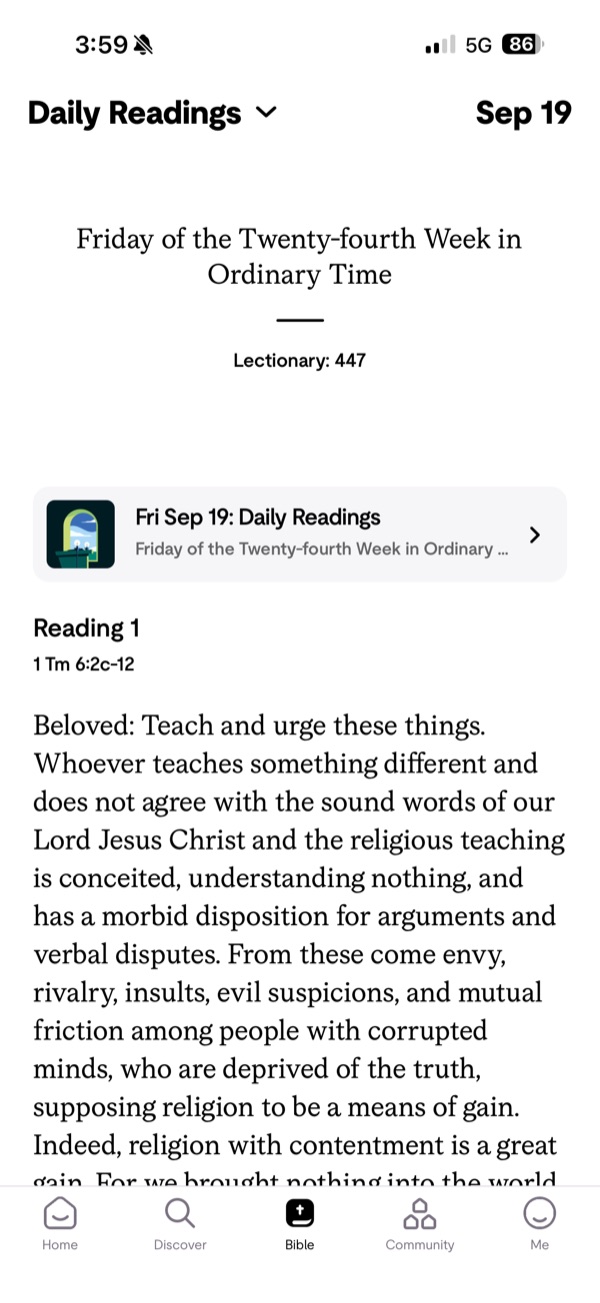 Hallow · iOS app · device model not recorded
The day named before its readings
User-contributed screenshot · resized, content unchanged
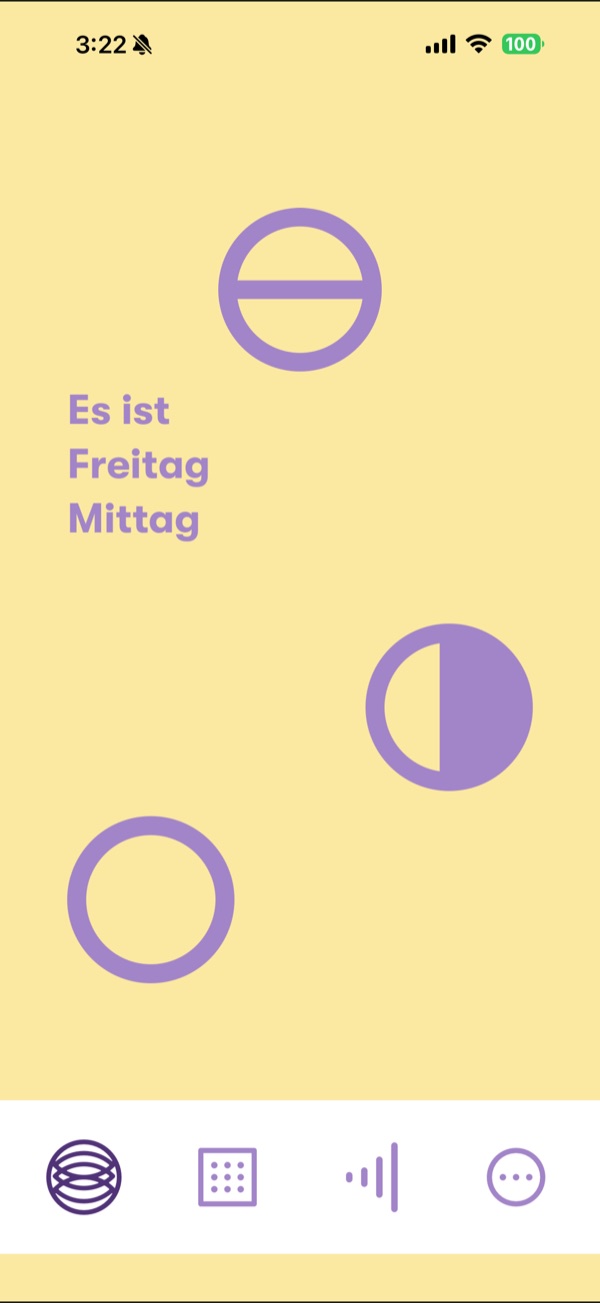 Lebens Liturgien · Mobile web · device model not recorded
“Es ist Freitag Mittag”
User-contributed screenshot · resized, content unchanged
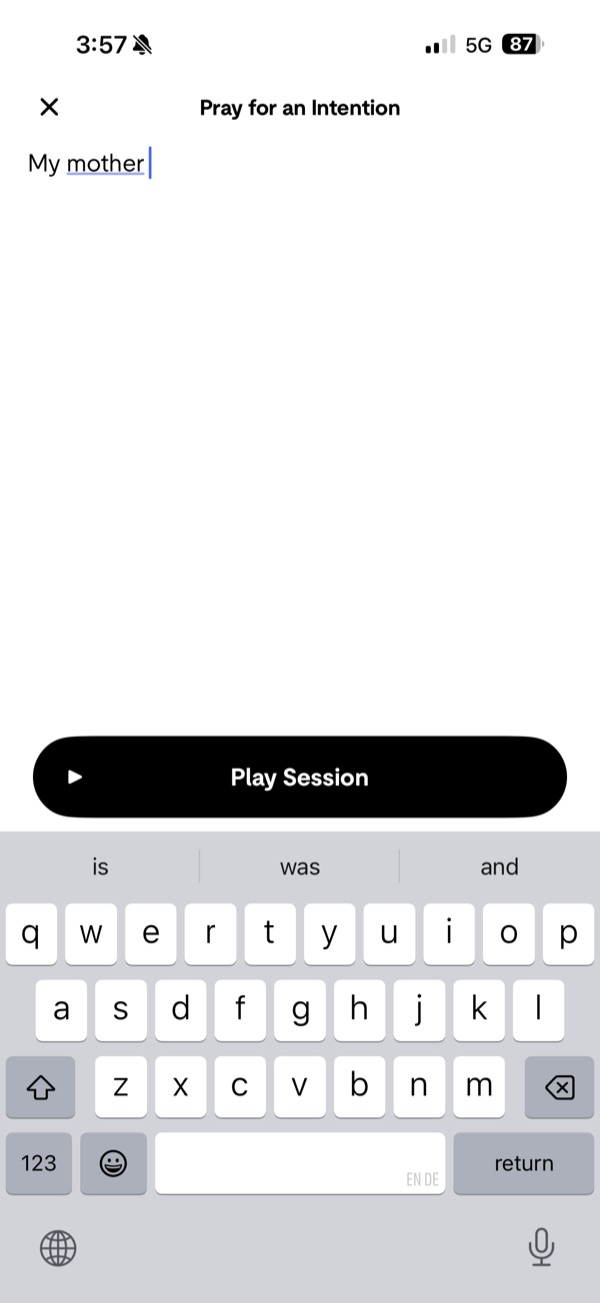 Hallow · iOS app · device model not recorded
A typed intention before a session
User-contributed screenshot · resized, content unchanged
 Pray.com · iOS app · device model not recorded
A prayer streak with missed days crossed out
User-contributed screenshot · resized, content unchanged
 Glorify · iOS app · device model not recorded
One prayer thread for the whole community
User-contributed screenshot · resized, content unchanged
 Pray.com · iOS app · device model not recorded
Praise and Remind buttons for other people’s streaks
User-contributed screenshot · resized, content unchanged
 Hallow · iOS app · device model not recorded
A running total of prayers prayed
User-contributed screenshot · resized, content unchanged
Theological reflection
What is this practice for?
What prayer is for
When the disciples asked, “Lord, teach us to pray” (Luke 11:1), Jesus gave them words. He also told them to pray to the Father “who is unseen” and warned against thinking “that by their many words they will be heard” (Matthew 6:6–7). Paul urges prayer “without ceasing” (1 Thessalonians 5:17), and the Spirit prays for us “with groans too deep for words” (Romans 8:26). Prayer is relationship with God, not output.
Where Christians differ
Some traditions pray mainly with set words, such as the daily office or the rosary; others prize extemporary prayer, and Puritans objected to prescribed prayer books. Contemplative traditions and Quaker meeting give silence the central place. Churches also differ on praying with saints and on the shape of the liturgical year. Each of these is a long and serious practice.
What follows for design
“Man sees the outward appearance, but the LORD sees the heart” (1 Samuel 16:7). An app cannot see prayer and should not count it. Name the tradition behind any words it offers, keep requests private, make silence possible, and finish with nothing recorded that the person did not choose to keep.
In conversation with
- Henri Nouwen, The Way of the Heart (1981) drew on the desert fathers to commend solitude, silence and prayer as the way of the heart, the things a busy screen most easily crowds out.
- Second Vatican Council, Dei Verbum (1965) describes prayer with Scripture as conversation: “we speak to Him when we pray; we hear Him when we read.”
Scripture is quoted from the Berean Standard Bible. This reflection is the editor’s, written from within the Christian tradition and open to correction. How we approach theology here →
Three ways to build
What would each way do here?
ExploitativeTakes from the person
Minutes, streaks and public totals; prayer requests shared with advertisers.
EthicalDoes no harm
Keep requests private by default and treat prayer as special-category data.
RedemptiveGives something up for them
Collect nothing about prayer, as Pray As You Go does, and give up the analytics; let silence end without a score.
The three ways are Praxis’s frame for redemptive entrepreneurship; their application here is ours. Why we use it, and its limits →
Take into your next review
Could someone pray here meaningfully and leave nothing for your dashboard to count?
Exercise
Ask five people how they prayed this week. Then let each pray with every option and ask what the screen expected of them, and what they would not want anyone else to see.
Build a room, not a scoreboard. What happens there is between them and God.
Record the decision with the worksheet →
Something missing or wrong here? Send a correction or suggest a topic.
Details
Go further
This deep dive brings together 2 earlier patterns. Their guidance, wireframes and sources are kept below; their old addresses lead here.
Edge cases to design for
Decide which practice the surface serves. For set prayer, show the order with its source and calendar, keep rubrics, the leader’s lines and the people’s responses visibly different, and let people look ahead without changing today. For guided prayer, show the outline, let people move at their own pace and keep any note optional and private. For people someone prays for, store requests on the device by default; for groups, name the audience and an end date before anything is shared, and ask before sharing someone else’s story. For silence, offer a complete untimed route and an optional end bell. Record nothing about prayer that the person did not choose to keep.
What tends to go wrong
A generic “today’s prayer” with no tradition named; a confession and its rubric in the same type; steps that advance by themselves; a required text field before continuing; prayer requests public by default or shown on the lock screen; marking a request “answered” automatically; minutes prayed, streaks and global totals; “Remind” buttons for friends who missed a day; sharing “I prayed 14 minutes” to social media; selling prayer data to advertisers.
How to test it
Pray each surface without typing, recording or sharing anything, and ask what the app expected of you. Ask people to tell a response from an instruction in the office, and to name the calendar. Add a request for a group and ask who will see it and until when. Sit in silence with and without a timer. Check what is stored and sent with a network inspector.
Earlier pattern: Make room for prayer
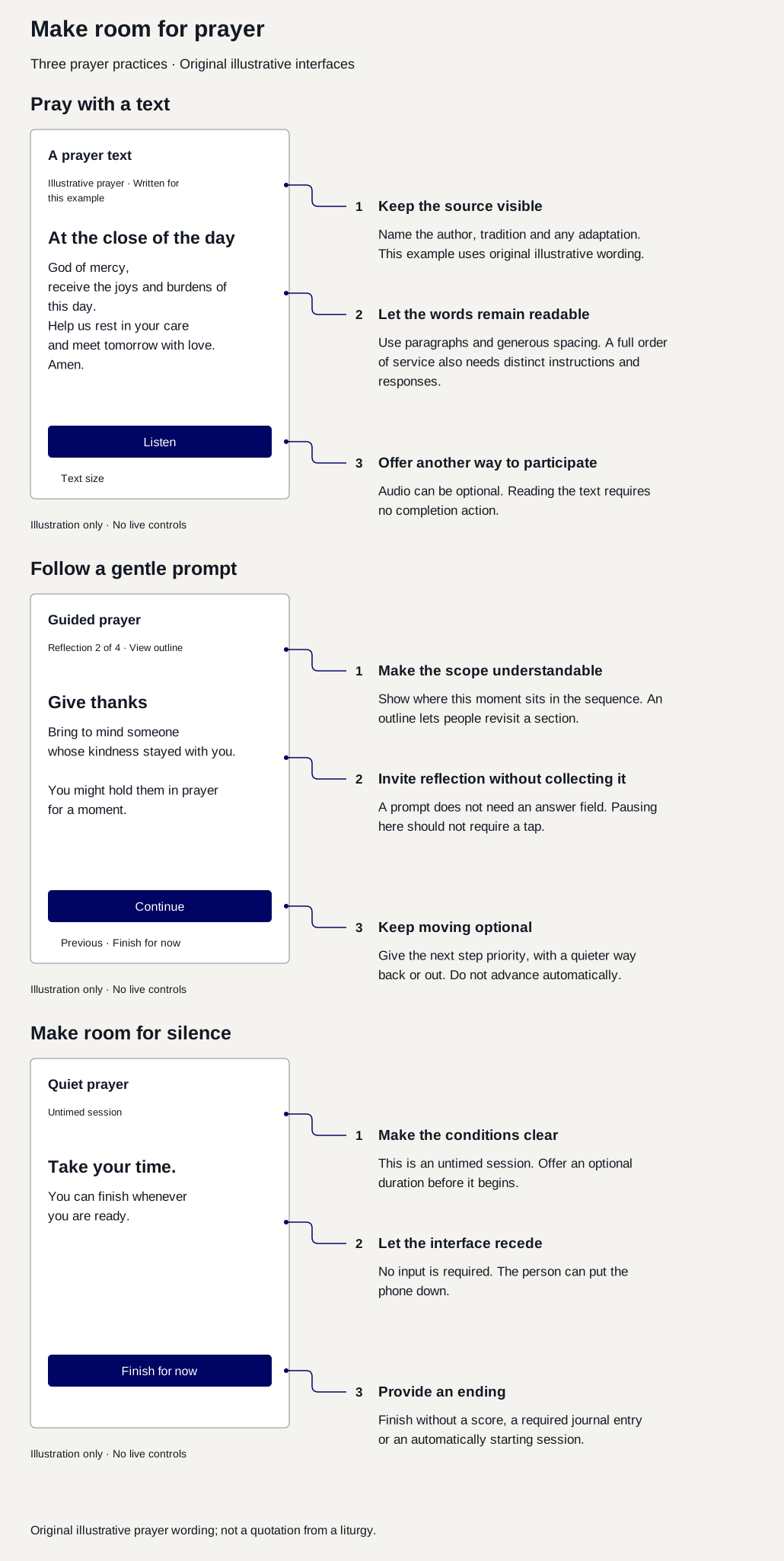
Compare a prayer text, a guided sequence and a quiet space without requiring personal input.
Guidance
Identify the prayer’s source, author or tradition and any adaptation. For set forms, keep instructions and responses distinguishable, with adjustable text and optional audio. For guidance, show an outline and let people pause without requiring written answers. For silence, offer an optional timer or end cue with a complete untimed route. Request lists and journals are separate, optional functions with explicit storage, deletion and sharing rules. Playback should not activate a microphone; generated wording requires clear provenance and review before saving or sharing.
What tends to go wrong
Requiring a typed prayer to continue; claiming an AI response speaks for God; marking a request answered automatically; treating minutes or taps as prayer quality; uploading dictated prayer without clear choice; exposing a request on a lock screen.
How to test it
Pray from a set text at large type, pause a guided sequence, and finish a silent session with no timer. Confirm that no recording or entry is required. If journalling is offered, test save, discard, deletion and audience understanding with synthetic content.
Sources
- Daily Prayer app and podcastOfficial search-index excerpts reviewed 5 October 2026; full-page fetch blocked · Documented overview only; no live app capture or exhaustive liturgical rules review.
- Android: Guided PrayerOfficial help page reviewed 5 October 2026 · Product precedent, not validation of the proposed interfaces.
Earlier pattern: Orient within a liturgical calendar
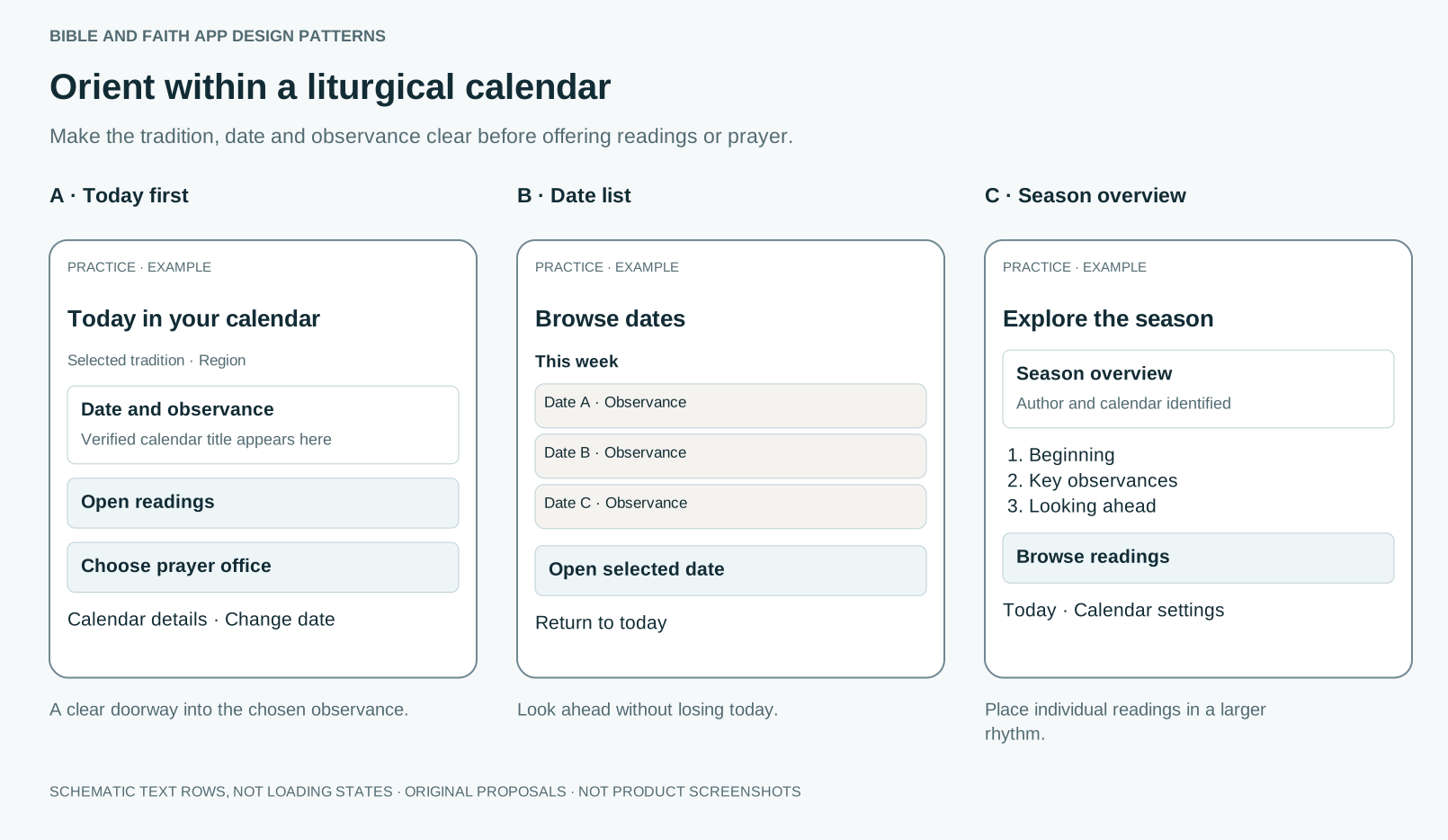
Make the tradition, date and observance clear before offering readings or prayer.
Guidance
Name the calendar and jurisdiction, service or office, civil date and source. Persist an explicitly chosen calendar without inferring belief from location. Separate browsing another date from changing today. Use authoritative calendar data and review tradition-specific rules for transfers, precedence, optional observances and evening boundaries. If a source offers alternatives, name them rather than silently choosing. Cache a versioned date range and disclose unavailable or stale data.
What tends to go wrong
Treating one tradition’s calendar as universal; silently switching calendars on travel; substituting ordinary readings for an unavailable observance; using liturgical colour as the only identifier; showing missed feasts as overdue tasks.
How to test it
Check representative movable and fixed observances, competing observances and year boundaries against the named authority. Test a date link while travelling, offline access outside the cached range, large text and return to today. Have a knowledgeable reviewer verify the supported tradition and locale.
Sources
- Liturgical Calendar for the Dioceses of the United StatesOfficial search-index excerpts reviewed 5 October 2026; full-page fetch blocked · US Catholic scope; not a universal calendar or implementation specification.
- Daily Prayer app and podcastOfficial search-index excerpts reviewed 5 October 2026; full-page fetch blocked · Documented overview only; no live app capture or exhaustive liturgical rules review.
Sources and their limits
Research-informed design proposal. Editorial review, not user validation.
- The Rule of Benedict, chapter 20: reverence at prayerChapter reviewed · A monastic rule for a community.
- An Order for ComplineText reviewed · One tradition’s office; other churches order night prayer differently.
- Collects: Season after Pentecost (contemporary)Text reviewed · One church’s calendar.
- How can I pray? The Daily ExamenPage reviewed · A modern adaptation; Ignatius’s own five points in the Spiritual Exercises differ in wording.
- Daily Prayer app and podcastOfficial search-index excerpts reviewed 5 October 2026; full-page fetch blocked · Documented overview only; no live app capture or exhaustive liturgical rules review.
- Liturgical Calendar for the Dioceses of the United StatesOfficial search-index excerpts reviewed 5 October 2026; full-page fetch blocked · US Catholic scope; not a universal calendar or implementation specification.
- Poloma and Pendleton’s (1989) Prayer Types Scale in Christian, Jewish, and Muslim praying adultsAbstract reviewed · Self-report survey; correlations, not effects of apps.
- The hidden cost of personal quantificationAbstract reviewed · Leisure activities in experiments, not prayer.
- A meta-analytic review of experiments examining the effects of extrinsic rewards on intrinsic motivationAbstract and reward distinctions reviewed 5 October 2026 · Not a blanket effect of gamification, a Bible-app trial or a one-month threshold.
- Top mental health and prayer apps fail spectacularly at privacy, securityReport summary reviewed · A 2022 review; apps’ practices may have changed since.
- Pray As You Go privacy policyPage reviewed · The same policy says anonymous navigation and error data may be stored by Google Firebase.
- Process personal data lawfullyOfficial guidance reviewed · Specific lawful basis, retention and DPIA decisions require the actual data flows.
- What is special category data?Categories and inference guidance reviewed · Context and processing intent matter; not every Bible-page visit automatically establishes a belief.
- Android: Guided PrayerOfficial help page reviewed 5 October 2026 · Product precedent, not validation of the proposed interfaces.
- Understanding SC 2.2.2: Pause, Stop, HideSpecification guidance reviewed · A Level A criterion for web content; apply the same intent in native apps.
Faith and interpretation
Jesus told his disciples to pray to the Father “who is unseen”, not “to be seen by men”, and warned against thinking “that by their many words they will be heard” (Matthew 6:5–7); when they asked, “Lord, teach us to pray”, he gave them words (Luke 11:1–4). The early church “devoted themselves … to prayer” together (Acts 2:42), and the Spirit helps “with groans too deep for words” when we do not know what to pray (Romans 8:26). Received words, one’s own words and silence all belong to Christian prayer. Benedict wrote that “we are heard not for our many words but for our purity of heart”, and asked that prayer be “short and pure”. An app cannot tell whether someone prayed, and should not pretend to count it.