

HelloBible · User-contributed screenshot · resized, content unchanged
“What is your gender?” with a reason and an opt-out
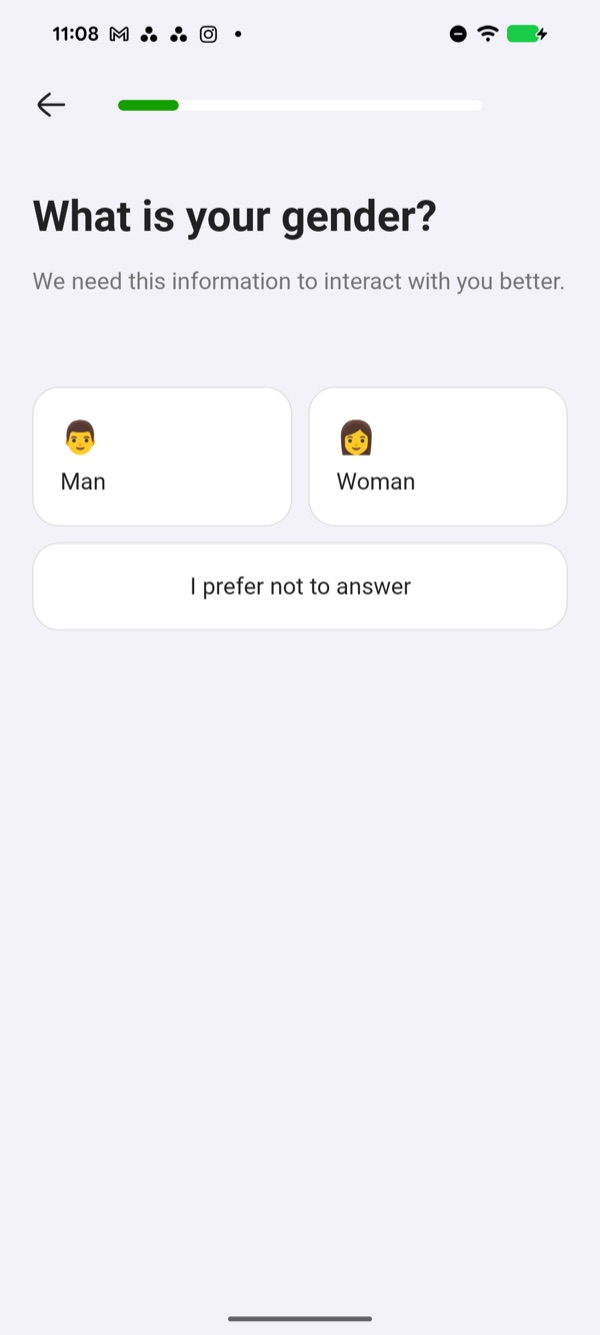
The first onboarding question, under a progress bar, asks “What is your gender?” and explains: “We need this information to interact with you better.” Options are Man, Woman and “I prefer not to answer”. The next question asks “What would you like me to call you?”.
Observed in HelloBible: app profile, research screenshots and design review.
Design takeaway
Giving a reason and an opt-out is good practice. Say more precisely what the answer changes; “to interact with you better” could mean almost anything.
What this example establishes
The first onboarding question, under a progress bar, asks “What is your gender?” and explains: “We need this information to interact with you better.” Options are Man, Woman and “I prefer not to answer”. The next question asks “What would you like me to call you?”.
Limits and further verification
A still image shows one interface state. Gestures, timing, accessibility, persistence and what happens next were not tested. App version not recorded.
Provenance
- Platform
- Android app · Pixel 8 Pro
- Image origin
- User-contributed screenshot · resized, content unchanged
- Source or capture date
- Captured 8 October 2026 · from embedded image metadata
- Reviewed
- 6 October 2026
- Version
- 2.7.2
Captured by the editor for this design reference during a signed-out onboarding, without accepting the terms. Resized for the web. Interface remains the property of HelloBox.
Compare the relevant patterns
Check-ins and assessments
From a few setup questions that only shape what the app suggests, through a daily check-in, a gifts inventory and a church survey, to a spiritual score as a warning case: decide what each question is for, what is kept, who sees a result, and how much the result claims to know.
Research-informed design proposal128 · Conversation and contentMeeting the person where they are
From the same answer for everyone, through reading the message in front of it, asking before assuming and preferences the person sets, to assumptions shown within one conversation and a remembered profile of someone’s faith: decide how the assistant tells a sceptic from a believer, and what it may keep about where they stand.
Research-informed design proposal · draft for review