Soultime · User-contributed screenshot · resized, content unchanged
“With God I’m feeling”
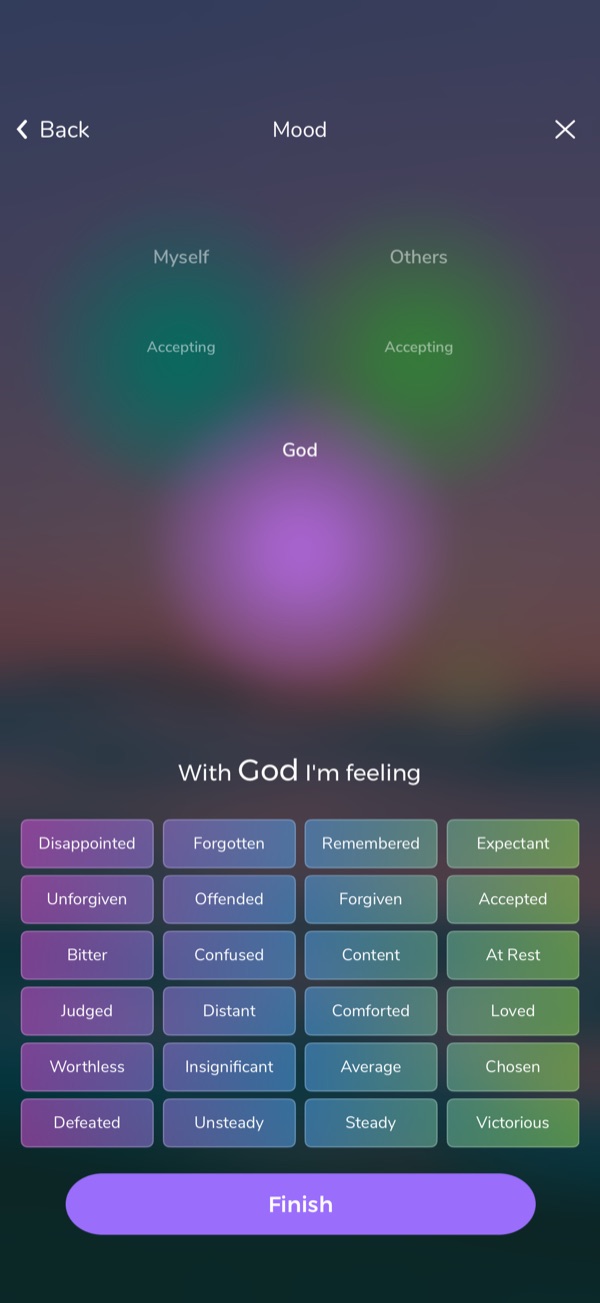
The third step of a mood check-in shows three glowing orbs for Myself, Others and God, and a grid of 24 feeling words for God (Forgotten, Remembered, Forgiven, Distant, Content, Chosen, Victorious and others). “Forgiven” is selected; words that don’t fit with it are dimmed. A Finish button sits below.
Design takeaway
Naming how one is with God echoes the Examen. Words like Forgiven or Chosen are theological claims as well as feelings; say who chose them, and keep the answers private.
What this example establishes
The third step of a mood check-in shows three glowing orbs for Myself, Others and God, and a grid of 24 feeling words for God (Forgotten, Remembered, Forgiven, Distant, Content, Chosen, Victorious and others). “Forgiven” is selected; words that don’t fit with it are dimmed. A Finish button sits below.
Limits and further verification
A still image shows one interface state. Gestures, timing, accessibility, persistence and what happens next were not tested. App version not recorded.
Provenance
- Platform
- iOS app · device model not recorded
- Image origin
- User-contributed screenshot · resized, content unchanged
- Source or capture date
- Captured 28 August 2025 · from embedded image metadata
- Reviewed
- 6 October 2026
- Version
- Not recorded
Screenshot captured by Tobias Treppmann for his app-pattern research and supplied for this design reference. Resized for the web; content unchanged. Interface, imagery and Scripture text remain the property of their respective rights holders.