Decision guide
Listening
Can the practice continue when the screen goes dark?
Someone starts a psalm on the way home, locks the phone and puts it away. A call comes in, the bus stops, they reach the door. For listening to work, every one of those moments has to work without looking at the screen, and the ending has to let the phone disappear.
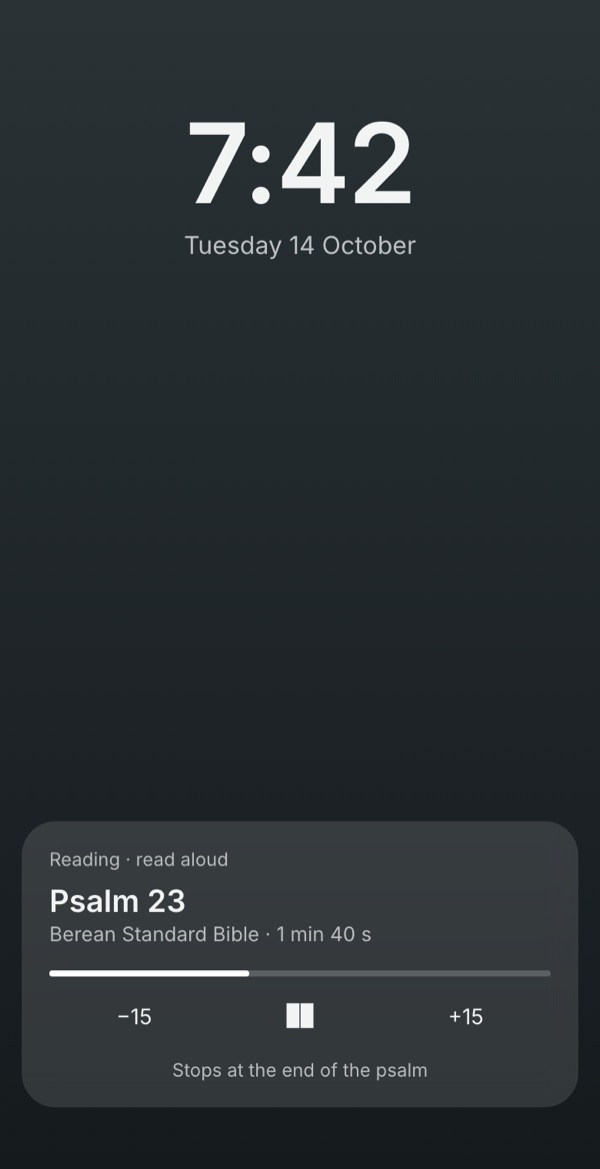 1Screen off: the reading continues and stops at the end
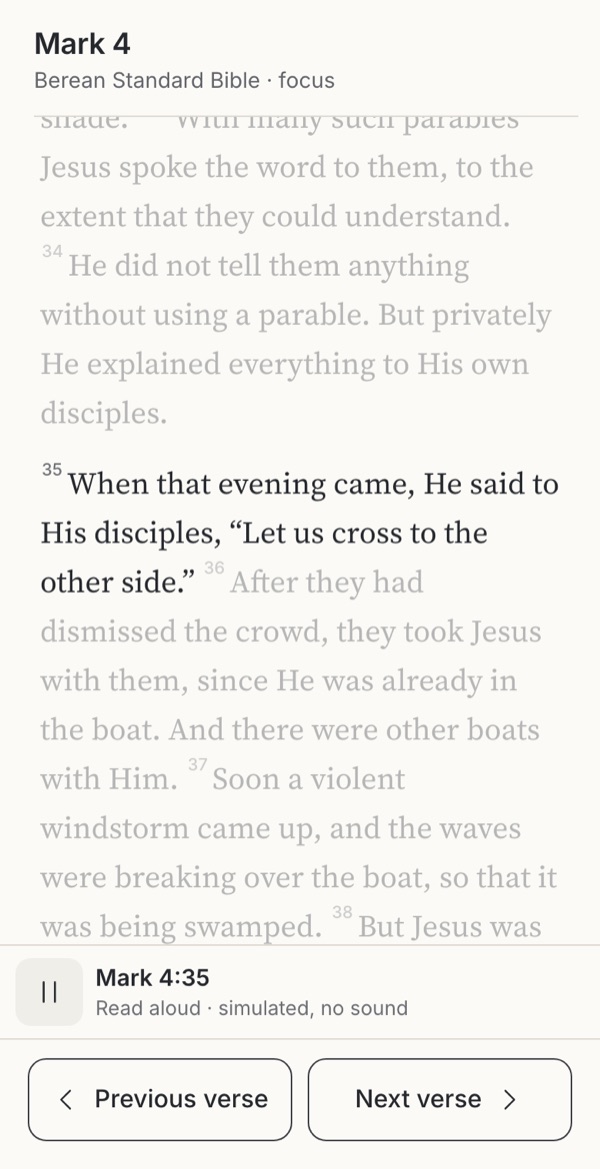 2Back on screen: the text follows the voice
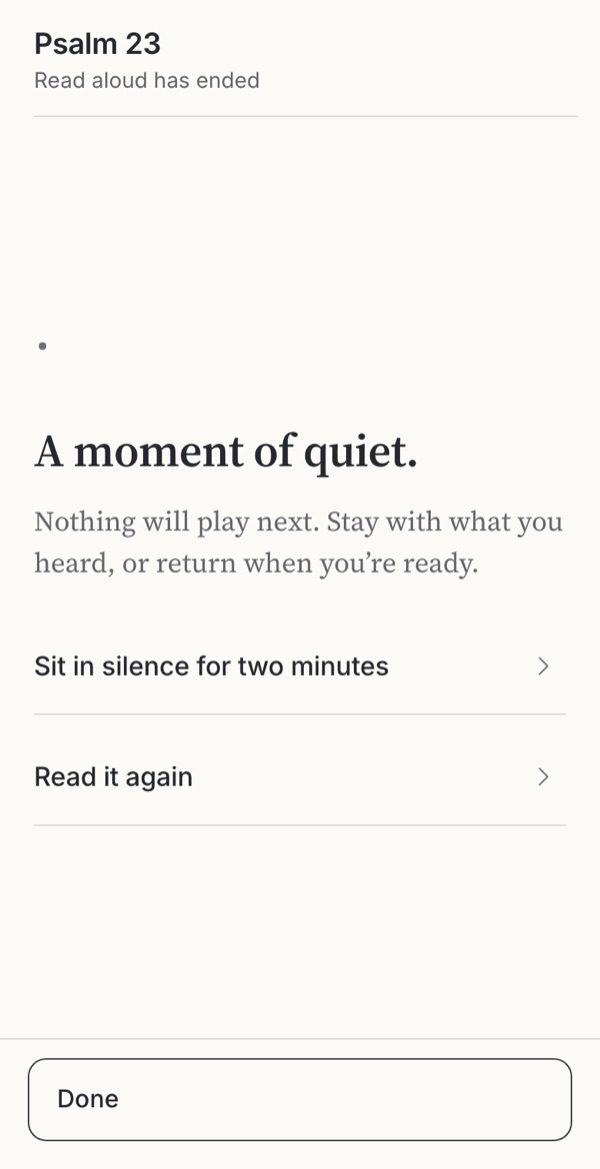 3The ending: silence instead of autoplay
- 4 decisions
- One question for your next review
- Editorial guidance, not user-tested
Make listening complete without the screen
Listening should never depend on watching a progress animation. Support background playback and the device’s own controls, recover cleanly after a call or when headphones disconnect, and remember the position and edition. For people who can’t or don’t want to listen, a transcript or the text itself is part of the same experience, not an extra.
PatternThe player works without the screenReading along is optional company
Highlighting words as they are spoken can help, but only at the precision the recording really supports; a highlight that drifts is worse than none. Let readers scroll ahead or back without dragging the narrator with them, and give them an obvious way to rejoin the audio.
PatternPlayback and reading positions can differTell chosen silence from a stalled player
A pause for reflection and a frozen stream look the same from the outside. Make it clear when silence is intended, and keep background music or ambience as something people choose, not a default that fills every gap.
Let it end
Stop at the passage or practice the person chose. Offer to repeat it or listen further, but don’t start either automatically. A quiet ending, with the phone back in a pocket, can be the best outcome the product has.
Take into your next review
Can the practice continue, and end, when the screen is off?
Exercise
Start a passage, lock the device, take a call, resume, read elsewhere in the text and rejoin the narrator. Then let it finish and check that nothing else begins. Try it with headphones, with large text, with a transcript and with no background music.
Details
Go further
Where these proposals come from
The Kairos manuscript (Tobias Treppmann, Digital Spiritual Formation: The Aperto Vision, Draft 4; selected sections on reading, engagement, multimodal and communal formation, incentives and honest assessment reviewed 5 October 2026) motivates these proposals. It is not an effectiveness study, and it does not show that audio produces more spiritual growth. The full manuscript and bibliography are not published or comprehensively reviewed here.
For reminders and when to stop asking for attention, see attention, reminders and enough. For all the audio patterns, see audio and guided practice.