Decision guide
Context around the passage
How much context does a reader need around the passage?
A daily reflection, a reference looked up mid-conversation and a sermon in preparation can all begin at Mark 3:5. The first wants one passage and some quiet. The second wants to land on the right verse. The third wants the whole chapter, two translations and the notes. The same verse needs three different screens.
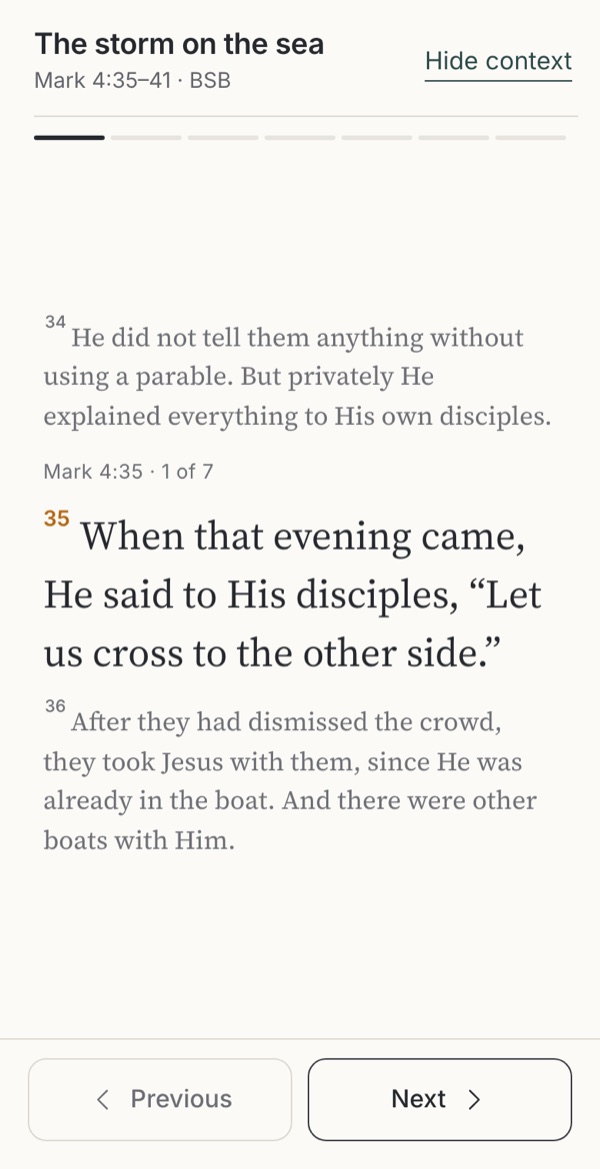 1A single verse: an easy way in
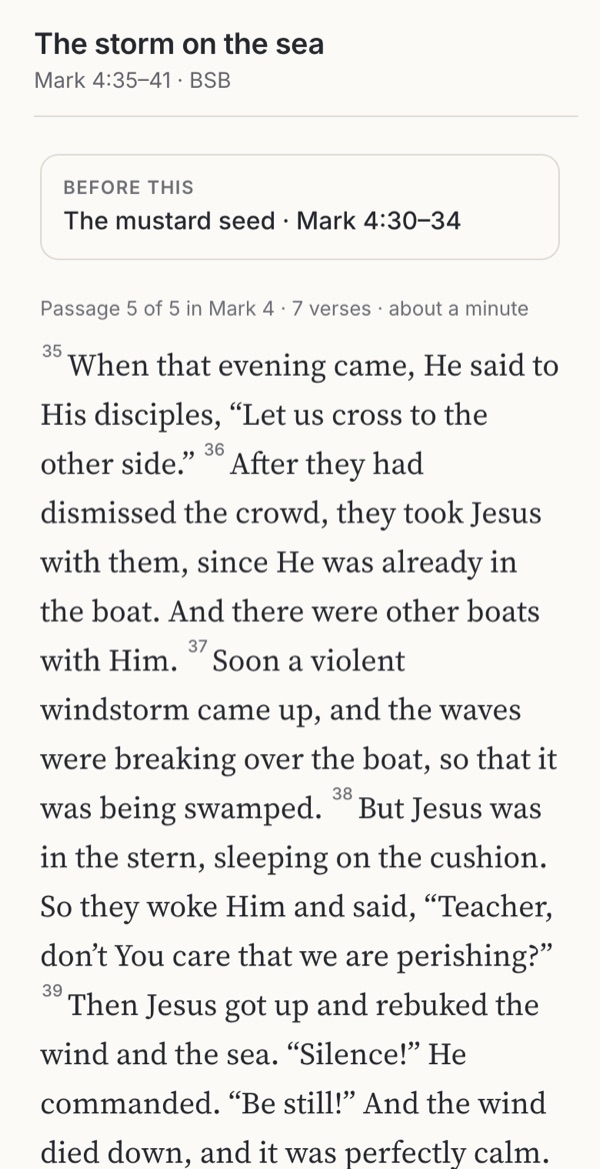 2The passage it belongs to
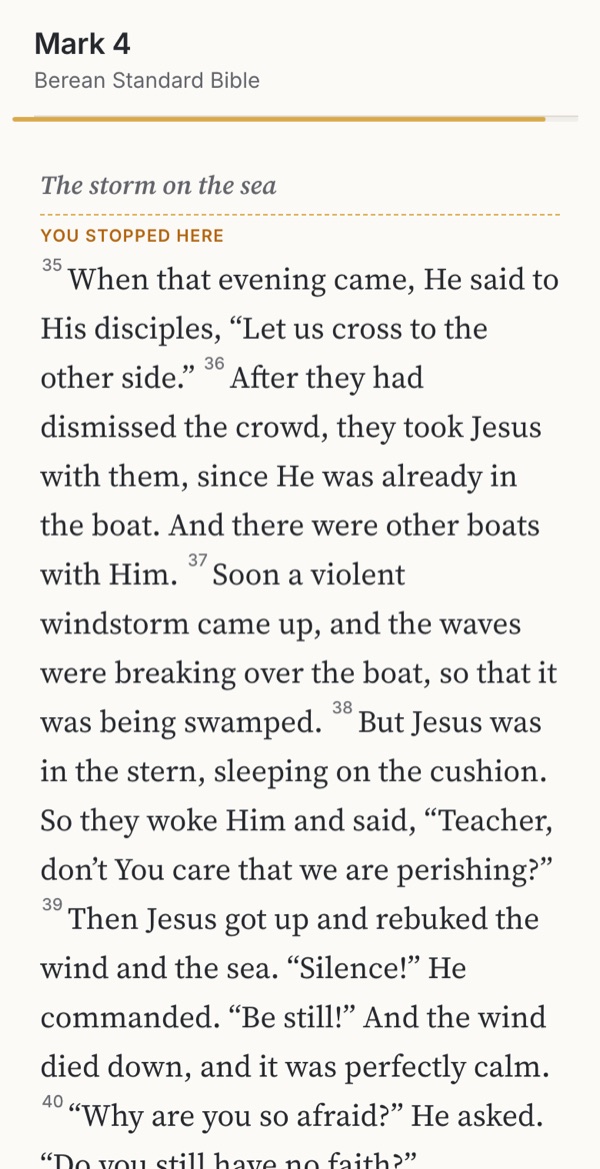 3The whole chapter, when context matters
- 3 decisions
- One question for your next review
- Editorial guidance, not user-tested
Choose the reading unit by the task
A bounded passage suits a focused encounter: a devotional, a shared verse, a reflection that should be allowed to end. Continuous text suits sustained reading. Close study needs comparison, notes and room. None of these is the serious one; they serve different moments, sometimes for the same person on the same day.
Whatever the unit, keep wider context one deliberate step away. A bounded passage without a route to its chapter quietly decides how much of the story someone is allowed to see.
PatternA bounded passage with a route to wider contextLand in the right place, and keep it
When someone opens a reference, show where they have landed: scroll to the verse and mark it briefly. Keep that anchor when they change translation, open a footnote or come back from somewhere else. Losing someone’s place is one of the quickest ways to make a reading app feel careless.
PatternA reference opens at a deliberate destinationGetting to the passage in the first place is its own journey; see how someone finds the passage they are looking for.
Keep Scripture, notes and explanations distinct
Let people preview a note before a study panel takes over the screen. When notes appear, say whose they are: the translators’ footnotes, a publisher’s commentary and an AI-generated explanation carry different kinds of authority and should never look like the text itself.
Comparing translations works differently on a phone and a desk. A side-by-side layout that suits a laptop can crowd a small screen; alternating verses or a second pane on demand may serve better.
PatternParallel reading chooses a useful arrangementTake into your next review
What does this person need to understand or find, right now?
Exercise
Ask one person to open a shared passage, change translation, look at a footnote and return. Ask another to compare two editions while preparing to teach. Watch for lost places, labels people misread and context they went looking for and could not find.
Getting around easily is not yet evidence that anyone understood what they read; ask about that separately.
Details
Go further
What the research says, and what it doesn’t
- The Habits and Hermeneutics of Digital Bible ReadersPublished abstract reviewed; author discussion reviewed separately. Population and study context limit how far this transfers. An abstract-level review does not establish causal effects or a preferred passage length.
- Americans’ Bible reading (August 2024 survey, published 2025)Methods and reading-approach results reviewed. US online self-report with a weighted sample of 1,200; the approach question was limited to the 1,137 who had read any Bible, and multiple selections were allowed.
For engagement measures and their limits, see reading research. For a real comparison layout, look at YouVersion’s two editions with independent selectors.