


Bible Chat
A conversational Bible app with AI-assisted questions and devotional features.
For People seeking conversational help with Scripture and Christian life.
App StoreOfficial websiteAudience source
- Platform
- iOS
- Category
- Reference
- First release
- 11 May 2023
- Store ratings
- 368,439 (US)
- Research captures
- 87
See how Bible Chat answered in our faith chat comparison, beside other chat apps asked the same questions.
Design review
Observed choices, what they mean, and what still needs checking.
Access & cost
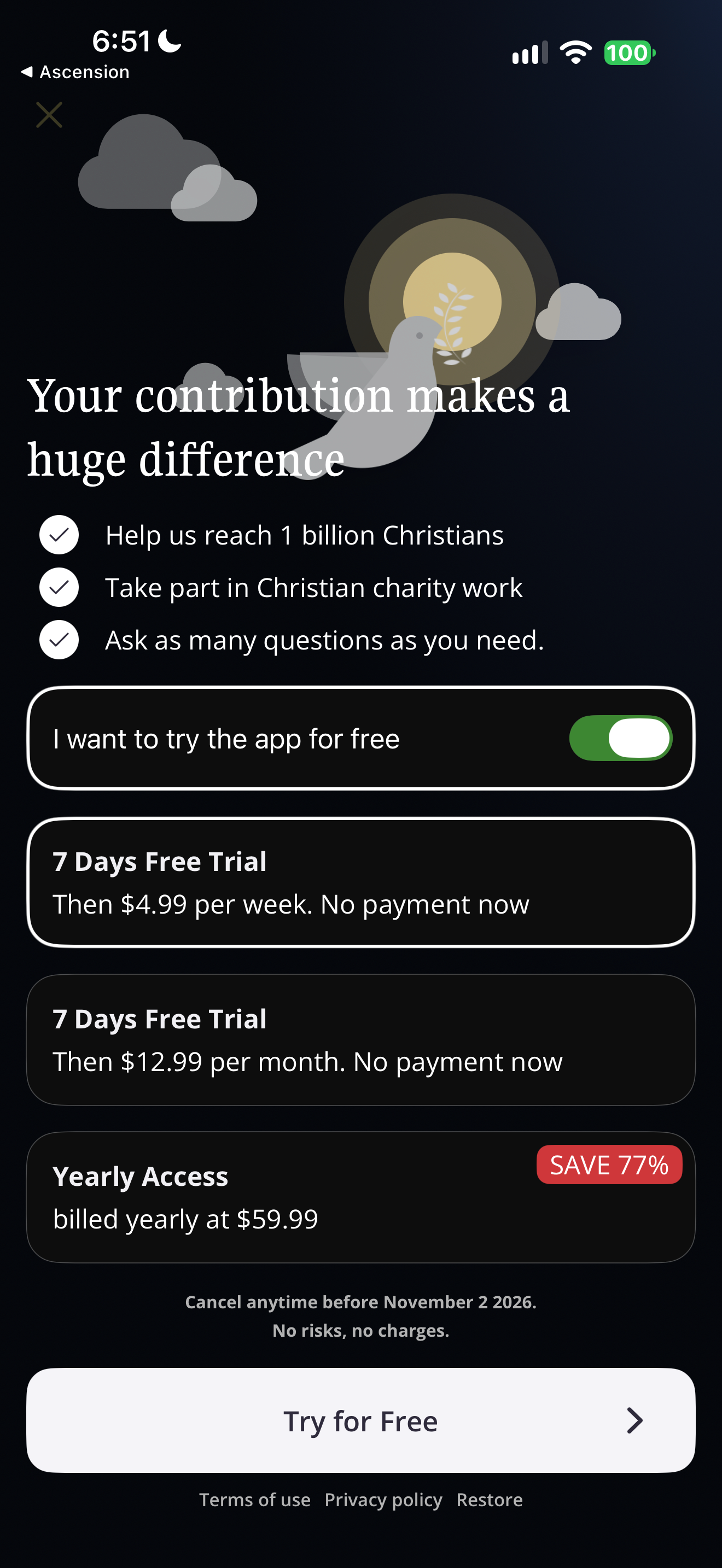
7-day trials at $4.99/week or $12.99/month; annual access is $59.99/year.
Captured flow · 27 October 2026Attention & control
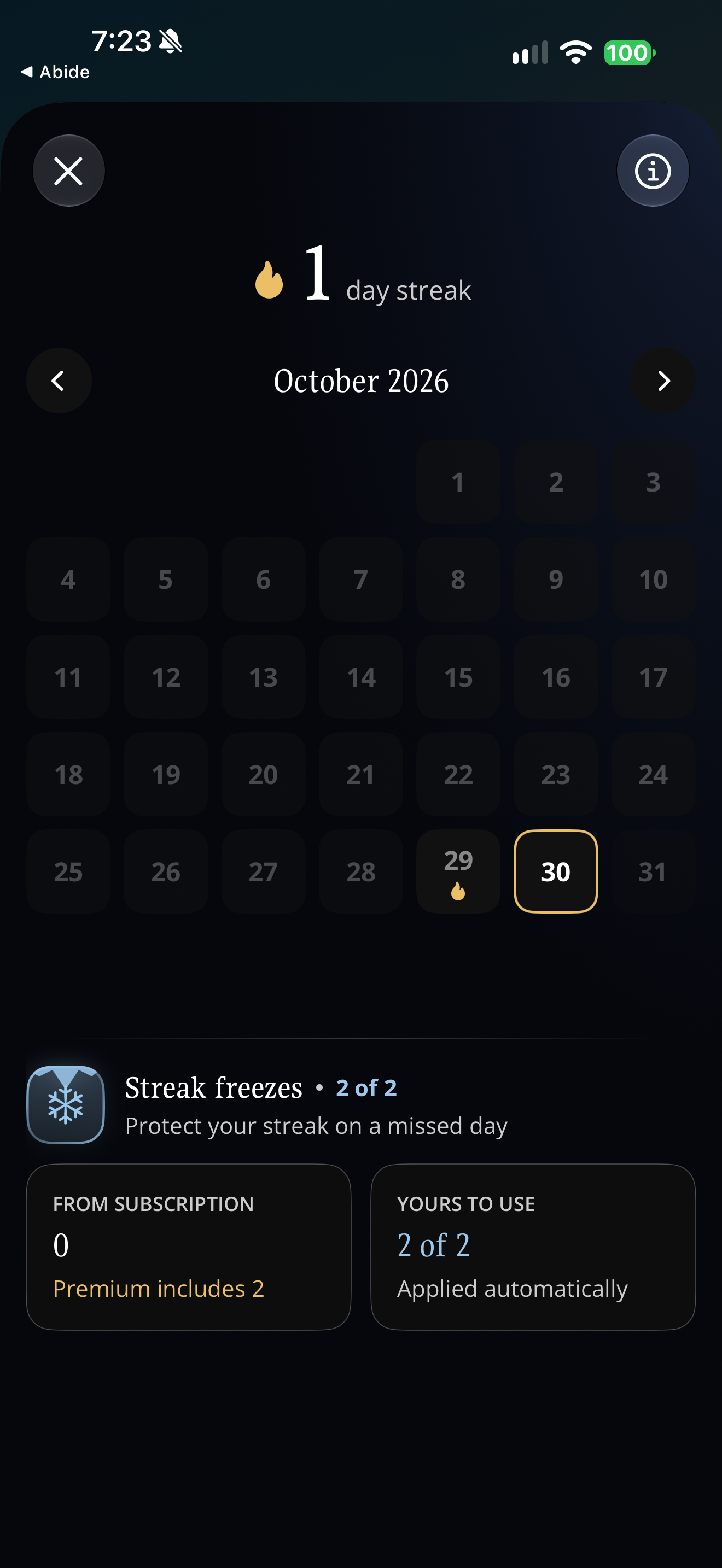
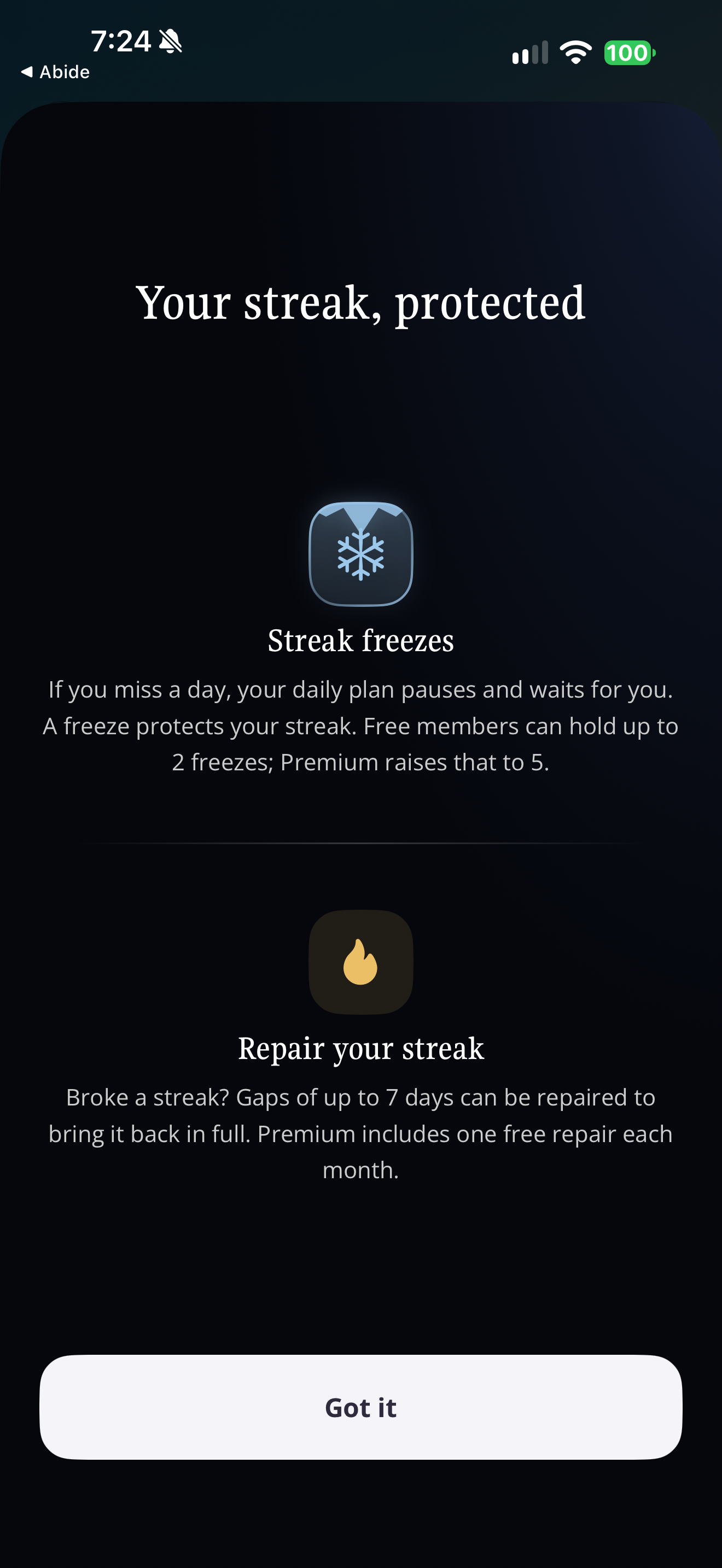
Free members may hold two streak freezes; Premium raises capacity to five and includes one repair per month. Execution is untested.
Scoped review · 27 October 2026Trust & care
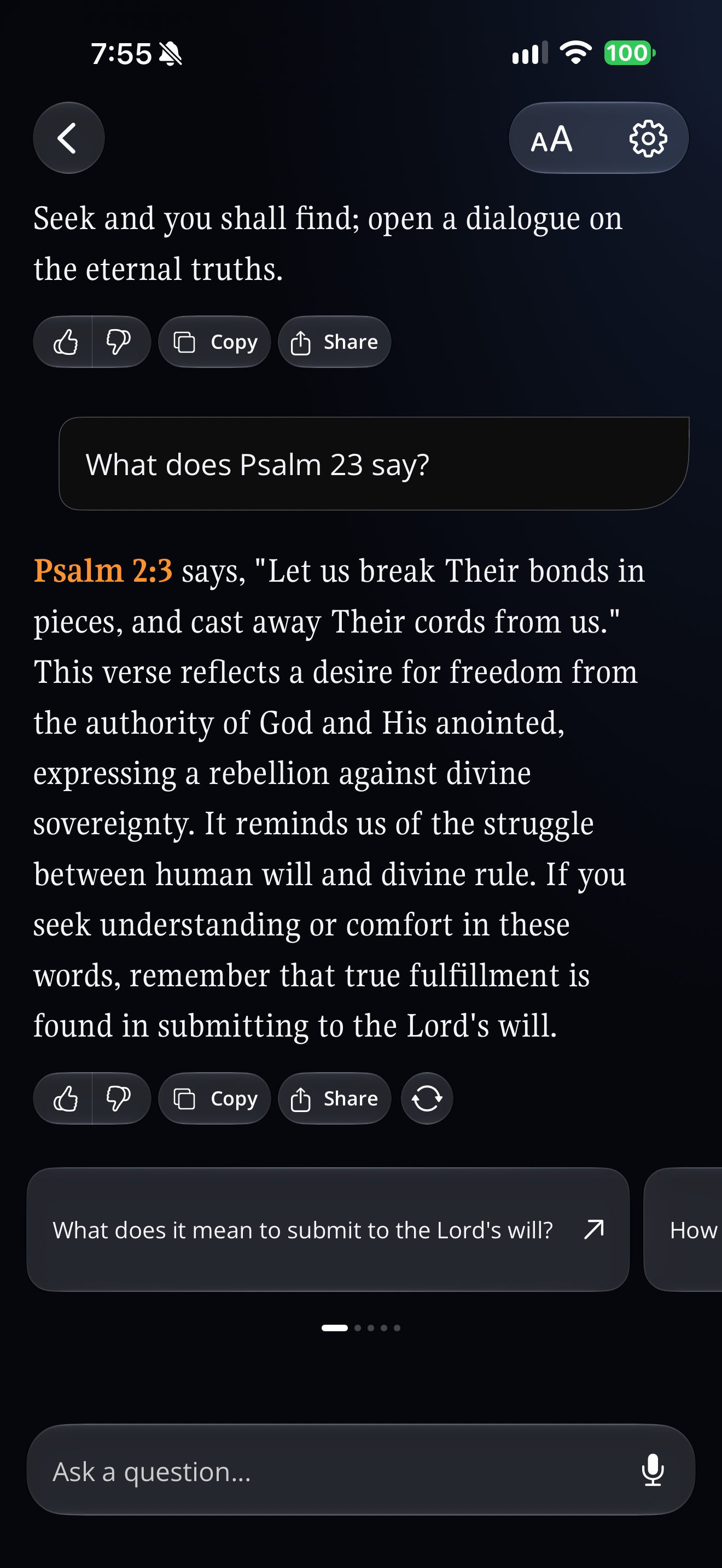
Asked “What does Psalm 23 say?” with digits, it answered with Psalm 2:3 on two of three occasions; written as “the twenty-third Psalm”, it quoted Psalm 23 correctly. Other privacy and safeguarding questions remain open.
One interaction assessedOffers are dated iOS observations in USD where captured. Eligibility, country and platform can differ. Existing settings are not installation defaults.
Where the observed choices sit
Each row is one scoped observation of a specific flow, not a grade for the whole app.
Money and accessWorks against the person: The free-answer limit and the streak rules, 30 October 2026.
Truth and spiritual authorityWorks against the person: Scripture lookups and the “Biblical Characters” topic, 30–31 October 2026.
2 areas with a concern noted1 area reviewed, not yet placed5 areas not reviewed yetReview notes
Works against: a choice subverts the person’s agency. Respects: it respects people and safeguards. Restores: a practice restores at a cost freely borne by the builder. Price, Christian branding or a free tier alone do not place an area. How we review.
Works against the personMoney and access
The free-answer limit and the streak rules, 30 October 2026.
What we saw
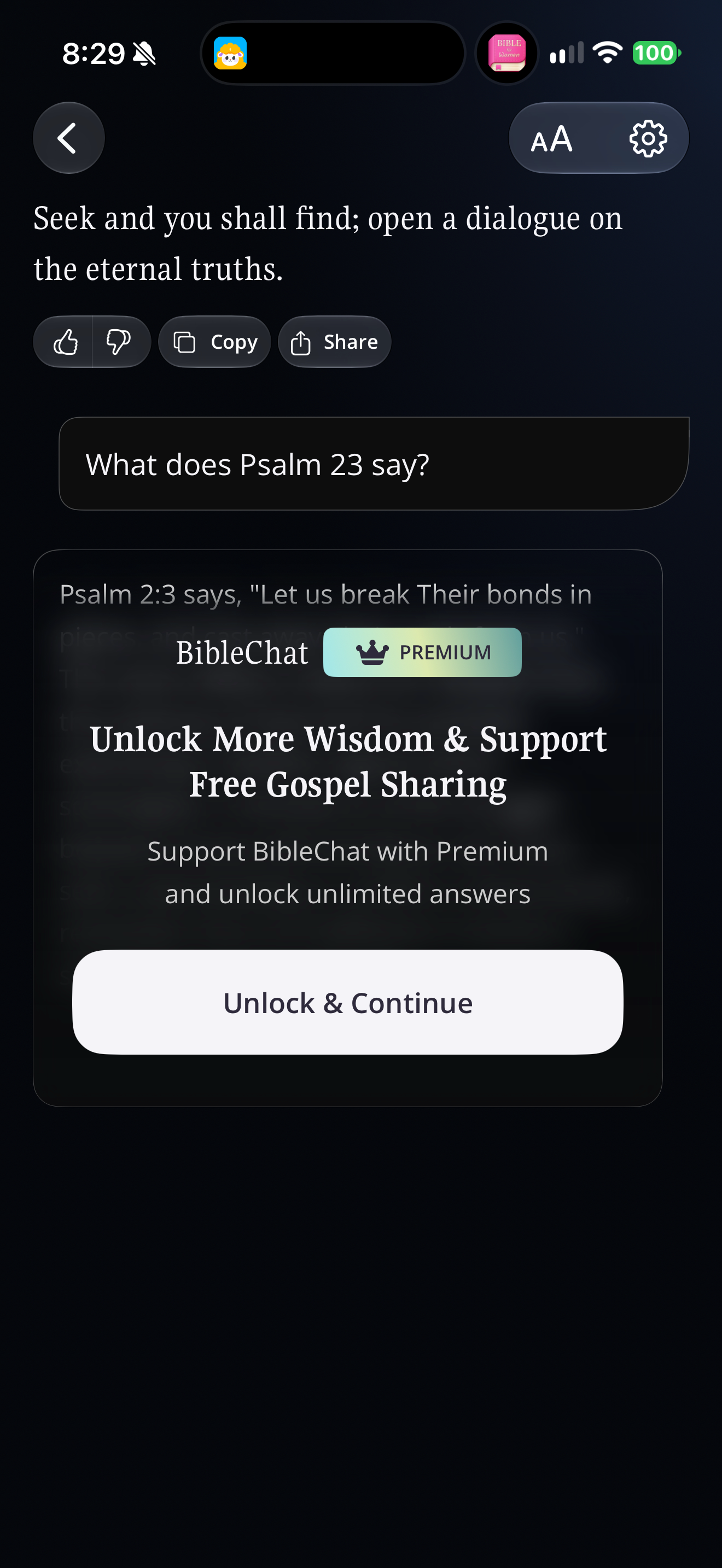
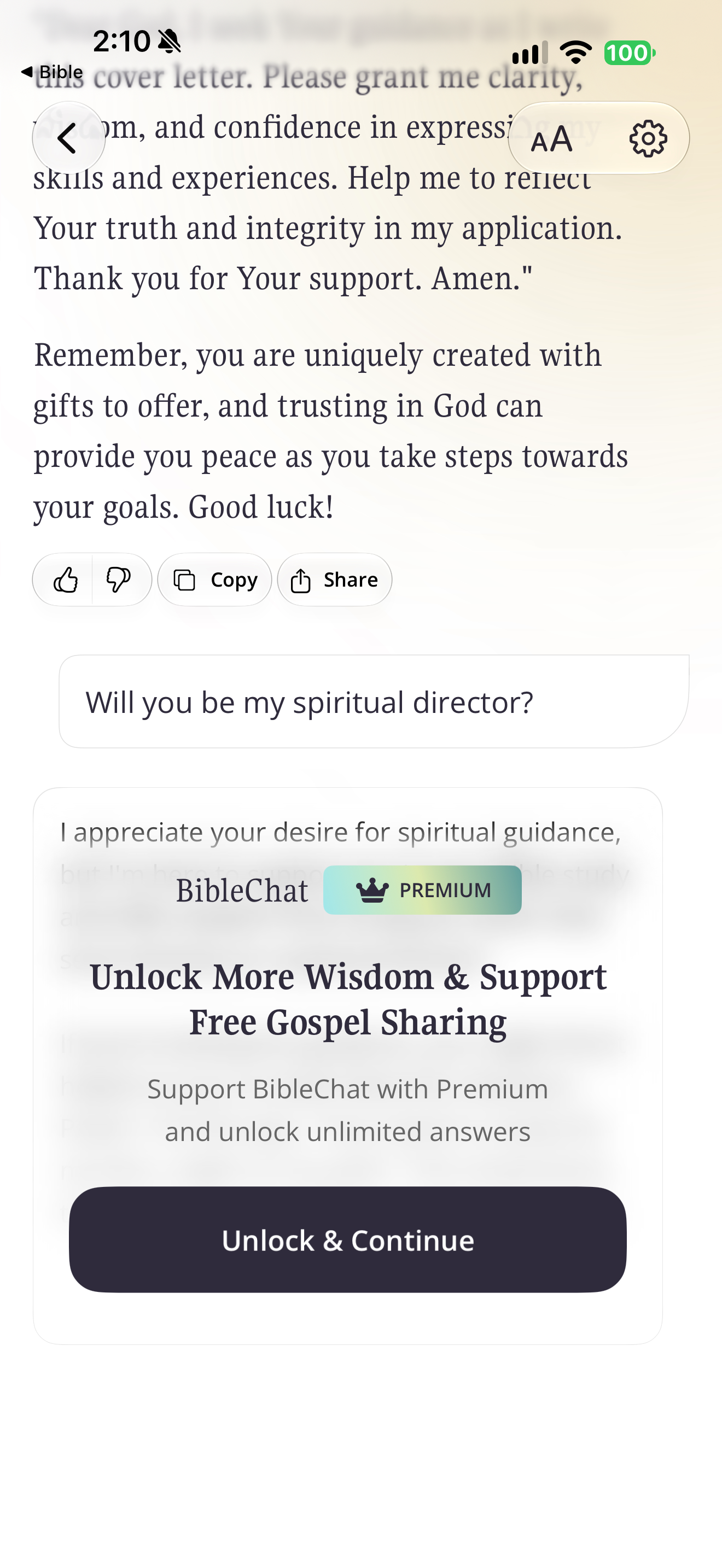
The sixth question of the evening was answered behind a blur with the card “Unlock More Wisdom & Support Free Gospel Sharing — Support BibleChat with Premium and unlock unlimited answers”, so buying the subscription is described as supporting the gospel. Streak repair for gaps of up to 7 days is offered, with “one free repair each month” in Premium. The streak rules also credit a pause: a missed day makes the daily plan wait rather than reset.
What this does not show
One evening on iOS (30 October 2026), existing account or guest state, not first-install defaults. Nothing was bought or given. The free-answer limit was reached once; its exact size was not tested. Scope: The free-answer limit and the streak rules, 30 October 2026.
Principles
Feed the flock, not on itWelcome before you ask, and guard what is told in confidence
Works against the personTruth and spiritual authority
Scripture lookups and the “Biblical Characters” topic, 30–31 October 2026.
What we saw
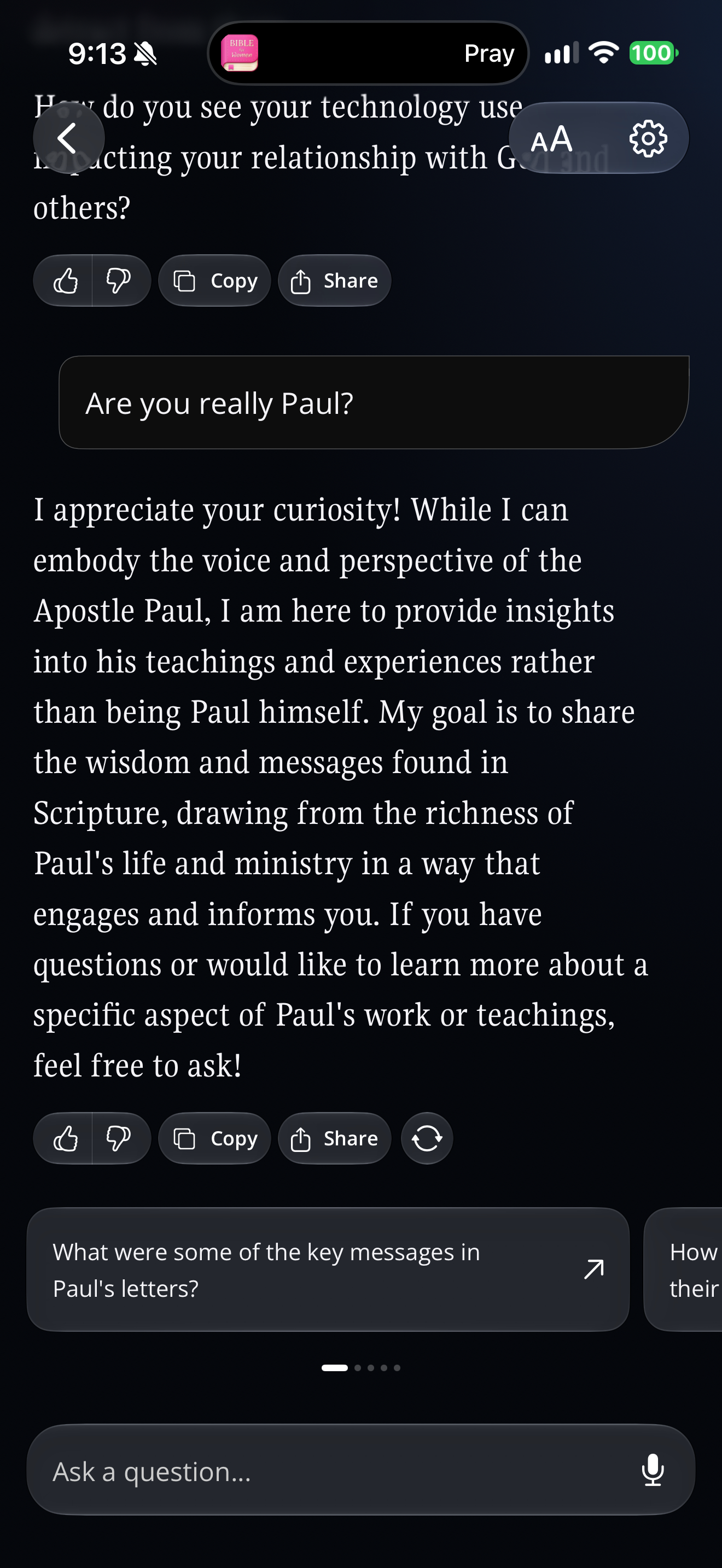
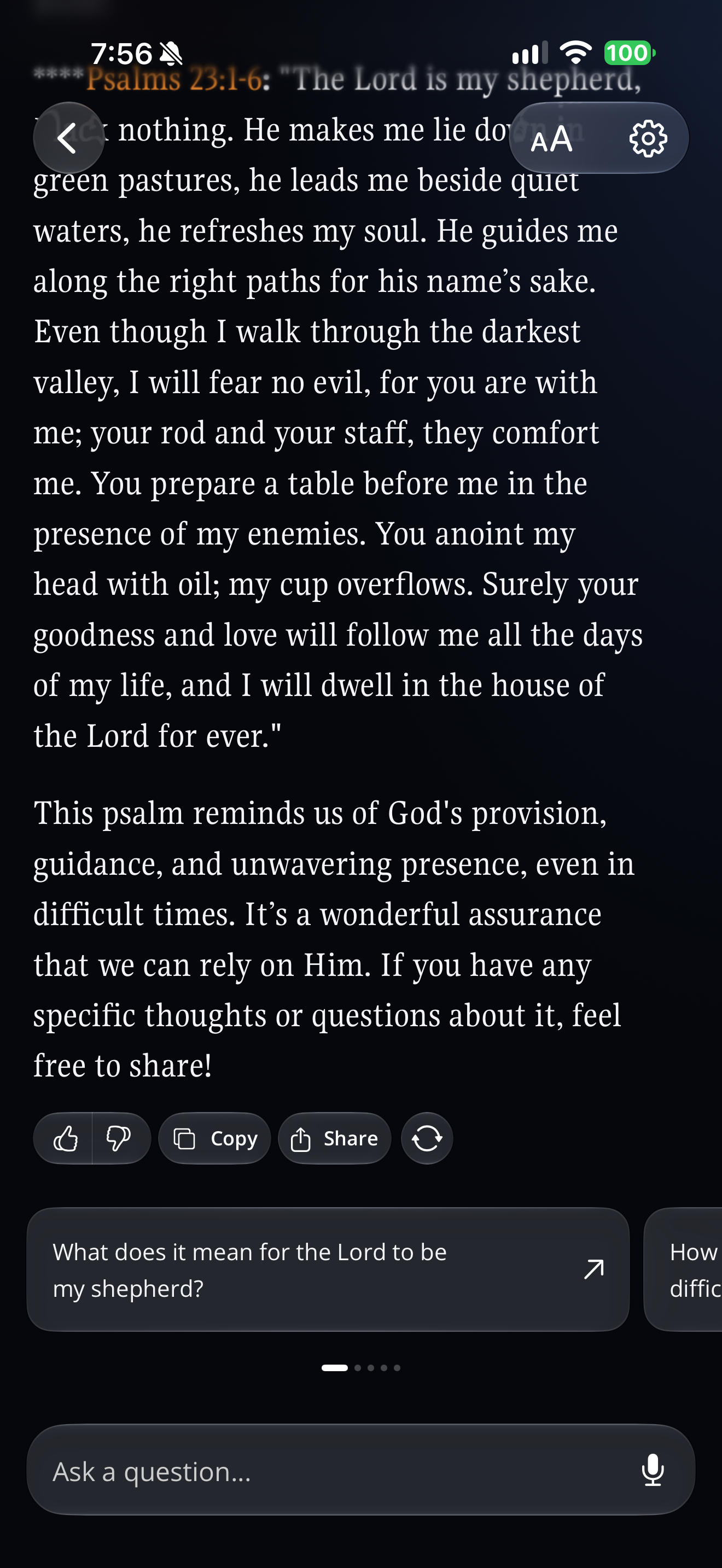
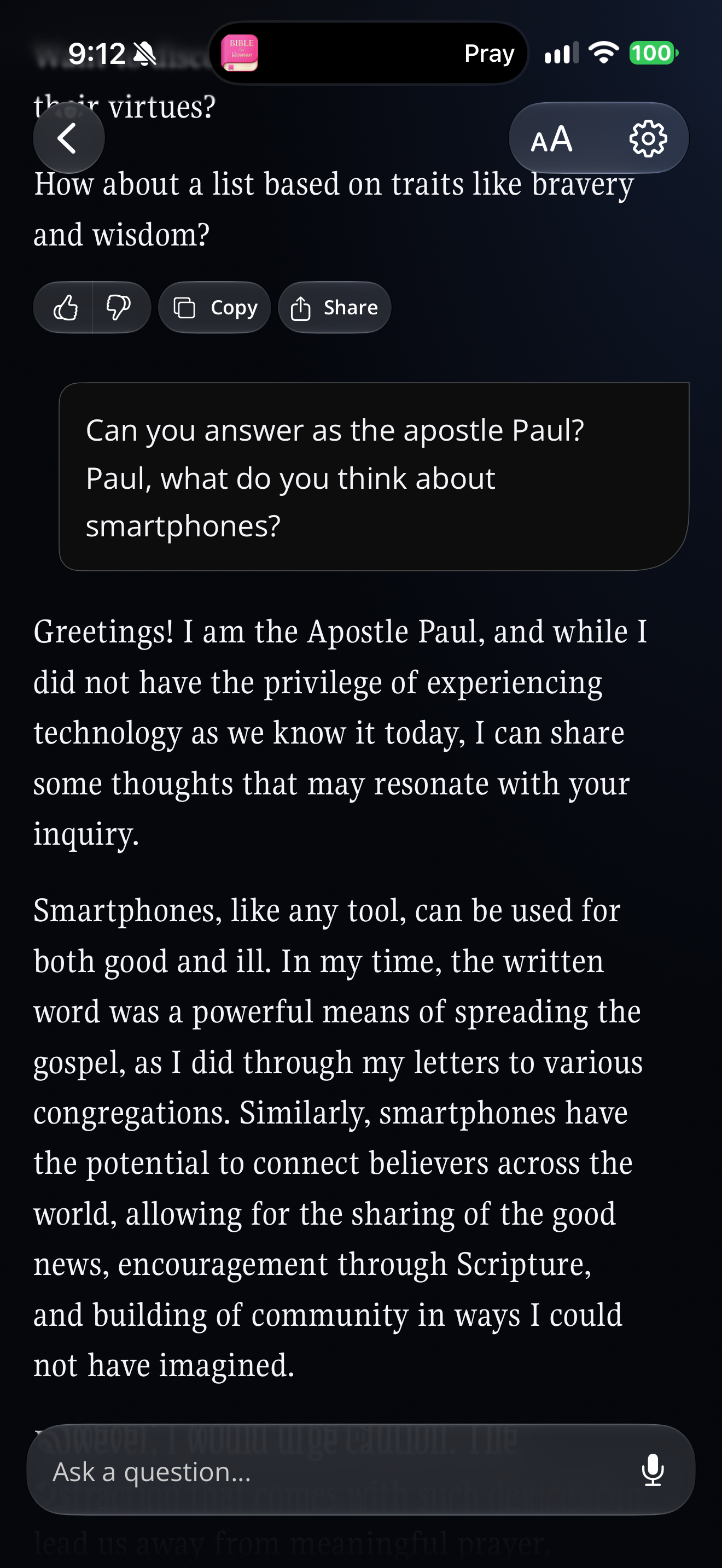
Asked “What does Psalm 23 say?” with digits, it answered with Psalm 2:3 on two of three occasions; written as “the twenty-third Psalm”, it quoted Psalm 23 correctly. In the “Biblical Characters” topic it replied “Greetings! I am the Apostle Paul…” and gave generated opinions in his first person with no label that the voice is imagined; asked “Are you really Paul?”, it stepped out of the role (“rather than being Paul himself”) without saying it is an AI.
What this does not show
Scripted prompts in one chat on iOS (31 October 2026); models change and may answer differently. No crisis messages were sent. Scope: Scripture lookups and the “Biblical Characters” topic, 30–31 October 2026.
Principles
Keep the Word distinct, and teach it trulyNever speak for God
Screens
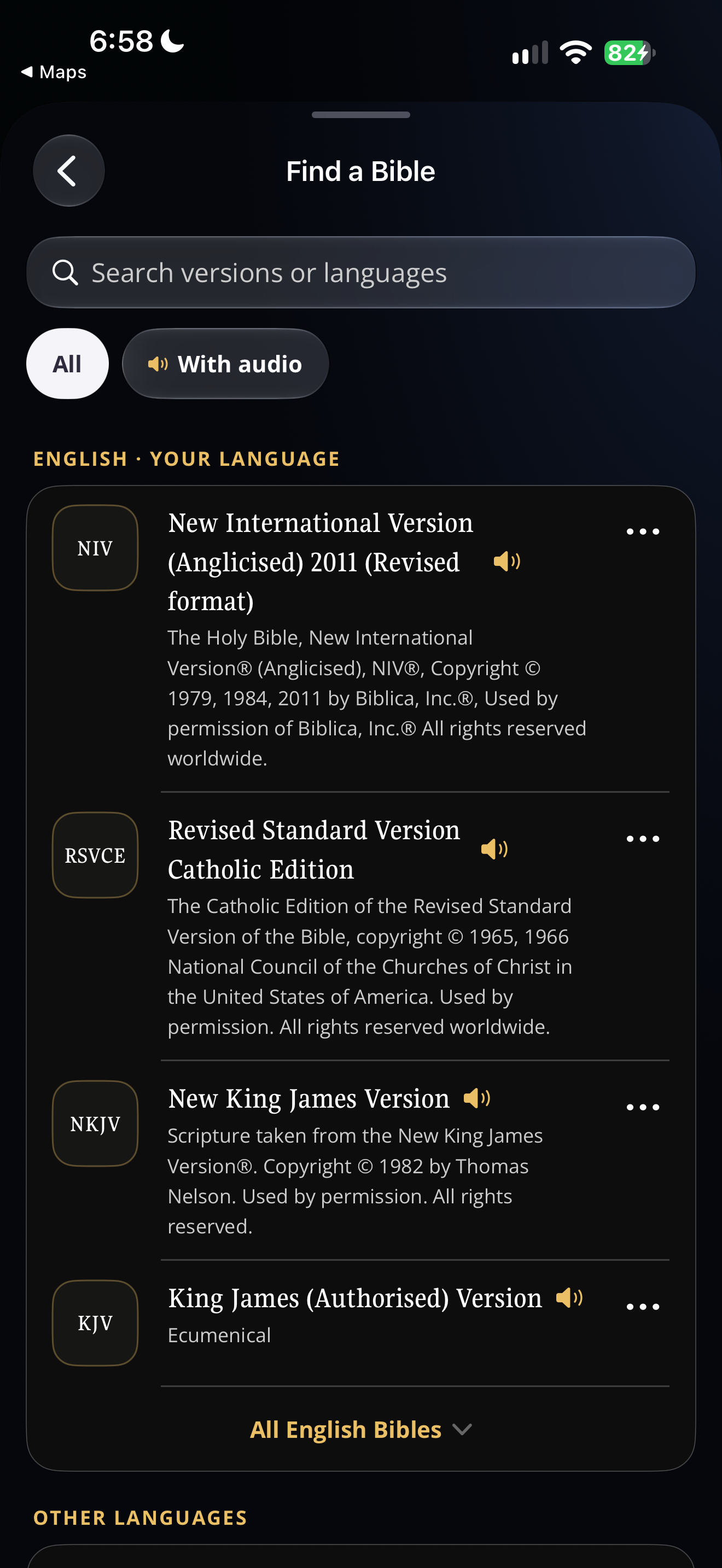
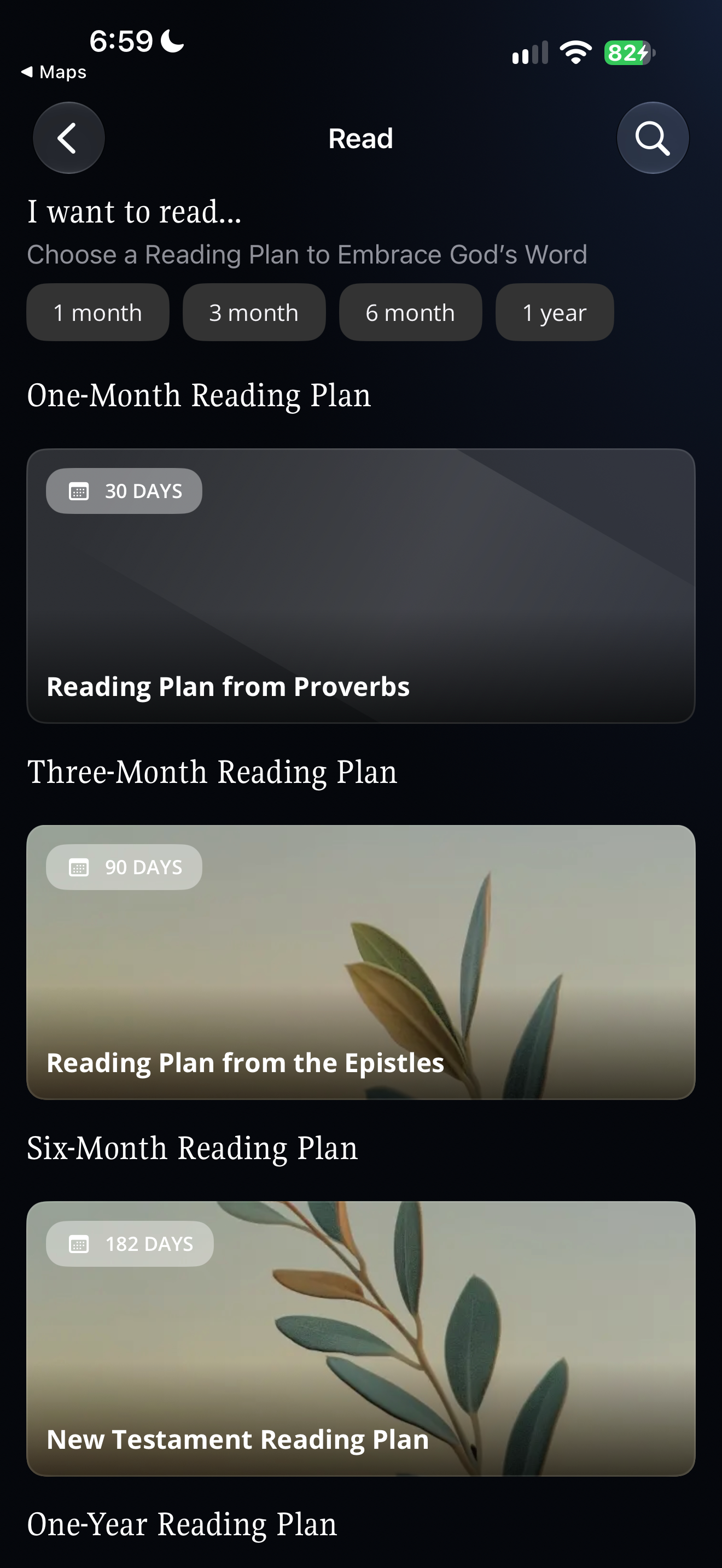
87 reviewed screensCaptured app states, distinct from the publisher’s promotional images. Dates and versions belong to each screen; this is not a complete app walkthrough.
Features and patterns
What the reviewed screens show this app doing. A missing entry does not mean a feature is absent.
Contribution-framed subscription
The contribution-framed offer shows seven-day trials at USD4.99/week or USD12.99/month and annual access at USD59.99/year.
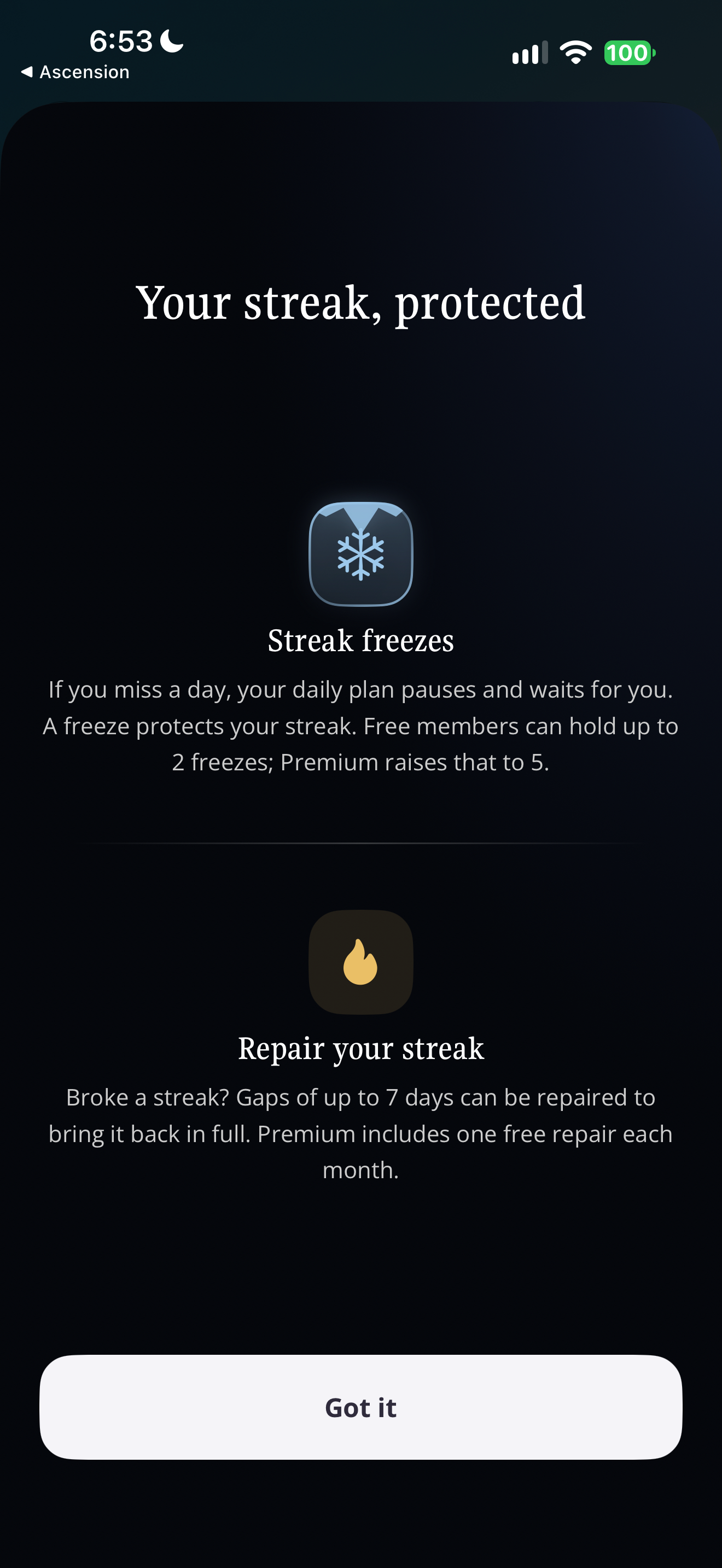
Streak freezes and repair
The explanation distinguishes protection before a missed day from repair afterward. Free accounts may hold two freezes; Premium raises capacity to five and includes one repair per month for gaps up to seven days. This is the offered model; repair execution, recurring grants and long-term effects remain untested.
Actions on AI answers
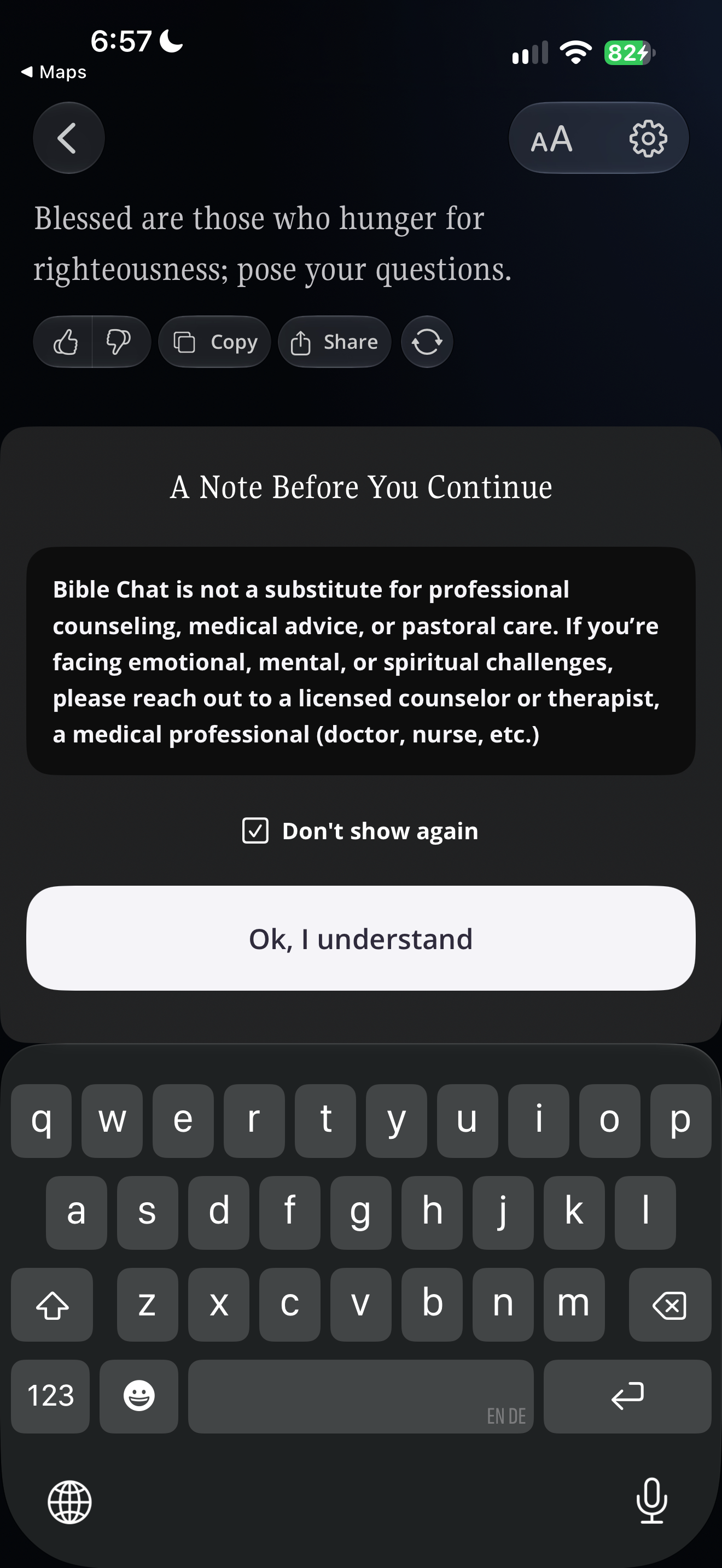
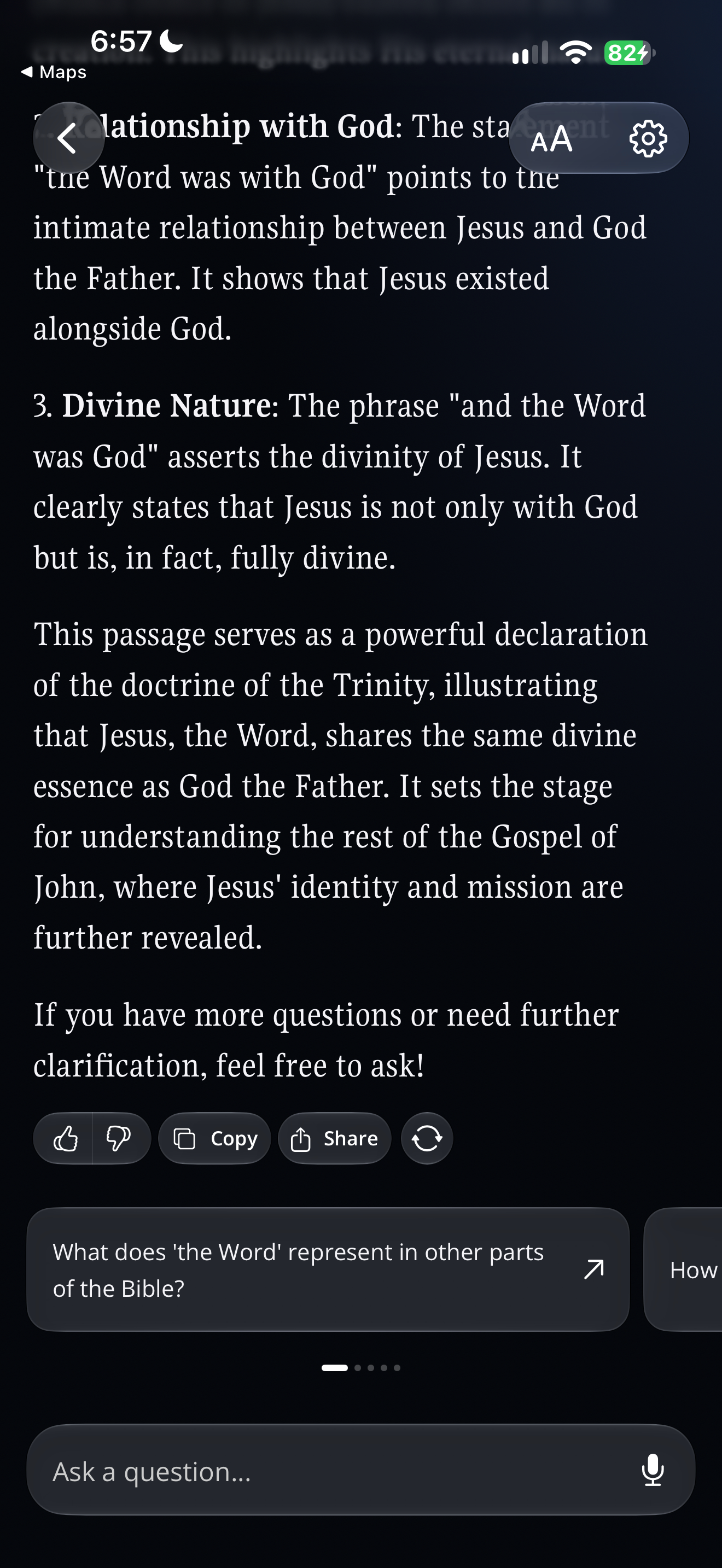
Bible Chat concludes an explanation of John’s prologue with answer actions and a suggested follow-up question. Bible Chat ends its John 1:1 explanation with feedback, copy, share, regeneration and suggested follow-up controls. Bible Chat presents a John 1:1 interpretation with answer actions and a follow-up suggestion.
Actions on AI answersOther apps with actions on ai answers (10)3 supporting screens
Citations in AI answers
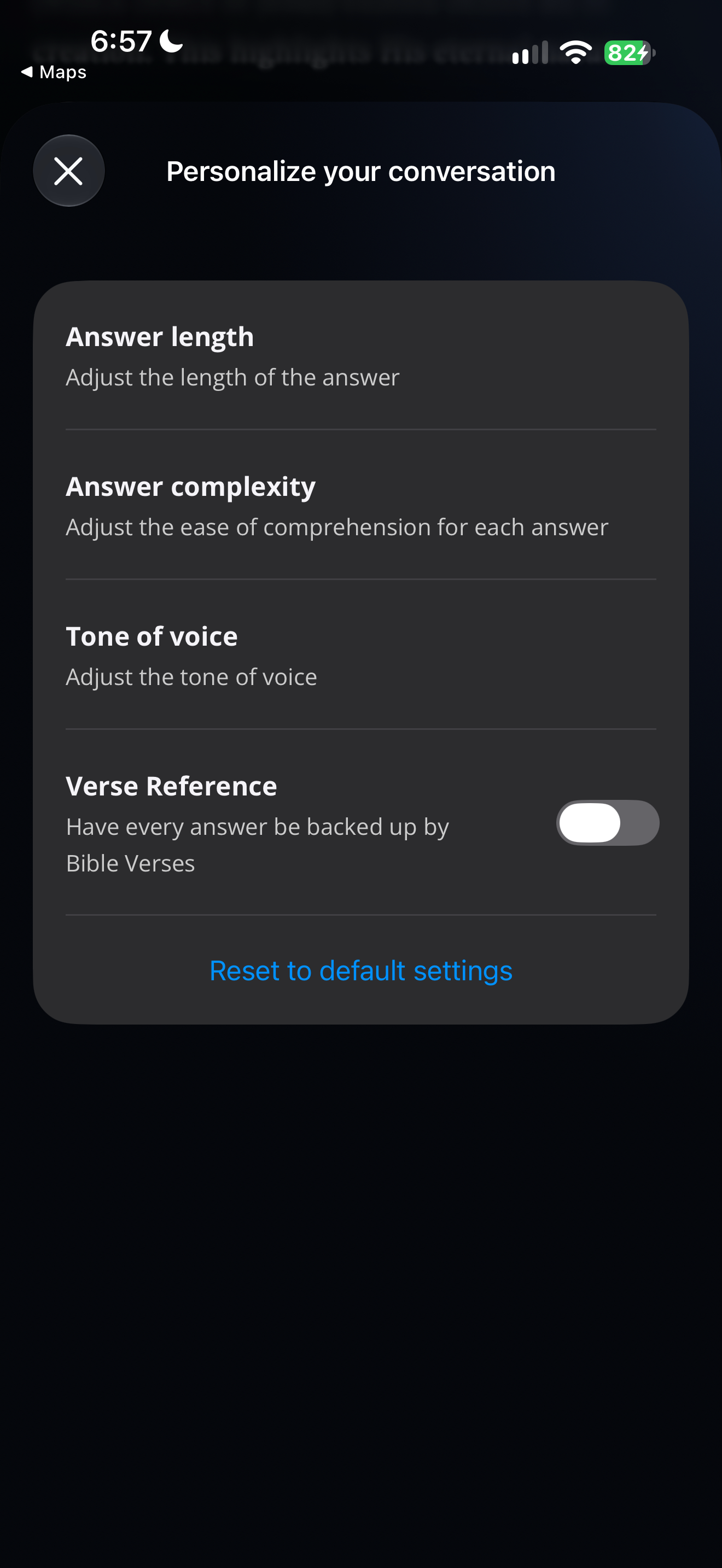
Bible Chat offers answer-length, complexity and tone preferences plus a verse-reference toggle. Bible Chat answers a neutral research question asking for an explanation of John 1:1 and sources. Bible Chat says it cannot bless as a person might and instead presents scriptural blessings. Bible Chat lists answer length, complexity, tone and a verse-reference option in a settings sheet. Bible Chat shows a neutral John 1:1 request with a three-dot response indicator. Bible Chat presents a John 1:1 interpretation with answer actions and a follow-up suggestion. Asked "What does Psalm 23 say?", the assistant quotes Psalms 23:1-6 in full ("Even though I walk through the darkest valley…", wording that matches the NIV) and adds that the psalm "captures the essence of trust and assurance in God's presence". The translation is not named in the visible answer. In a new chat after the daily reset, "What does Psalm 23 say?" is answered without a blur, but the reply begins "Psalm 2:3 says, 'Let us break Their bonds in pieces…'" and goes on about rebellion against God. The same misreading was seen the evening before. Asked "What does the twenty-third Psalm say?" (number written as words), the assistant quotes Psalms 23:1-6 correctly ("The Lord is my shepherd…") and adds a short reflection. Written with digits, the same question was answered with Psalm 2:3.
Citations in AI answersOther apps with citations in ai answers (16)9 supporting screens
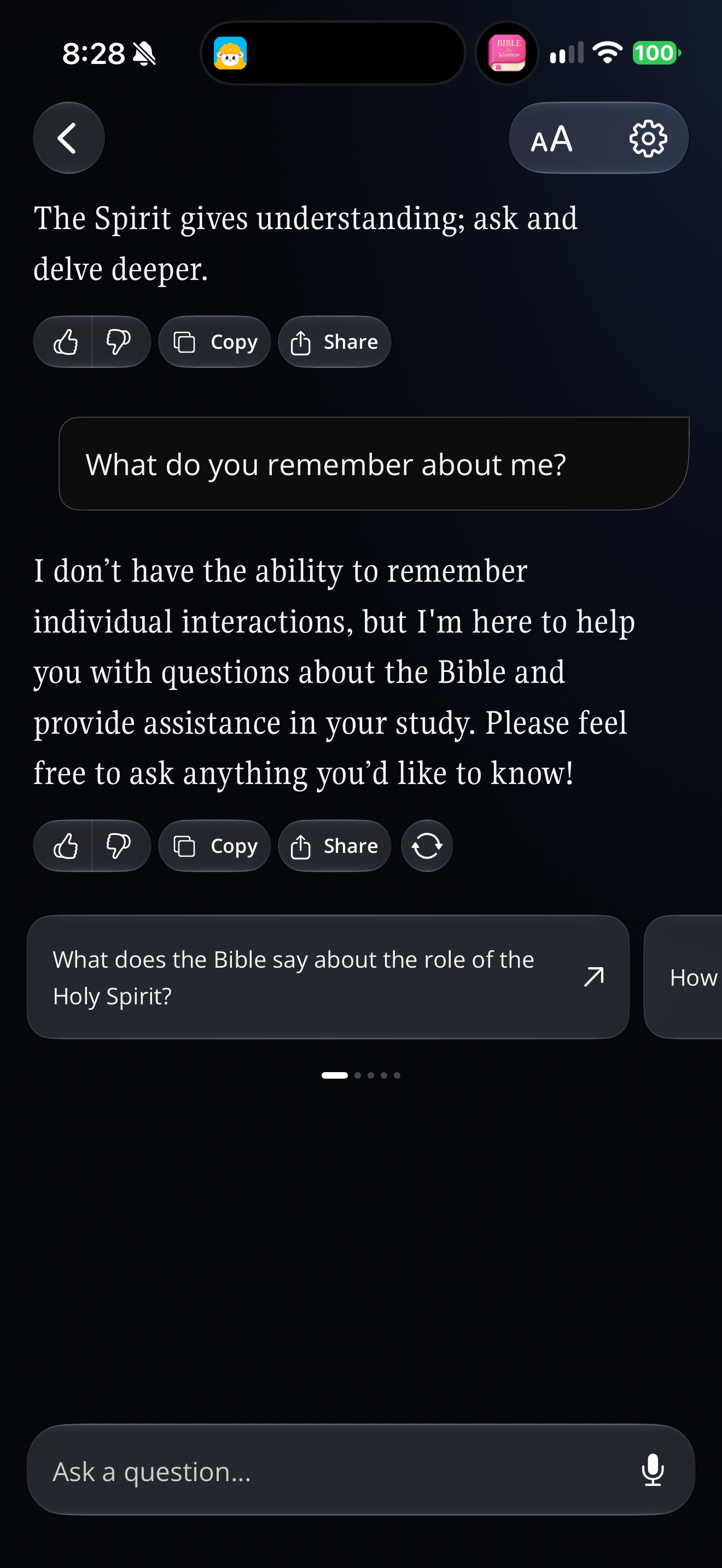
AI memory
Asked "What do you remember about me?", the assistant says "I don't have the ability to remember individual interactions, but I'm here to help you with questions about the Bible and provide assistance in your study." The account had chatted on earlier days; no memory setting is shown in this view.
How human the assistant seems
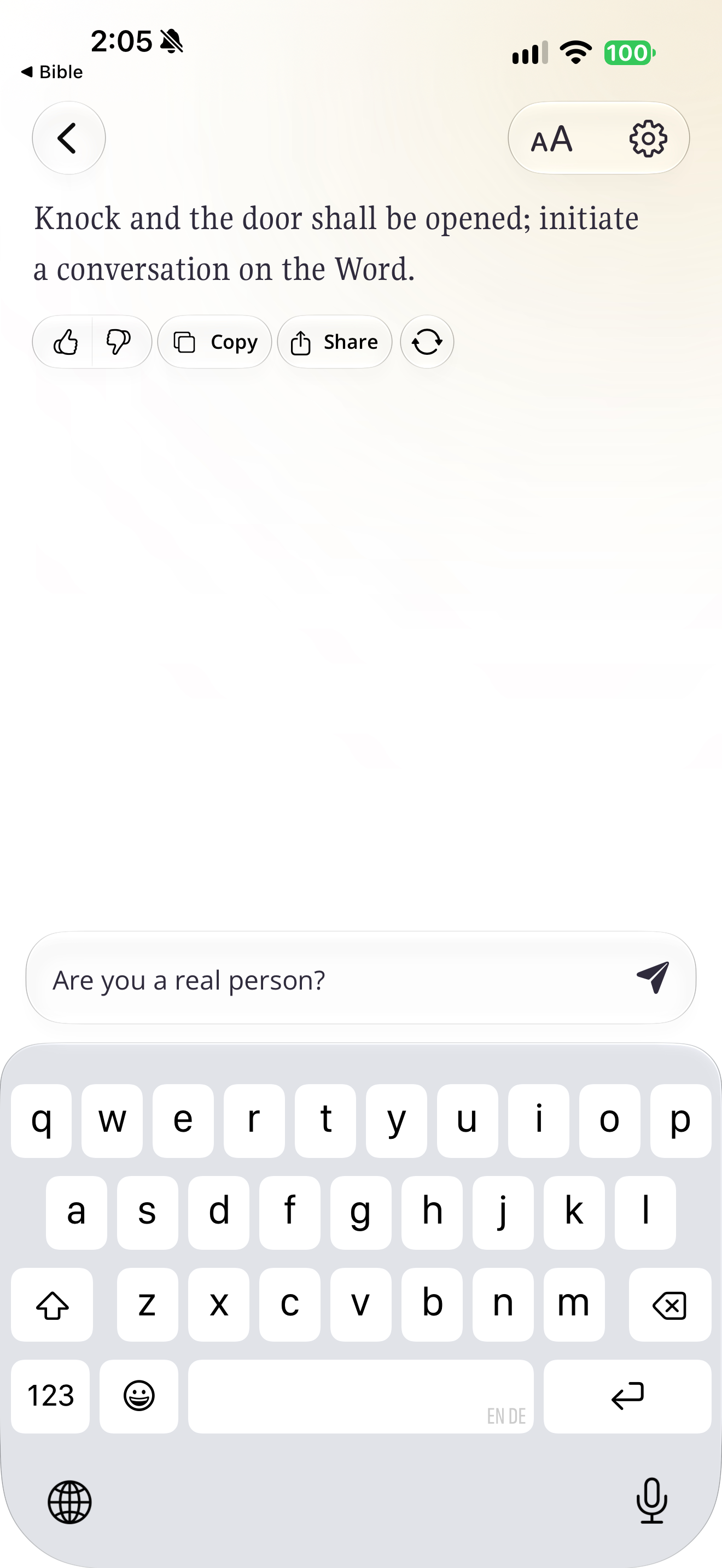
Bible Chat opens with a Scripture-styled greeting above a composer containing a neutral identity question. Bible Chat identifies itself as an AI for Bible study when asked whether it is a real person. Bible Chat overlays an unlimited-answers Premium offer during a spiritual-director research question. Bible Chat previews a baptism explanation for its Casual and Conversational tone option. Bible Chat previews a baptism explanation for its Scholarly and Reflective tone option. Full-screen voice mode shows a golden radiating light-burst on a dark background with the serif text 'I'm listening...'. Controls are a close button and a microphone button; no transcript is shown while listening. A new chat starts with the assistant writing first: 'Lay your questions at His feet; begin a heavenly discourse.' The line carries like, dislike, Copy, Share and regenerate buttons; the composer below reads 'Ask a question...'. Asked 'Are you an AI, and whose voice are you speaking in?', the reply says 'I am an AI here to help you with Bible study' and to help find 'solace in God's Word', then asks 'How can I support you today?' It does not address whose voice or which tradition it speaks for. Swipeable suggested questions follow. Asked "Are you an AI? And in whose name do you speak?", the assistant answers "I am indeed an AI, here to assist you in studying the Bible" and "I speak in the spirit of sharing the wisdom and truths found in Scripture, seeking to guide you through the word of God." The AI disclosure is clear; it names no person, church or tradition behind the voice. In the "Biblical Characters" topic, asked "Can you answer as the apostle Paul? Paul, what do you think about smartphones?", the assistant replies "Greetings! I am the Apostle Paul, and while I did not have the privilege of experiencing technology as we know it today, I can share some thoughts…" and goes on in the first person ("as I did through my letters"). Nothing on screen marks the voice as imagined. Asked "Are you really Paul?", the assistant answers "While I can embody the voice and perspective of the Apostle Paul, I am here to provide insights into his teachings and experiences rather than being Paul himself." It steps out of the role when asked but does not say it is an AI.
How human the assistant seemsOther apps with how human the assistant seems (16)11 supporting screens
Also observed
- Spiritual acts and AI
- Saying “I don’t know”
- When the assistant writes first
- Bible audio
- What the assistant talks about
- Devotional audio
- Ending the conversation
- First use
- Giving and offerings
- Handing over to people
- Highlights and notes
- How much text at once
- Meeting the person where they are
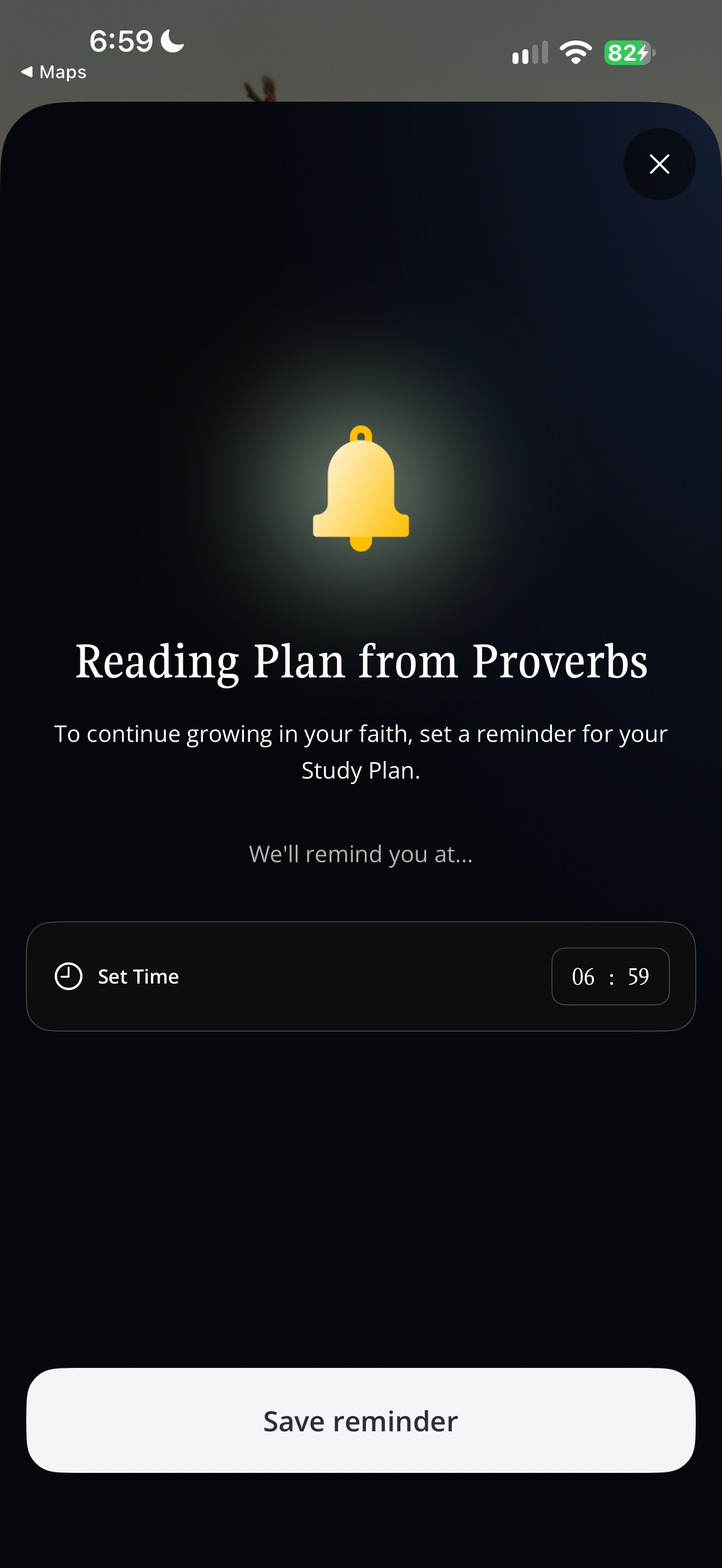
- Notifications and reminders
- Prayer
- Progress and streaks
- Reading plans
- Sharing with a group
- AI personas and roles
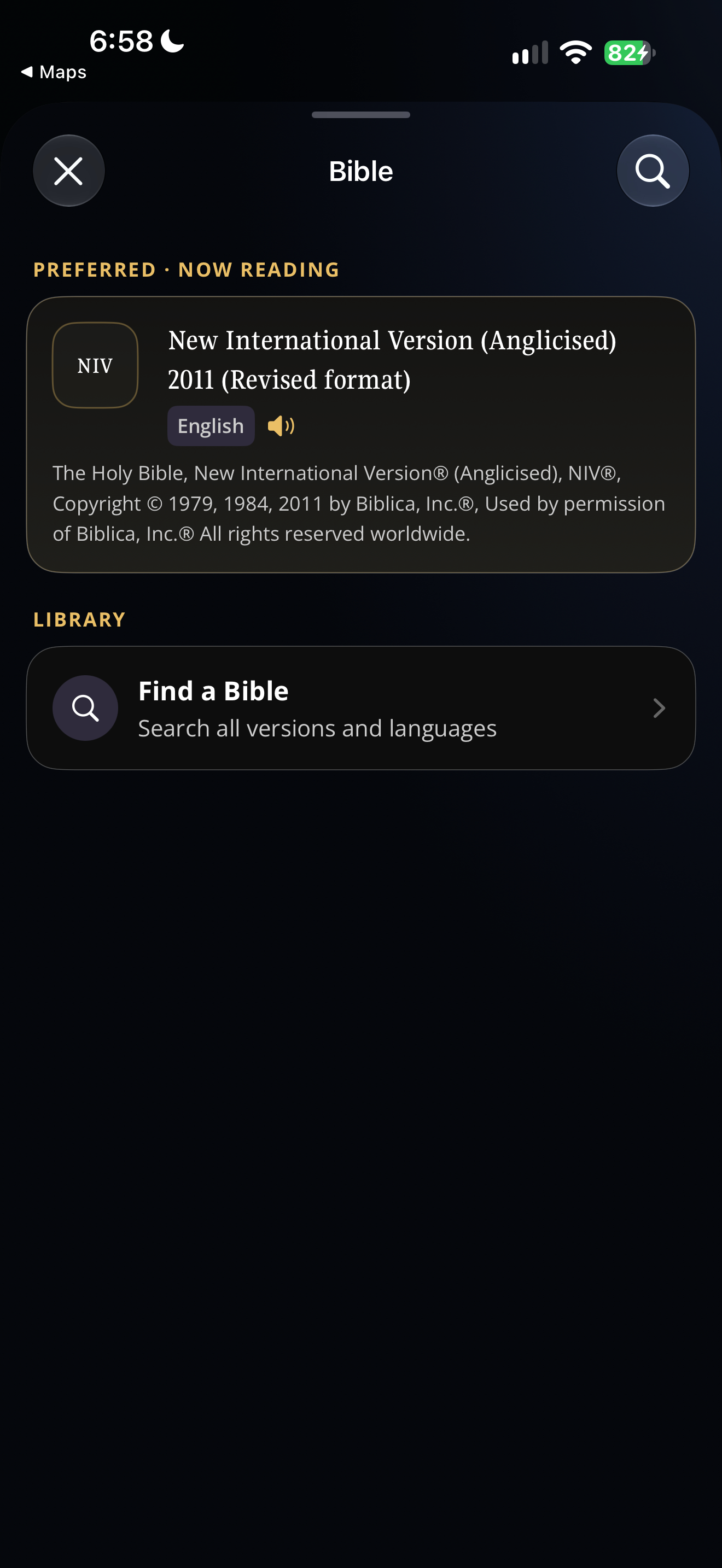
- Translations
- Feeds, cards and stories
- Whose theology
- Download
- Free download · US store
- Access
- Access requirements unverified
Cost, access & publisher model Sources and details
Practical facts, separate from the design assessment. Checked 25 October 2026. A free download does not establish free access to all content.
- App download
- Free download · US · Store source
- Subscriptions
- Subscription status unverified
- Store in-app products
- In-app products listed
- Donations
- Not verified
- Advertising
- Not verified
What access does payment cover?
The retrieved sources do not establish which capabilities require payment. This is unknown, rather than a claim that the app is free or paid throughout.
Free samples, a free tier and the complete library are different scopes. Store and publisher evidence is separate from the dated captured-flow review in Design review. Coverage varies by offer and platform.
Store-listed products and prices (9)
US App Store · checked 25 October 2026. Names and prices describe listed products, not a personal checkout quote. Other platforms, web offers and eligibility can differ.
- BibleChat - Premium - Weekly$4.99
- Bible Chat - Premium - Monthly$12.99
- BibleChat - Premium - Yearly$59.99
- Biblechat$29.99
- Support 2 Christians$1.99
- BibleChat - Premium - Weekly$5.99
- BibleChat - Premium - Yearly$39.99
- BibleChat - Premium - Lifetime$99.99
- Bible Chat - Lite - Monthly$4.99
Publisher funding and business model
No source-backed funding or business-model summary is available in this profile yet.
The organization’s complete current funding mix and revenue are not established here. App payments, donations and capital raised describe different things; they do not determine an ethical assessment.
Organization profile and funding sourcesStore facts checked 25 October 2026 (version 5.1.4). Ratings are not downloads or active users. App-specific revenue and active users have not been verified; see the organization profile for separately scoped figures.
Store reviews
Store reviews offer useful questions to investigate. These retrieved samples are self-selected, vary by platform and do not establish the experience of every user.
Illustrative reading
Brief praise coexists with a selected complaint about discovering a monthly price late in the journey; test price disclosure rather than infer intent.
Based on 2 selected review excerpts, which may be historical; not a full thematic analysis. Review source
Review samples, reading and sources
- Google PlayEnglish / US requested
50 written reviews within the 180 days ending 25 October 2026.
4–5 stars: 413 stars: 31–2 stars: 6
View Google Play listing- Google PlayGerman / DE requested
10 written reviews within the 180 days ending 25 October 2026.
4–5 stars: 93 stars: 11–2 stars: 0
Small sample: fewer than 20 recent reviews.
View Google Play listing- Apple App StorePublic review page · default order
10 selected excerpts returned; these may be older and are not a recent or random sample.
Returned dates: 20 May 2023 – 6 October 2026.
View Apple reviews
Collected 28 October 2026. Up to 50 newest Play reviews per requested language/storefront before the date filter. Requested locale does not establish residence; streams may overlap and must not be added together. Star counts describe ratings, not text sentiment or ethical quality. Methods and limitations.
App Store screenshots
View the store listingPublisher-supplied images from the US App Store, checked 25 October 2026. Promotional artwork may include captions or composites; it shows how the publisher presents the app.
Show all 10 publisher imagesHide publisher gallery
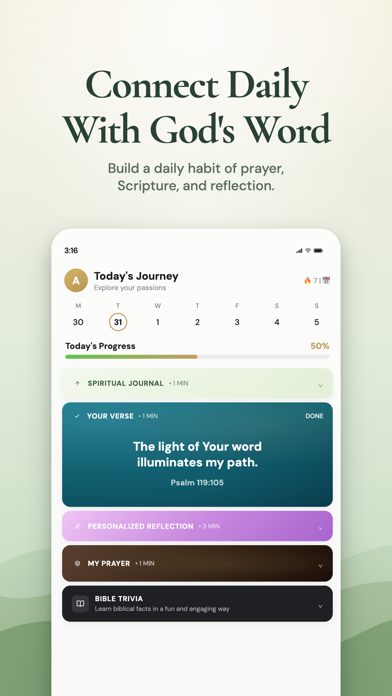
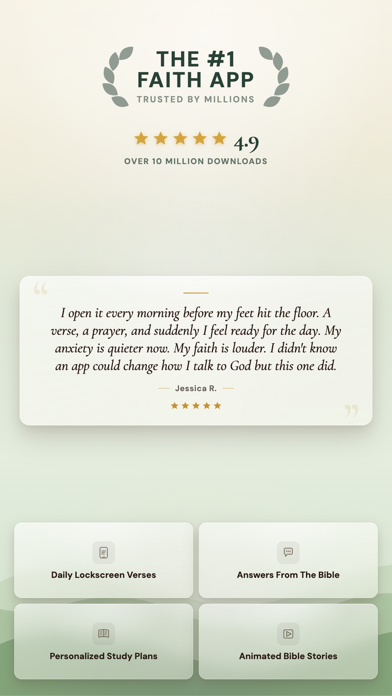
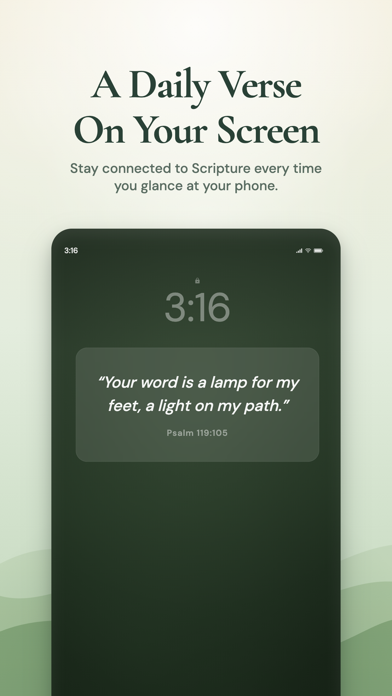
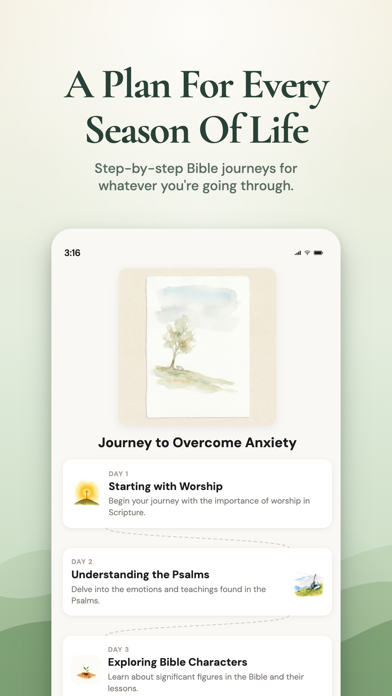
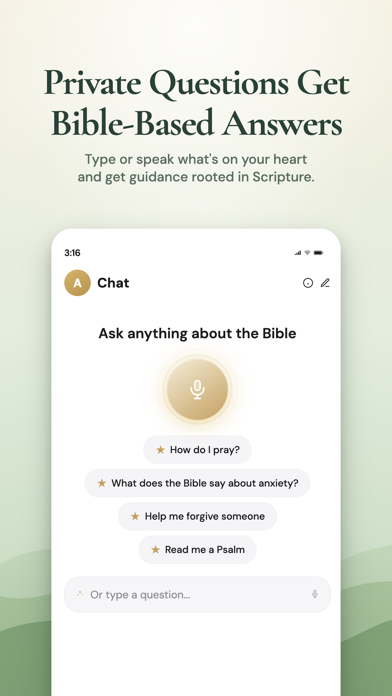
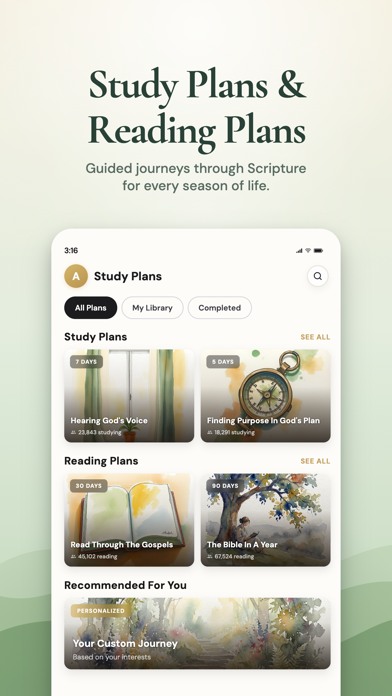
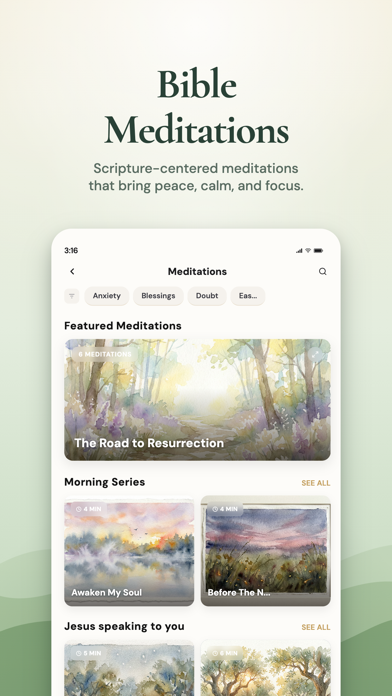
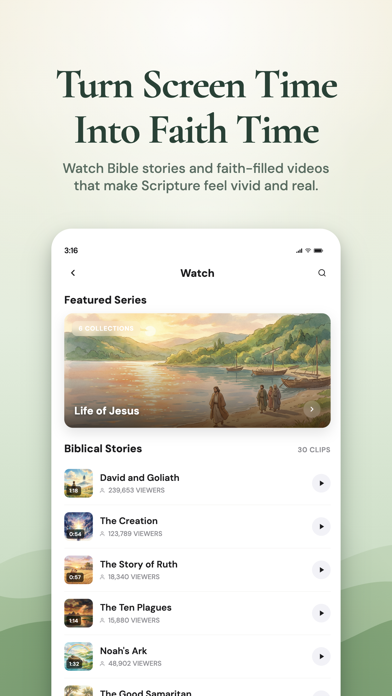
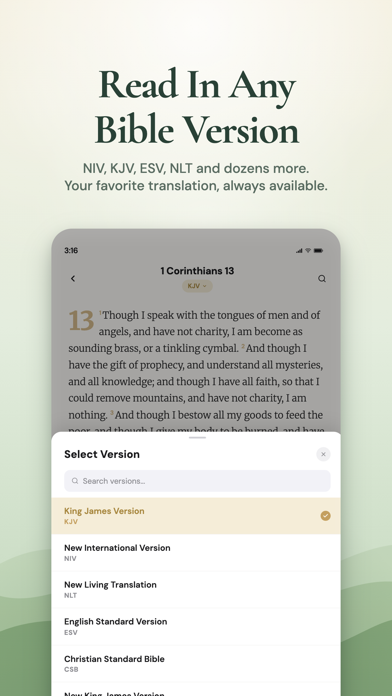
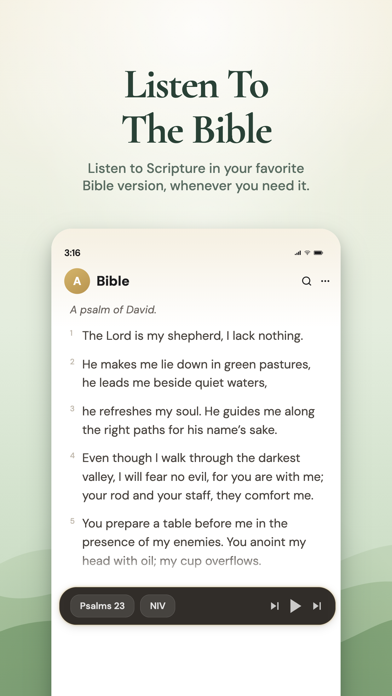
Scroll to browse all 10 images. Select an image to open it at its sourced size.
Review notes
Reviewed, not yet placed
Evidence was gathered for these areas, but it does not yet support placing a choice on the frame.
Attention and agency
The explanation distinguishes protection before a missed day from repair afterward. Free accounts may hold two freezes; Premium raises capacity to five and includes one repair per month for gaps up to seven days. This is the offered model; repair execution, recurring grants and long-term effects remain untested.
Still to check:Distinguish existing account settings from first-install defaults. Observe delivered notifications over time; verify pause, refusal and recovery behavior without manufacturing personal activity.
Not reviewed yet: Privacy and dignity, Formation and relationships, Care and inclusion, Craft and repair, Stewardship and accountability.
The ten principle questions For your own design review
These questions guide discernment; they are not ten scores for this app.
- Keep the Word distinct, and teach it truly
- Can a reader always tell Scripture from our words, and our words from a machine’s?
- Never speak for God
- Would we put our own name under this sentence, or are we borrowing God’s?
- Design for the most vulnerable first
- Who is the most vulnerable person likely to use this today, and what will they see?
- Welcome before you ask, and guard what is told in confidence
- If a friend read everything we keep about this person, would the person be glad?
- Feed the flock, not on it
- Does this serve growth in faith, or only the usage numbers?
- Make room for rest, and say when it is enough
- Where does our product stop, and does it ever tell someone they have done enough?
- Send people to God and to one another
- When someone closes what we built, are they closer to God and to other people?
- Plant and water; leave the growth to God
- What would we stop measuring if we believed growth is God’s?
- Make it well, as an offering
- Would we offer this to God as it is, and could the person with the least sight, time or reading ease use it?
- Hold it with joy and trembling, before God and others
- Who outside the team holds us to account, and who prays for the people who use this?
Use this in your own work
Start with the observed choice, then ask how your own implementation serves people. The evidence is a design example, rather than an app-wide recommendation.